
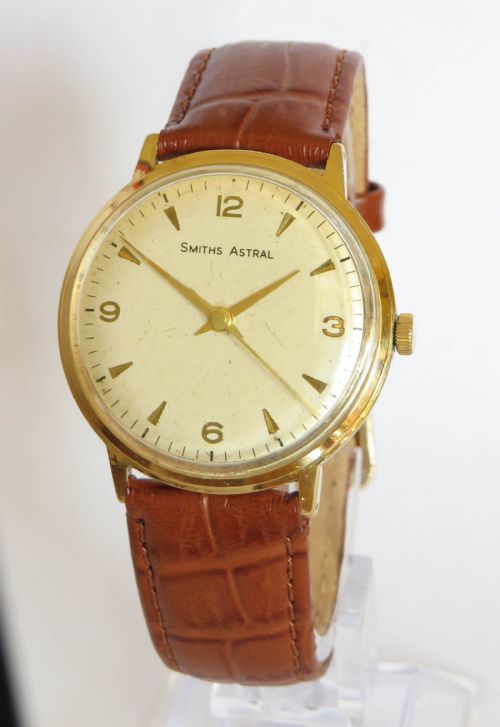


Vintage Analogue Wrist Watch
A vintage analogue wrist watch brings mechanical precision and mid-century character directly to the wrist.
Vintage Analogue Wrist Watch
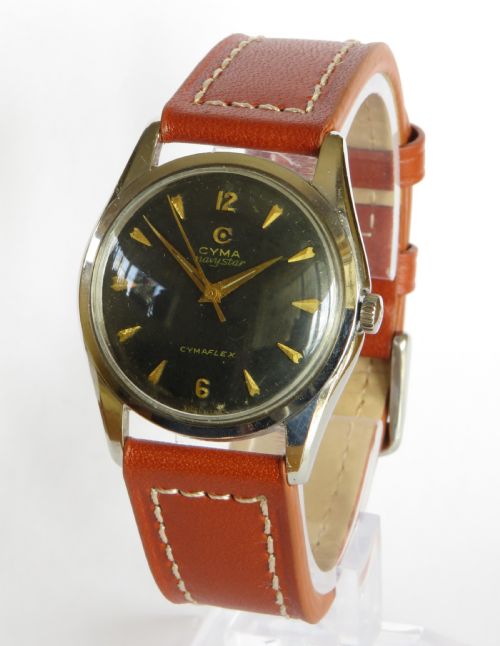
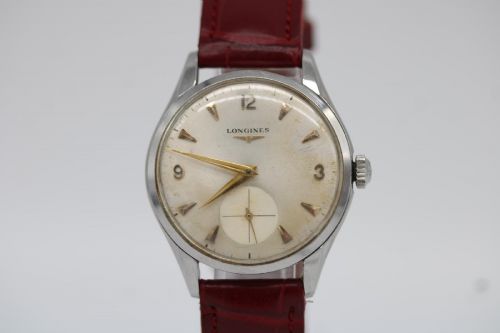
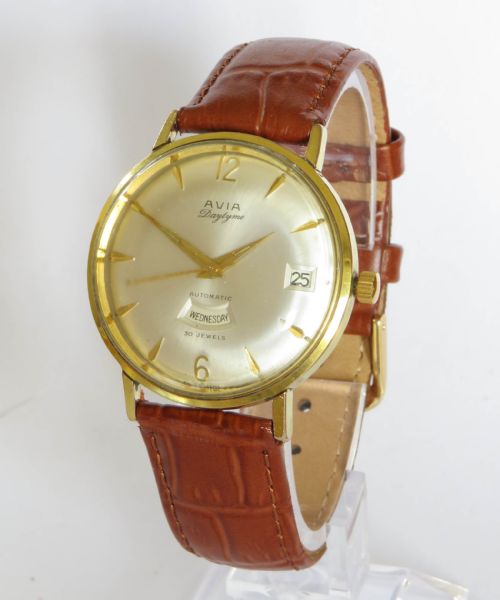
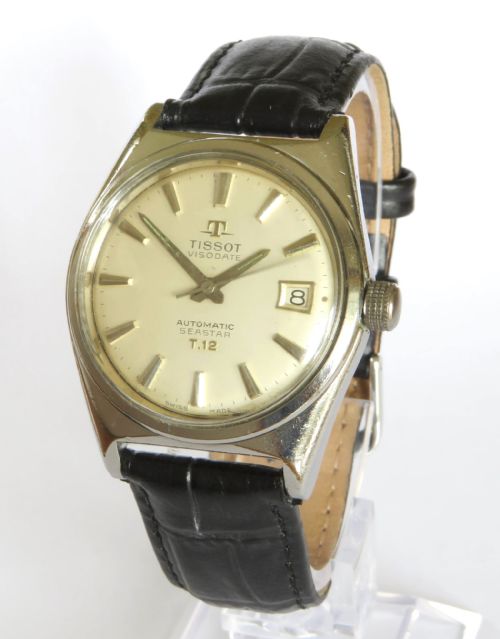
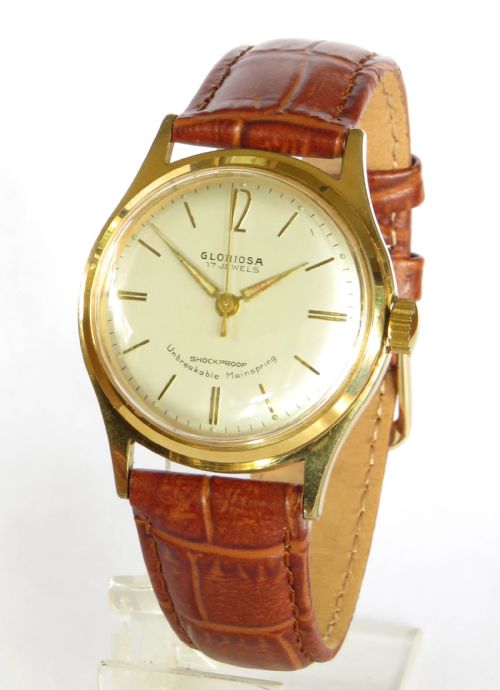
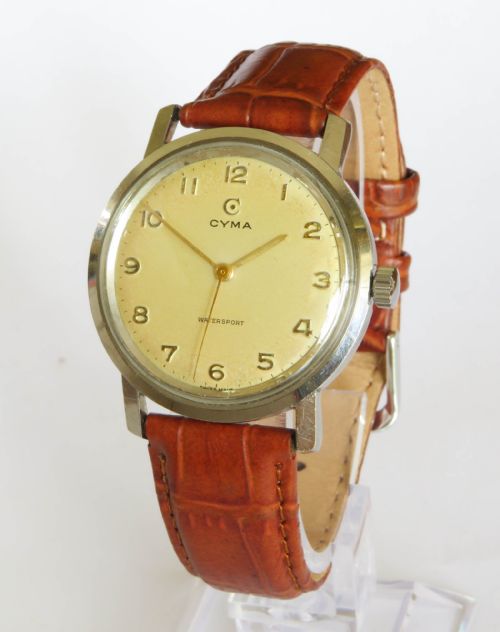
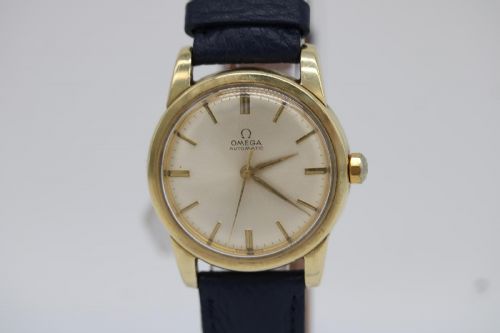
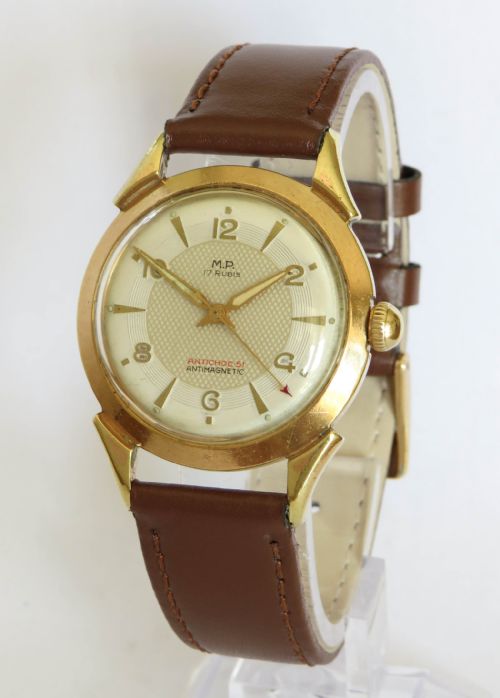
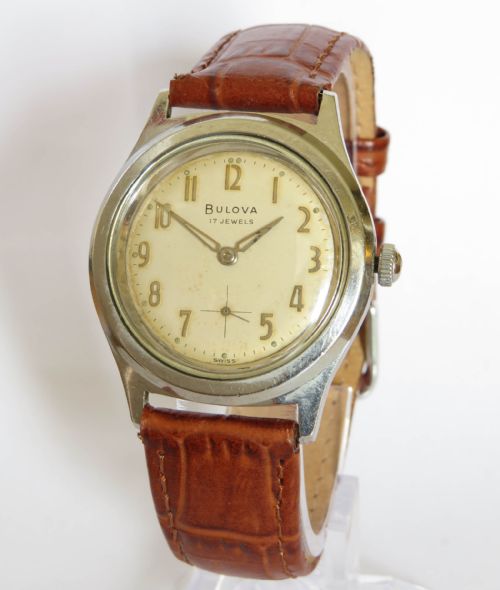
A vintage analogue wrist watch represents a portable timepiece driven by traditional mechanical movements rather than digital displays. These wristwatches span periods from the nineteenth century through the nineteen-fifties and nineteen-sixties, capturing decades of horological design. The selections here predominantly showcase gents' models from the mid-twentieth century, featuring forms shaped by mid-century modern and art deco aesthetic movements.
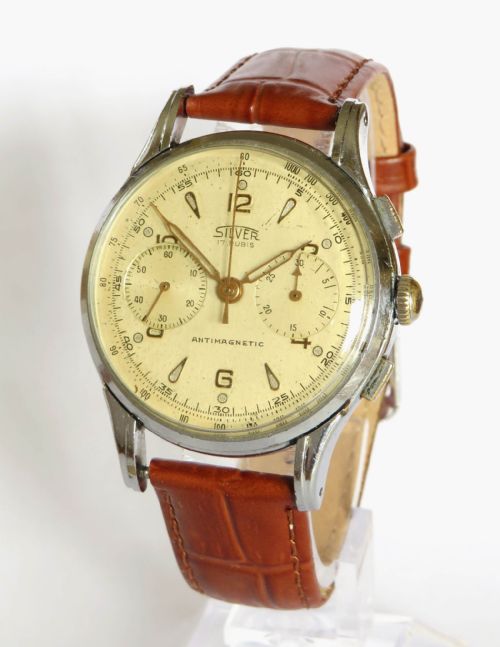
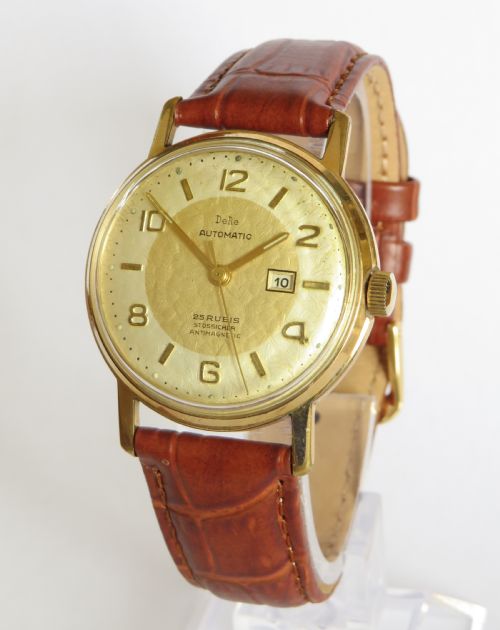
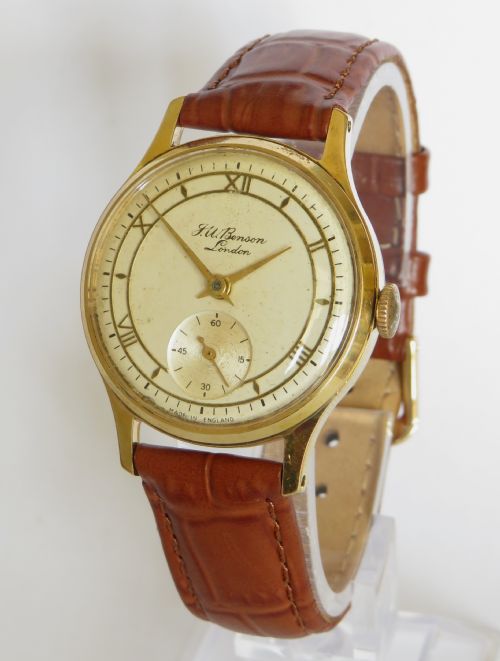
Most pieces on this page originate from Swiss workshops and British makers, displaying classic dial layouts with hands and hour markers. The designs range from robust chronographs and automatic daily wearers to slender manual wind dress pieces. Buyers encounter various case proportions, including larger jumbo formats alongside standard diameters.
These items offer tangible links to historical manufacturing, often retaining original textured dials, subsidiary seconds tracks, and date apertures. The forms reflect the shifting tastes of the period, moving from geometric art deco lines toward cleaner mid-century minimalism.
How they were made
Watchmakers constructed these timepieces using durable metals such as stainless steel, chrome, and gold plate for the outer cases, paired with crystal or acrylic glass to protect the dial. Movements relied on intricate arrays of brass gears, springs, and jewelled bearings to regulate time mechanically.
Strap construction typically utilised genuine leather, fastening the watch securely to the wrist while complementing the metallic tones of the case. Dial faces featured applied numerals or indices, often protected beneath clear glass or acrylic covers shaped to fit the bezel.
The listings span multiple decades, incorporating nineteenth-century examples alongside significant production from the nineteen-forties, nineteen-fifties, and nineteen-sixties.
What varies in quality
Quality in these timepieces rests upon the sophistication of the internal movement, such as specialised calibre designations and jewel counts that ensure reliable timekeeping. The choice of exterior materials also marks the tier of the watch, moving from standard chrome and gold plate to robust steel cases.
The degree of original preservation distinguishes examples, particularly the clarity of the dial, the crispness of case proportions, and the inclusion of original components like signed crowns or fitted boxes. Pieces featuring specialised complications such as chronographs or automatic winding mechanisms generally represent higher tiers of period production.
Cyma·Antoremi·Longines·Avia·Tissot·Gloriosa·Omega·Bulova·Ensign·Eterna·Prisma·Girard Perregaux·Lanco·Dogma Prima·Marvin·Felca·Technos Goldshield·Consul Dermaphile
The Vintage Analogue Wrist Watch Glossary
- Manual Wind
- A mechanical watch movement that requires the owner to turn the crown by hand to tension the mainspring.
- Automatic
- A self-winding mechanical movement that uses a weighted rotor driven by the natural motion of the wearer's arm.
- Chronograph
- A timepiece equipped with an independent sweep-second hand that functions as a stopwatch.
- Calibre
- The specific manufacturer's designation for a particular watch movement design and size.
- Acrylic Glass
- A lightweight, shatter-resistant transparent material utilised for crystal covers before sapphire crystal became standard.
Vintage Analogue Wrist Watch: Frequently Asked Questions
How do I wind a manual watch?
Rotate the crown clockwise between your thumb and forefinger until you feel gentle resistance. Stop turning immediately once the tension increases to avoid damaging the mainspring.
Perform this action at roughly the same time each day to maintain consistent timekeeping performance.
What does automatic mean?
An automatic watch winds itself using an internal weighted rotor that spins as your arm moves throughout the day. This movement transfers energy to the mainspring automatically.
Such watches generally do not require manual winding unless they have been left stationary for an extended period.
How are periods identified?
Periods are determined through a combination of case styling, typography on the dial, and movement serial numbers or calibre types. Design cues like art deco geometry or mid-century modern minimalism offer clear temporal clues.
Maker records and specific historical model introductions further narrow the decade of production.
Can I wear my watch daily?
Most vintage timepieces suit regular daily wear provided they receive standard care and periodic mechanical servicing. Owners should remember that older watches typically lack modern water resistance.
Store the watch safely when engaging in vigorous physical activities to protect the delicate internal mechanism.