

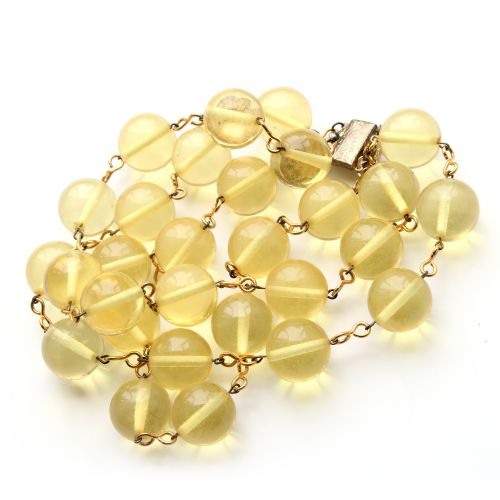


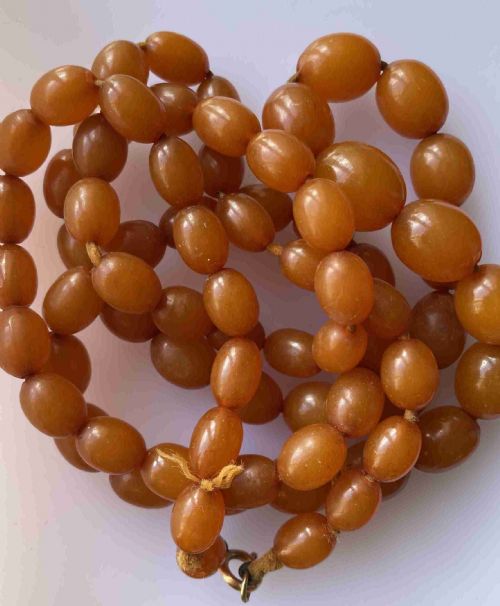
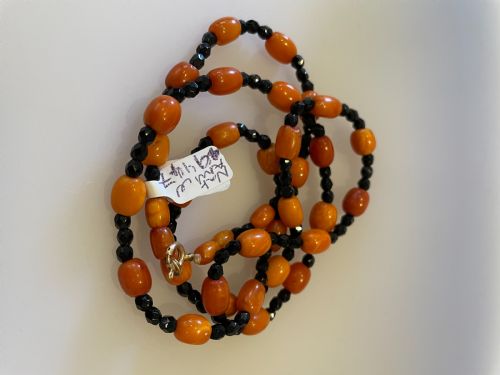


Vintage Amber Necklace
A vintage amber necklace brings warmth and history to the collarbone, holding fossilised tree resin that captures centuries past in rich honey and butterscotch tones.
Vintage Amber Necklace
A vintage amber necklace is a piece of jewellery fashioned from fossilised resin, shaped into beads, pendants, or raw nuggets. When you search for a vintage amber necklace, you encounter designs spanning the Edwardian era, the 1930s, and the 1950s, alongside pieces from the nineteenth century.
The most common examples on this page date from the 1930s, often featuring graduated butterscotch or egg yolk amber beads threaded securely. Pieces range from simple polished nugget arrangements to sophisticated sterling silver settings and coordinated jewellery sets.
Styles vary from natural Baltic folk designs and Art Deco geometric arrangements to Scandinavian modern creations and bohemian strands. Alongside genuine fossilised resin, related early plastics such as Bakelite, Lucite, and phenolic resin appear within these historic forms.
Quality factors in amber jewellery
Quality rests in the depth of colour, bead uniformity, and the integrity of the amber material itself. Rich butterscotch, egg yolk, and deep cognac hues command attention, while skilled bead-grading ensures a balanced, harmonious silhouette along the neckline.
The craftsmanship of the setting elevates the piece, seen in secure sterling silver mountings, robust clasps like traditional barrel fastenings, and durable threading. Synthetic substitutes differ fundamentally from genuine fossilised resin in weight, warmth, and composition.
Vintage Amber Necklace Retail Price Guide 2026
Typical asking prices for vintage amber necklace among the pieces listed under this phrase on Sellingantiques today, from the lower quarter to the upper quarter. They describe what is for sale here now, not the wider market.
Materials identified across the inventory include Baltic amber, sterling silver, Bakelite, Lucite, and 9ct gold.
Paris House London·David-Andersen
The Vintage Amber Necklace Glossary
- Baltic Amber
- Fossilised tree resin originating from the regions surrounding the Baltic Sea. It is known for its clarity and varied warm tones.
- Butterscotch Amber
- An opaque, pale yellow variety of amber highly prized by collectors for its creamy, rich coloration. It typically dates to the early twentieth century.
- Bakelite
- An early form of thermosetting plastic utilised in twentieth-century jewellery production. It often accompanies or mimics amber in period designs.
- Graduated Beads
- Beads that increase incrementally in size from the clasp towards the centre of the necklace. This technique ensures a balanced drape against the collarbone.
- Phenolic Resin
- A synthetic plastic material employed in vintage imitation amber and modernist jewellery pieces. It offers durability and uniform colouration.
Vintage Amber Necklace: Frequently Asked Questions
How do I date a vintage amber necklace?
Dating relies on examining the clasp style, bead shape, and overall manufacturing techniques employed in the piece. Barrel clasps and hand-carved graduated beads often point towards the 1930s.
Material composition also offers clues, as Edwardian and nineteenth-century pieces differ noticeably in stringing methods and mounting styles from mid-century modernist creations.
What is butterscotch amber?
Butterscotch amber is an opaque, pale yellow variety of fossilised resin that gained immense popularity during the early twentieth century. Its creamy, dense appearance results from microscopic air bubbles trapped within the resin.
This specific coloration is particularly sought after in graduated bead necklaces from the 1930s.
How should I care for my necklace?
Amber is a relatively soft organic material that requires gentle handling to preserve its polish and structural integrity. Store your necklace away from direct sunlight and harsh chemicals found in perfumes and cosmetics.
Clean the beads occasionally with a soft, damp cloth and polish the silver mountings separately to avoid scratching the resin surface.
How do I distinguish amber from Bakelite?
Genuine amber feels warm to the touch and carries a natural organic scent when gently rubbed, whereas early plastics like Bakelite feel harder and cooler initially. Amber also exhibits natural inclusions and irregular colour variations.
Testing methods such as density checks or professional appraisal confirm the exact material composition of the beads.