


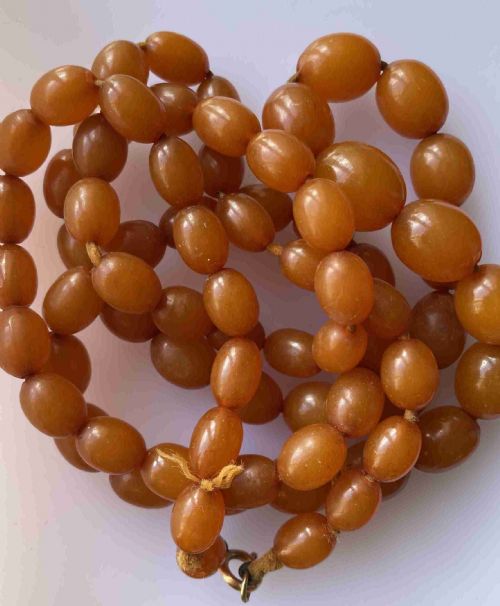


Baltic Amber Jewellery
Baltic amber jewellery brings together fossilised tree resin set in silver, gold, and metal across periods from the nineteenth century to the mid-twentieth.
Baltic Amber Jewellery
Baltic amber jewellery encompasses necklaces, bracelets, earrings, and matching sets created from natural fossilised resin. These pieces range from Edwardian designs and nineteenth-century butterscotch beads to 1930s Art Deco settings and 1950s Modernist drops.
The most common forms on this page are necklaces featuring graduated beads, egg yolk amber, or raw polish amber pieces. Alongside these, buyers find silver and sterling silver bracelets, drop earrings, and gold-mounted items spanning styles such as Bohemian, Art Nouveau, and Baltic Folk.
How baltic amber jewellery was made
Maker construction relies on natural amber, Baltic amber, and raw polish amber combined with sterling silver, silver, nine-carat gold, and thread. Beads are drilled and strung, whilst drop earrings and pendants utilise metal mounts to secure the fossilised resin.
Makers shaped the amber into equal round beads, graduated beads, or left the material in raw polished forms to highlight the varying natural colours. Metalwork components include silver marks and initials on bracelets, alongside gold stud settings for drops.
Tree resin captured ancient droplets whilst still soft, trapping prehistoric moments inside beads you can wear around your neck today.
What varies in quality in baltic amber jewellery
Quality differences emerge in the selection and grading of the amber itself, distinguishing butterscotch and egg yolk tones from mixed natural colours. The regularity of bead shaping, such as equal ten-millimetre rounds versus varied organic pieces, also marks the grade of a necklace.
The accompanying metalwork separates pieces further, contrasting simple thread stringing with stamped sterling silver settings, silver marks with initials, and nine-carat gold mounts. The integration of style, whether Art Deco, Edwardian, or Modernist, dictates the refinement of the finished item.
The Baltic Amber Jewellery Glossary
- Amber
- Fossilised tree resin prized for its warm organic tones and inclusions. It forms the primary material for beads, pendants, and settings.
- Baltic Amber
- Amber originating specifically from the Baltic region, historically noted for its high succinic acid content. This material appears in nineteenth-century and twentieth-century items.
- Butterscotch
- An opaque, pale yellow to yellow-brown shade of amber. This colour is particularly sought after in vintage bead necklaces.
- Graduated Beads
- Beads arranged by size in a single strand, typically largest at the centre and tapering towards the clasp. This method requires careful sorting of the natural amber.
Baltic Amber Jewellery: Frequently Asked Questions
What is egg yolk amber?
Egg yolk amber refers to an opaque, rich yellow variety of fossilised tree resin. It gained popularity during the 1930s.
This specific coloration occurs naturally and is frequently found in graduated bead necklaces from the period.
How do I care for amber jewellery?
Amber is a relatively soft organic material that requires gentle handling. Clean pieces with a soft, damp cloth without harsh chemicals.
Store amber items separately from harder metals and gemstones to prevent scratching the surface of the resin.
Are all amber necklaces strung on thread?
Many traditional bead necklaces utilise thread to hold the amber pieces together. Some designs incorporate knotted stringing between beads for security.
Other items combine amber with metal chains, sterling silver links, or gold mountings depending on the specific period and style.
How do I identify Edwardian amber?
Edwardian amber pieces often feature natural, unpolished forms or simpler bead arrangements characteristic of the early twentieth century. These items typically predate the geometric styles of the 1930s.
Examining the overall mounting and metalwork helps distinguish Edwardian examples from later mid-century Modernist designs.