




Butterscotch Amber Necklace
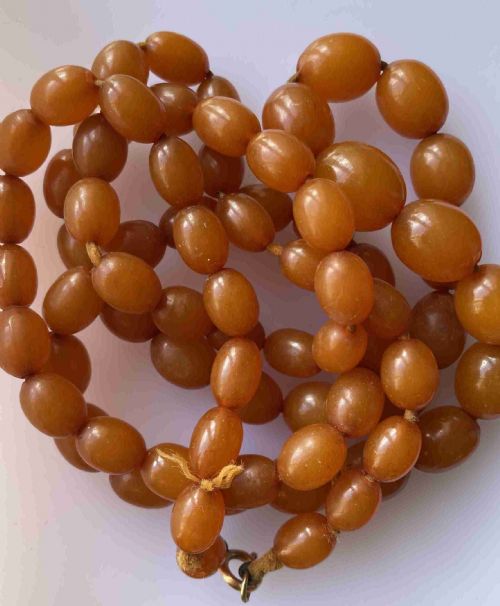
A butterscotch amber necklace brings a rich, warm tone to the neckline, drawing on natural resins and early plastics from the nineteenth century to the mid-twentieth century.
Butterscotch Amber Necklace
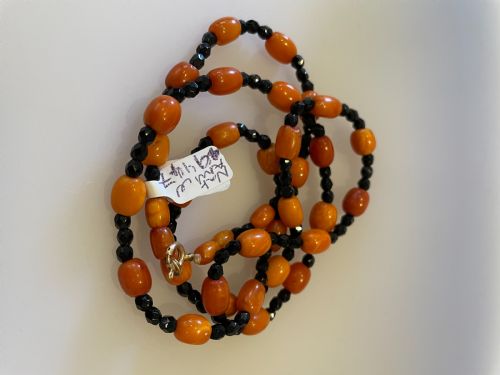
A butterscotch amber necklace encompasses pieces shaped from fossilised tree resin as well as early synthetics that mimic its opaque, yellow-orange depth. You will encounter these neck ornaments in several distinct configurations, ranging from simple single strands to matching jewellery sets.
The pieces on this page span from the nineteenth century through the Edwardian era to the 1930s and 1950s. Art Deco, bohemian, and Baltic folk styles appear frequently among the listings, reflecting the aesthetic preferences of their respective periods.
Graduated bead strands are most common, featuring larger stones at the centre that taper towards the clasp. You will also find raw polish amber pieces and designs incorporating alternating shapes alongside standard rounded beads.
Distinguishing quality in older pieces
The visual appeal of a butterscotch amber necklace relies on the depth of colour, consistency of the opaque tone, and the symmetry of the bead graduation. Superior examples display a rich egg yolk or butterscotch opacity throughout each stone without distracting inclusions.
Construction standards differ between hand-strung period pieces and mass-produced items, particularly in the security of the thread and the craftsmanship of the clasps. Uniformity in bead size and careful polishing elevate the overall presence of the jewellery.
Some nineteenth-century beads were carved so generously they look ready to tumble straight out of their Edwardian settings.
The Butterscotch Amber Necklace Glossary
- Baltic Amber
- Fossilised tree resin originating from the Baltic region. It forms the primary material for many traditional beads.
- Bakelite
- An early form of synthetic phenol formaldehyde resin. This material appears in twentieth-century pieces designed to imitate genuine amber.
- Graduated Beads
- Beads arranged by size along a strand. The largest elements sit at the centre and decrease towards the fastening.
- Egg Yolk Amber
- A descriptive term for opaque amber with a dense, yellow-orange coloration. It closely matches the appearance of a cracked egg yolk.
Butterscotch Amber Necklace: Frequently Asked Questions
How do I date a butterscotch amber necklace?
Dating relies on stylistic clues, manufacturing techniques, and material types present in the piece. Edwardian examples often feature finer settings, while 1930s items frequently utilise Bakelite or distinct Art Deco geometries.
Examining the stringing material, clasp style, and bead shape helps narrow down the decade of production. Comparing the piece against known examples from the nineteenth century to the 1950s provides further context.
What is the difference between amber and Bakelite?
Amber is a natural fossilised tree resin that contains organic inclusions and feels warm to the touch. Bakelite is an early synthetic plastic created in the early twentieth century.
While both can exhibit a similar butterscotch hue, Bakelite displays uniform internal patterns and distinct chemical properties. Natural amber reacts differently to heat and light compared to phenolic resins.
How should I store my amber necklace?
Store the necklace in a soft pouch away from direct sunlight and extreme temperature fluctuations. Amber is a relatively soft organic material that can scratch easily if kept alongside harder gems.
Keep the piece separate from other jewellery to prevent friction against metal clasps or sharp edges. Proper storage preserves the surface polish and the integrity of the stringing thread.
Can I wear my amber necklace every day?
Frequent wear is possible with proper care, though amber requires gentle handling due to its natural composition. Avoid exposing the necklace to perfumes, hairsprays, or harsh household chemicals that can dull the surface.
Regularly check the thread or cord for signs of wear, especially near the clasp, to prevent accidental breakage. Removing the piece before swimming or sleeping ensures it remains secure.