


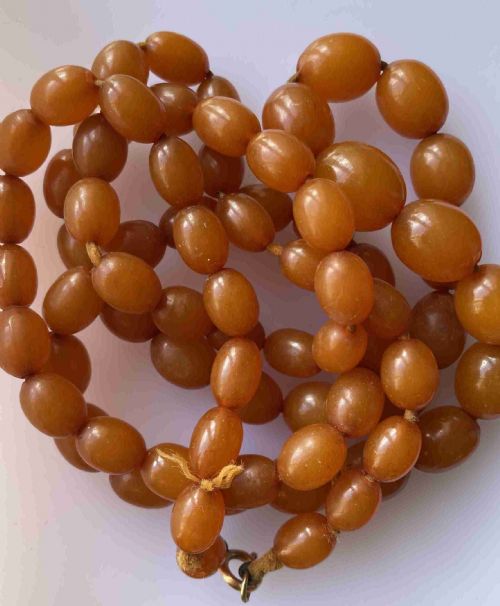


Vintage Baltic Amber
Vintage baltic amber pieces bring together warm fossilised tree resin and silver, sterling silver, 9ct gold, or metal settings.
Vintage Baltic Amber
When you search for vintage baltic amber, you are looking at items shaped from fossilised tree resin originating around the Baltic region, fashioned into necklaces, bracelets, earrings, and jewellery sets. These pieces range from Edwardian and nineteenth century examples to items made through the 1930s and 1950s.
The version you are most likely to meet on this page is the necklace, particularly graduated bead forms and butterscotch or egg yolk coloured varieties set on thread or chain. These objects span styles such as Art Deco, Art Nouveau, Bohemian, modernist, and traditional designs.
Materials and construction
The pieces on this page are constructed using natural baltic amber alongside silver, sterling silver, or 9ct gold, often threaded or mounted into drop earrings, bracelets, and pendants. Makers worked with raw polish amber, equal round beads, and varied colour pieces.
Techniques range from smooth bead graduation to raw stone settings, paired with metalwork that includes silver marks and initials on bracelets and necklaces.
Listings feature items from the Edwardian period, the nineteenth century, 1930, and 1950, utilising amber, sterling silver, 9ct gold, and thread.
Assessing quality
Quality in these items is visible in the uniformity or intentional grading of the amber beads, such as equal ten millimetre round beads or well proportioned graduated strands. The clarity and richness of butterscotch and egg yolk tones also distinguish finer examples.
The security of the thread and the quality of the metal mountings, whether sterling silver or 9ct gold, separate standard production from more substantial jewellery sets and drop earrings.
The Vintage Baltic Amber Glossary
- Amber
- Fossilised tree resin valued for its warm organic colours and lightness when worn as jewellery. It forms the primary material for the necklaces and earrings listed here.
- Butterscotch amber
- An opaque, pale yellow to orange variety of fossilised resin. This specific tone appears frequently in nineteenth century and 1930s bead necklaces.
- Graduated beads
- Beads of increasing size arranged systematically along a necklace strand. This method showcases larger stones centrally with smaller elements near the clasp.
- Sterling silver
- An alloy of silver containing parts of other metals for durability. It frequently provides the chain, setting, or clasp for amber pendants and earrings.
Vintage Baltic Amber: Frequently Asked Questions
What is egg yolk amber?
Egg yolk amber refers to an opaque, rich yellow form of fossilised resin found in older jewellery pieces. It is particularly associated with 1930s graduated bead necklaces.
This specific coloration comes from microscopic bubbles trapped within the resin during the fossilisation process. It remains one of the most sought after hues for collectors.
How do I care for amber jewellery?
Amber is a relatively soft organic material that requires gentle handling to prevent scratching. Clean it only with a soft, damp cloth and avoid harsh chemicals.
Store amber pieces separately from harder gemstones and metals to protect the surface. Keeping them away from direct heat and perfumes preserves the polish.
Are these pieces made from real amber?
The items listed include natural baltic amber and raw polish amber formations. These materials originate from ancient forests around the Baltic region.
Pieces range from Edwardian designs to mid twentieth century items. They utilise genuine fossilised resin rather than synthetic substitutes.
What styles are common in these pieces?
The selection includes Art Deco, Art Nouveau, Bohemian, and modernist designs. These styles reflect the aesthetic preferences of the Edwardian era, the 1930s, and the 1950s.
Settings vary from simple threaded bead strands to detailed sterling silver and 9ct gold metalwork. Each style highlights the natural variation of the amber stones.