





Amber Bead Necklace
An amber bead necklace carries centuries of warm resin history, offering tactile organic beauty that makes a striking addition to any collection.
Amber Bead Necklace
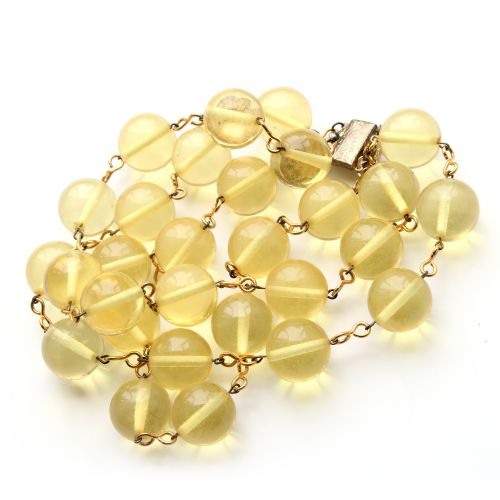
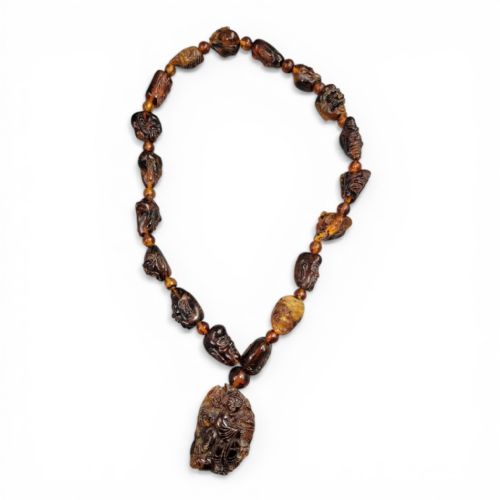
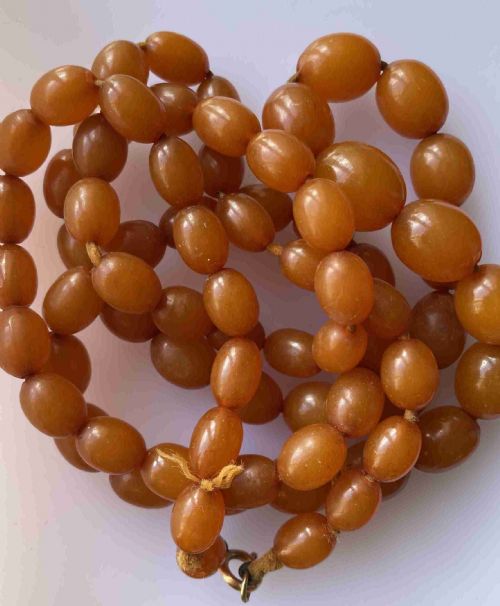
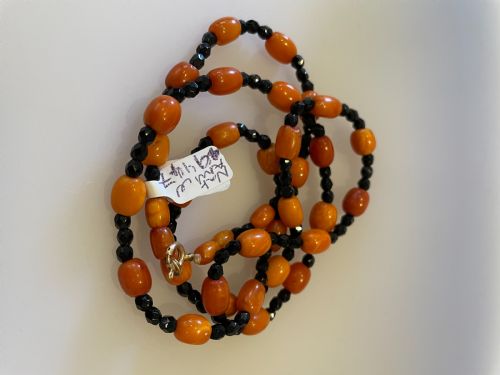
An amber bead necklace brings together organic fossilised tree resin fashioned into wearable adornments across multiple centuries and aesthetic movements. When browsing this selection, you encounter pieces spanning the Edwardian era, the nineteen-thirties, and mid-century modern design. These vary from natural Baltic amber variants to early plastics styled to mimic the fossilised resin.
Evaluating Quality
Quality rests upon the natural authenticity of the material, the uniformity and skill of the bead grading, and the integrity of the original clasps. Pieces featuring genuine Baltic amber command greater interest than synthetic resin alternatives, though high-grade early plastics hold distinct collector appeal.
The precision of graduation across a strand and the overall weight significantly influence value. Master lapidaries ensured smooth transitions in bead size from the centre to the clasp, whereas lesser items display irregular shaping and mismatched drilling.
Some antique amber beads retain microscopic prehistoric insects trapped inside the resin millions of years before anyone strung them into a necklace.
Paris House London
The Amber Bead Necklace Glossary
- Baltic Amber
- Fossilised tree resin originating from the region around the Baltic Sea. It often contains natural inclusions and warm yellow or orange hues.
- Bakelite
- An early form of synthetic phenol formaldehyde resin developed in the early twentieth century. It frequently appears in vintage jewellery mimicking natural amber.
- Graduated Beads
- Beads that systematically decrease in size from the centre front towards the fastening clasp at the back. This construction technique sits comfortably against the neckline.
- Egg Yolk Amber
- A dense, opaque variety of amber displaying rich yellow tones reminiscent of an egg yolk. This term describes a specific colour profile highly sought after by collectors.
- Luohan
- An enlightened follower of Buddha often depicted in traditional Chinese carving. Carved luohan heads occasionally form the focal point of antique Asian amber pieces.
Amber Bead Necklace: Frequently Asked Questions
How do I care for an amber bead necklace?
Amber is a relatively soft organic material that requires gentle handling to preserve its surface polish. Clean the beads using a soft damp cloth without harsh chemical detergents.
Store your necklace away from direct sunlight and extreme heat sources to prevent drying or cracking. Keep it separated from harder jewellery items in your collection to avoid scratching the surface.
What is butterscotch amber?
Butterscotch amber refers to an opaque, milky variety of fossilised resin with creamy yellow and golden brown tones. This coloration results from microscopic air bubbles trapped within the resin during the fossilisation process.
Pieces featuring this specific tone gained immense popularity during the Edwardian period and the nineteen-thirties. The distinctive opaque finish sets it apart from transparent yellow or red amber variants.
How can I distinguish real amber from Bakelite?
Genuine amber is fossilised tree resin that feels warm to the touch and floats in a strong saltwater solution. It also produces a characteristic aromatic pine scent when gently rubbed or tested with a heated point.
Bakelite is a synthetic phenolic resin that feels heavier and cooler against the skin initially. Testing methods for synthetic materials require professional appraisal to avoid damaging vintage items.
What does graduated mean?
Graduation describes a manufacturing technique where individual beads systematically decrease in diameter from the centre point towards the clasp. This traditional layout ensures the necklace drapes naturally around the collarbone.
Master lapidaries carefully matched the colour and clarity of adjacent beads during the grading process. Finding a uniform graduation adds both aesthetic balance and historical charm to antique pieces.