
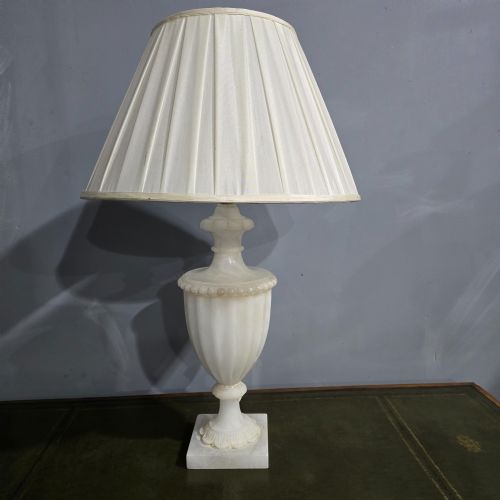


Vintage Alabaster Lamp
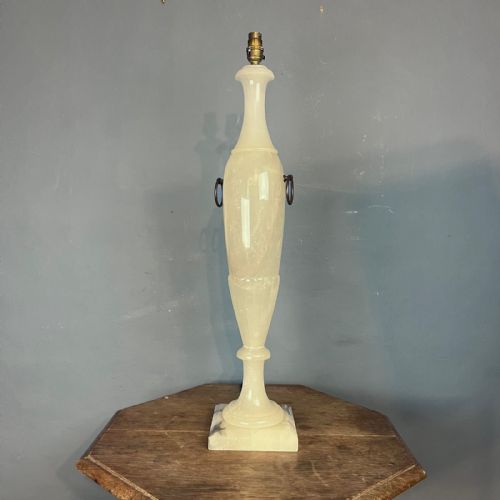
These vintage alabaster lamp examples bring a soft, translucent glow to a room, valued for their natural veining and sculptural forms.
Vintage Alabaster Lamp
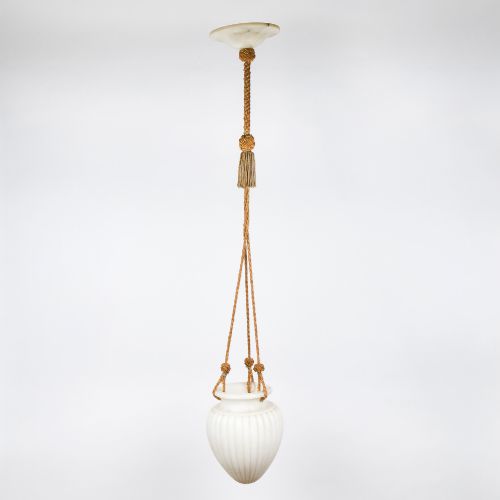
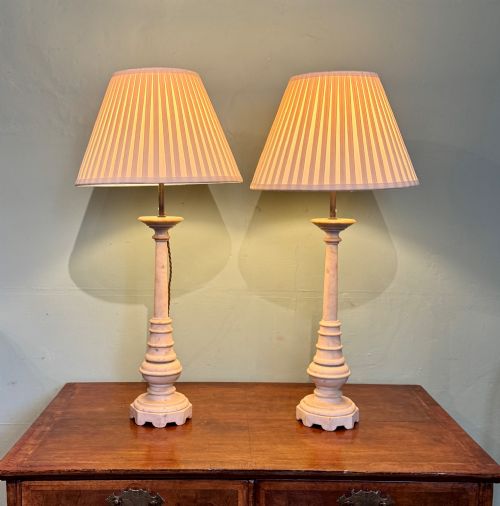
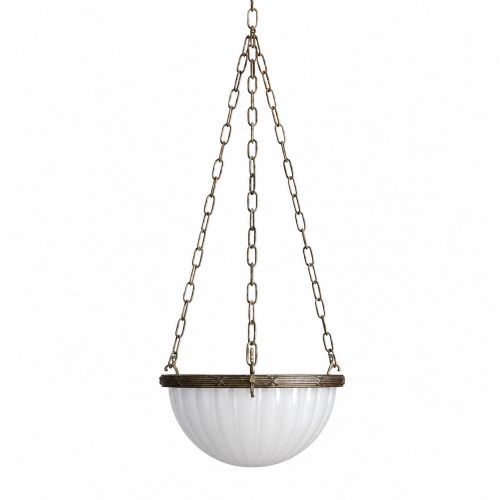
A vintage alabaster lamp brings a soft, diffused glow to an interior through its naturally translucent stone. When searching for a vintage alabaster lamp, buyers encounter table lamps, pendant lights, and ceiling lights spanning periods from the Victorian era through the Art Deco movement.
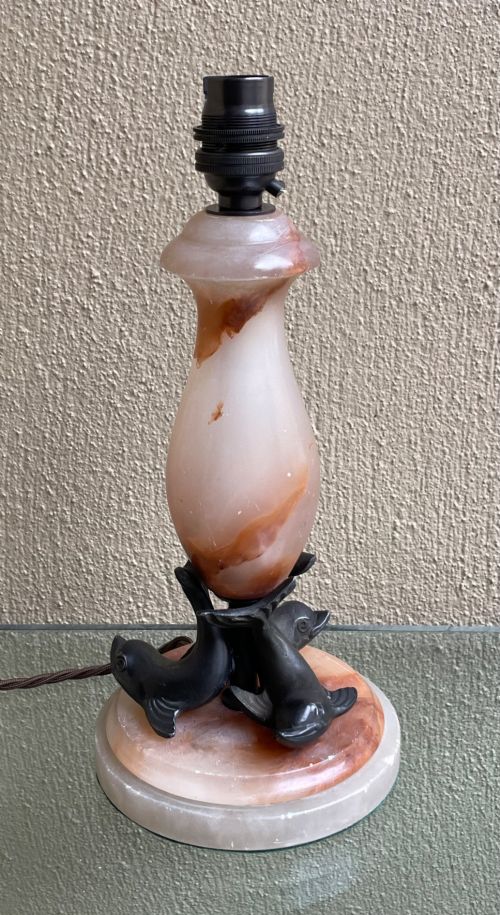
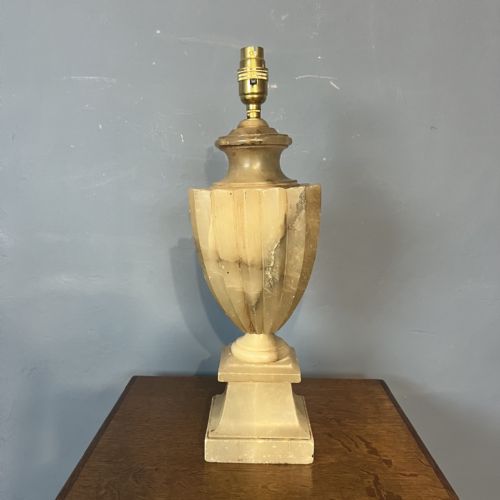
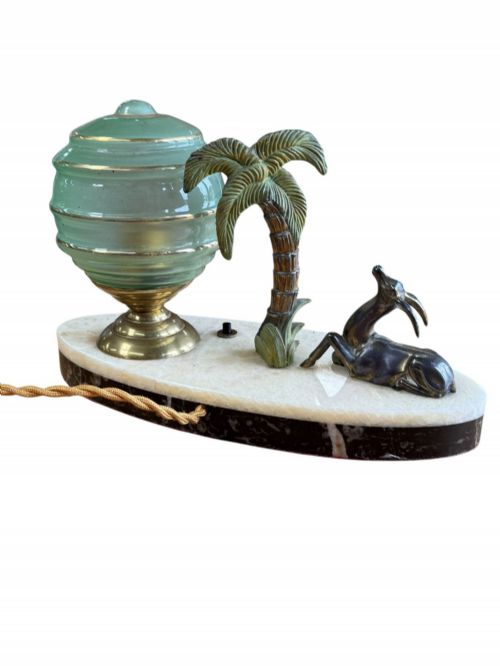
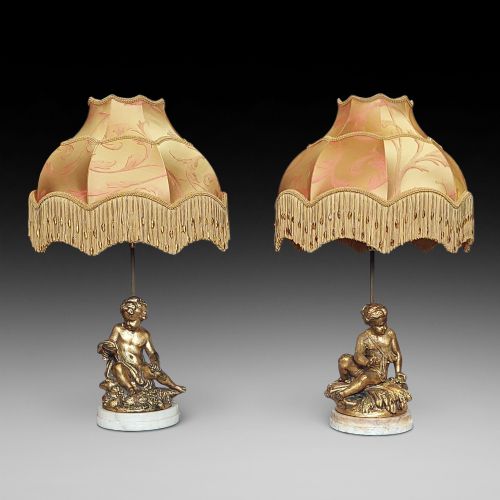
The selection ranges from simple carved columns and campana urn bases to figural pieces incorporating metal mounts, glass fruit, and cherubs. Table lamps dominate the offerings, frequently appearing as matched pairs alongside single large feature lights from the early twentieth century.
Origins stretch across British, Italian, and Scandinavian workshops, capturing aesthetic shifts from Classical Revival to streamlined modernism. The material's natural variation ensures that no two pieces share the exact same pattern of veining or depth of tone.
Materials and construction methods
Carvers shaped solid blocks of alabaster and white onyx on lathes or by hand, exploiting the stone's softness to achieve translucent walls that glow when lit from within. Metal components in brass, gilt metal, and silver plate provide structural support and decorative mounts.
Many designs incorporate contrasting materials such as marble bases, fabric shades, and glass elements like fruit clusters or crystal bowls. Wiring runs internally through drilled channels, often paired with brass fittings characteristic of their specific decade of production.
Distinctions in quality and execution
Quality rests primarily in the depth and clarity of the stone carving, where finer pieces display subtle, even veining and precise architectural or figural details. Heavy metal mounts, cast brass fittings, and integrated secondary materials like crystal or gilt elevate the execution.
Proportion and scale dictate the visual presence of a piece, with larger carved urns and double-figural compositions demanding greater technical skill from the maker. The integrity of the original mounts and the subtlety of the surface polish distinguish masterwork production from standard commercial output.
The Vintage Alabaster Lamp Glossary
- Alabaster
- A fine-grained, translucent stone prized for lighting because it transmits a warm glow when illuminated. It requires gentle cleaning to protect its porous surface.
- Campana urn
- A bell-shaped vessel form frequently utilised as the central body for classical table lamps. This classical silhouette originates from ancient Roman bronze and marble vases.
- Onyx
- A banded variety of chalcedony or calcite often utilised interchangeably with alabaster in early twentieth-century lighting bases. It offers distinct linear striations and a polished finish.
- Gilt metal
- Base metal treated with a thin layer of gold paint or leaf to imitate solid gold mounts. It provides decorative contrast against white stone.
- Neoclassical revival
- A stylistic movement drawing heavily on the art and architecture of classical Greece and Rome. Pieces in this style feature urns, columns, and symmetrical proportions.
Vintage Alabaster Lamp: Frequently Asked Questions
Are these lamps heavy?
These pieces possess substantial weight due to the density of solid stone and metal components. Table lamps require sturdy furniture surfaces that can support their downward load.
Pendant and ceiling lights need reinforced mounting points in the ceiling structure to secure their hanging weight safely.
How do I date an alabaster lamp?
Examine the wiring style, plug type, and the construction of the metal mounts and switches. Edwardian and Victorian examples tend to feature heavy brass components and classical motifs.
Art Deco pieces display geometric lines, streamlined urns, or figural subjects like the iconic lady lamps from the nineteen twenties and thirties. Maker marks or stamps on the metal base also provide clues.
Can I replace the shade?
Replacing a shade depends on the original design, as many traditional alabaster lamps utilise carved stone bowls or globes as the primary diffuser rather than a fabric shade. For designs that incorporate fabric or glass shades, ensure the fitter size matches the original brass gallery.
Consult a professional restorer to maintain the balance and electrical safety of period fittings when making alterations.