



Carved Stone Table Lamp
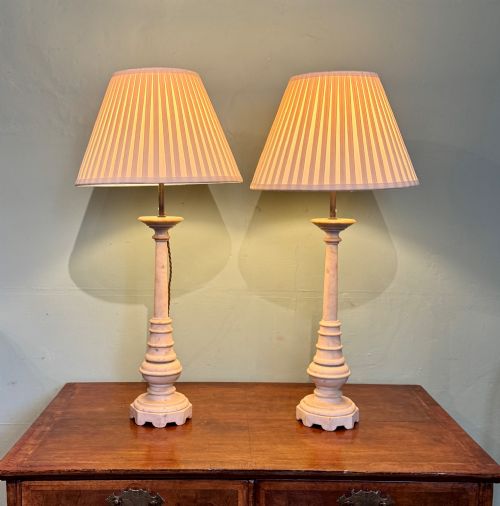
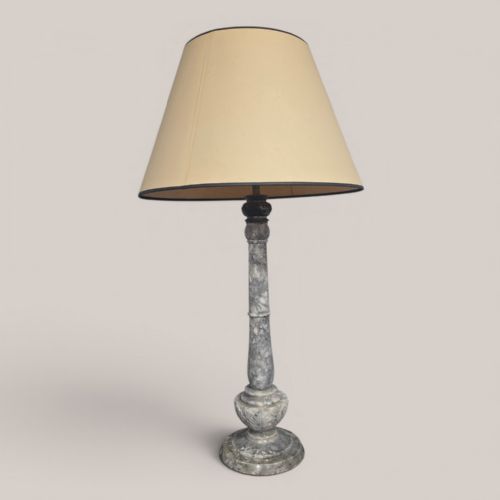
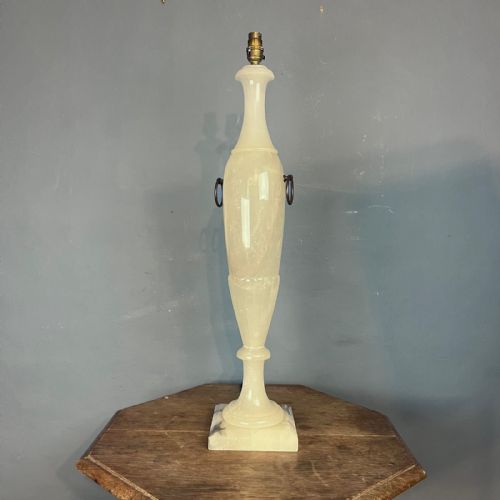
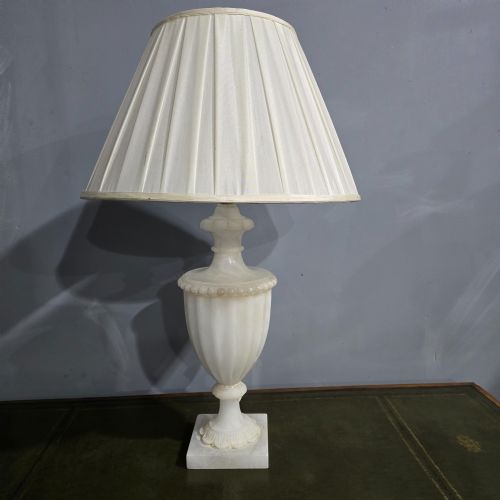
These carved stone table lamp pieces bring weight and classical presence to a room through solid alabaster, marble, and onyx.
Carved Stone Table Lamp
A carved stone table lamp brings heavy minerals and classical forms into domestic lighting, relying on the natural grain of alabaster, marble, and onyx. These pieces date from the Victorian, Edwardian, and Art Deco eras, showing influences from Neoclassical and Aesthetic Movement styles.
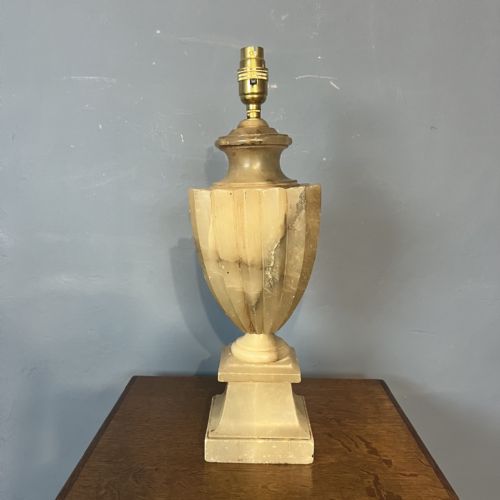
The most common examples on this page are single and paired alabaster or marble columns and urns from the early twentieth century. Many originate from Italy or France, often incorporating brass or patinated metal fittings alongside fabric shades.
Materials and construction methods
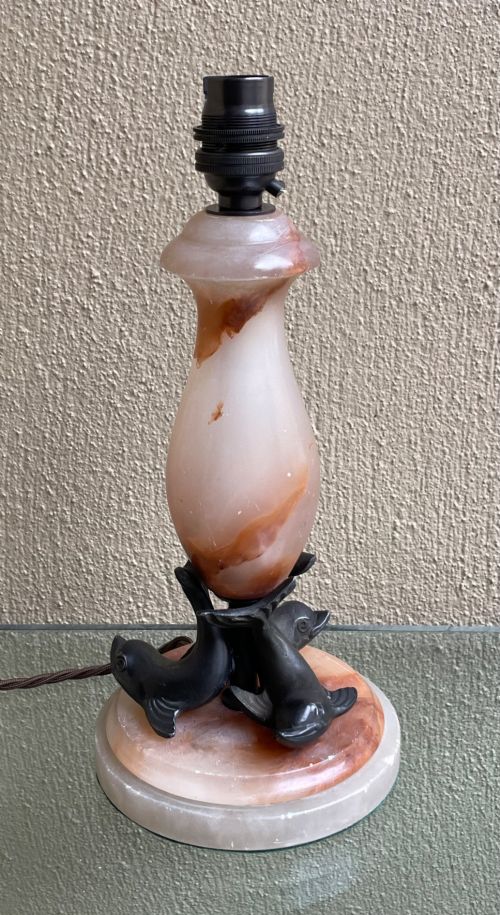
Makers shaped dense minerals like alabaster, white marble, and onyx on lathes or carved them by hand to create urns, columns, and cassolettes. These stone bodies are frequently combined with brass, metal, or patinated metal mounts to secure the electrical components and shade supports.
The natural translucency of alabaster allows light to diffuse softly through the stone itself when illuminated. Heavier marble and fossil stone variations rely entirely on exterior fabric shades to direct light downward onto surfaces.
An eighteenth-century French perfume jar finds a second career lighting a Victorian writing desk.
Distinguishing quality in stone lighting
Quality rests in the purity of the mineral block and the crispness of the hand-carved details, distinguishing solid alabaster and marble from composite materials. Superior examples feature well-balanced proportions and harmonious natural veining across both halves of a matched pair.
The refinement of the metal mounts, whether brass or patinated bronze, indicates the standard of the workshop. Integrated design where the stone body and metal hardware complement each other marks out the finer pieces.
The Carved Stone Table Lamp Glossary
- Alabaster
- A fine-grained, translucent stone frequently used for classical lighting because it diffuses light warmly.
- Cassolette
- A decorative vessel shaped like a vase or urn, often adapted from French designs to form lamp bases.
- Onyx
- A banded variety of chalcedony prized for its striking layered patterns and polished surface finish.
- Neoclassical
- A revival style drawing heavily on classical Greek and Roman architecture and decorative motifs.
- Aesthetic Movement
- A late nineteenth-century design approach emphasising visual beauty above narrative or moral content.
Carved Stone Table Lamp: Frequently Asked Questions
Are these lamps heavy to place?
Solid marble, onyx, and alabaster lamp bodies possess substantial physical weight for their size.
Ensure your table or occasional furniture can support the load safely without wobbling.
Why do some stones glow lit up?
Alabaster possesses a natural translucency that allows internal light bulbs to illuminate the stone grain.
Opaque marbles and heavy fossil stones block light entirely, casting illumination strictly through the shade.
How do I date a stone lamp?
Examine the style of the metal mounts, wiring conduits, and the overall aesthetic movement or period influence.
Early twentieth-century pieces often reflect Art Deco or Edwardian tastes, while nineteenth-century items favour stricter classical revivals.