
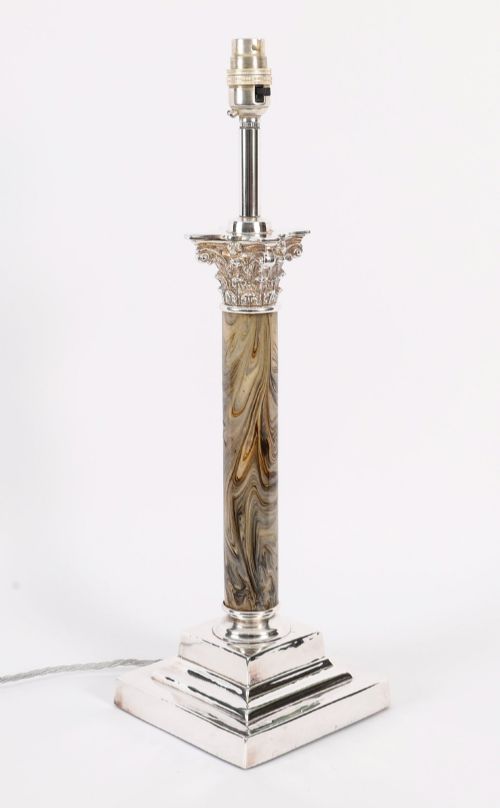
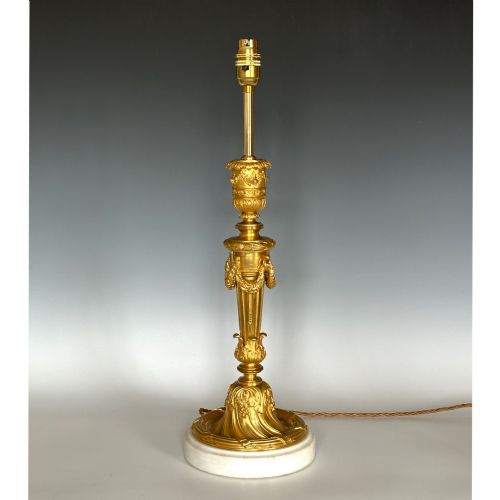
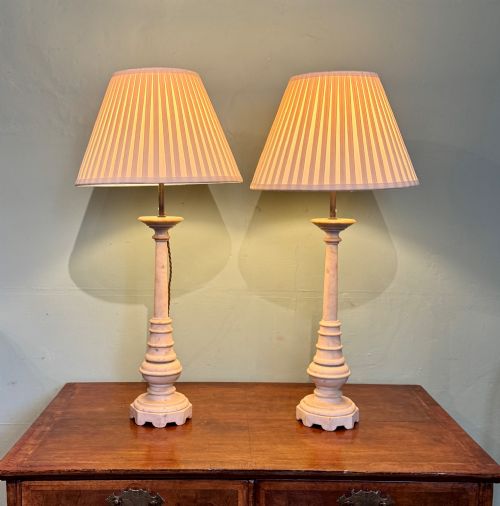
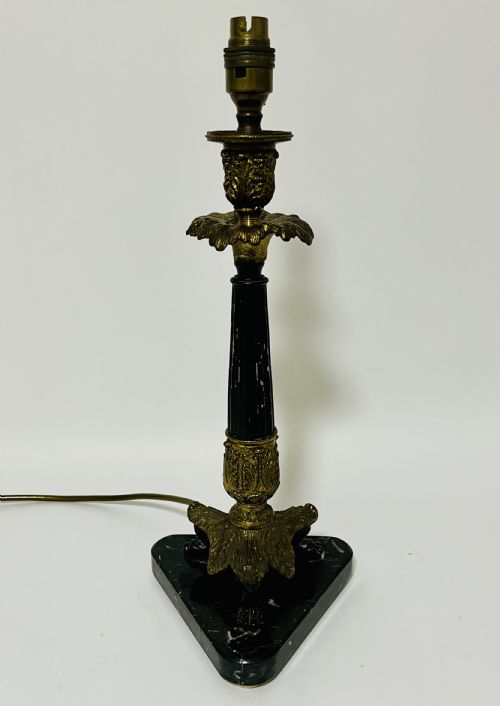
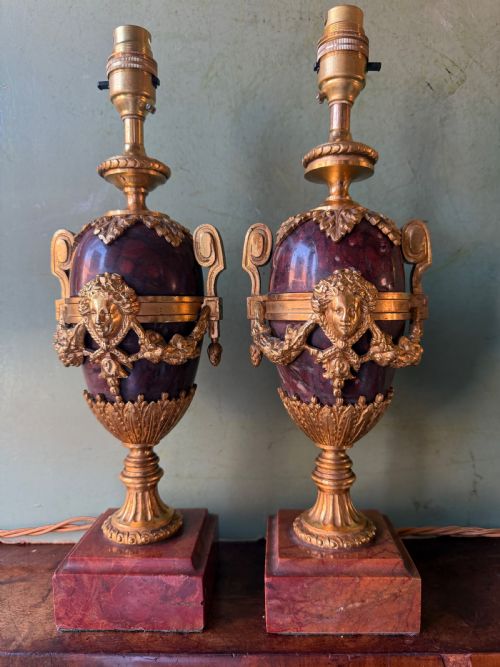
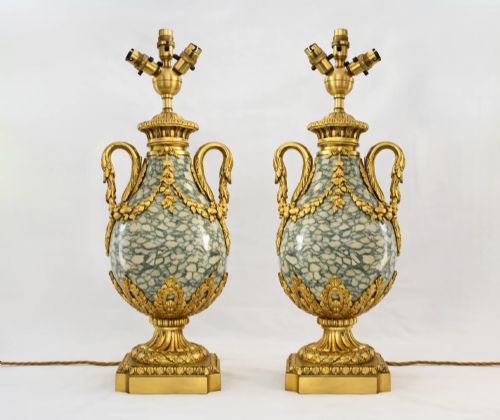


Neoclassical Marble Table Lamp
These neoclassical marble table lamps combine classical stone pillars and metal mounts to illuminate interiors with architectural poise.
Neoclassical Marble Table Lamp
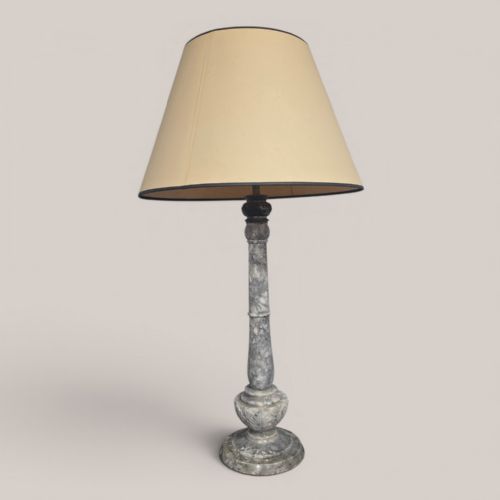
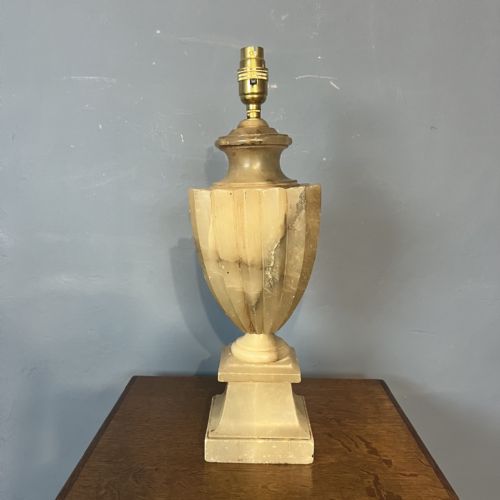
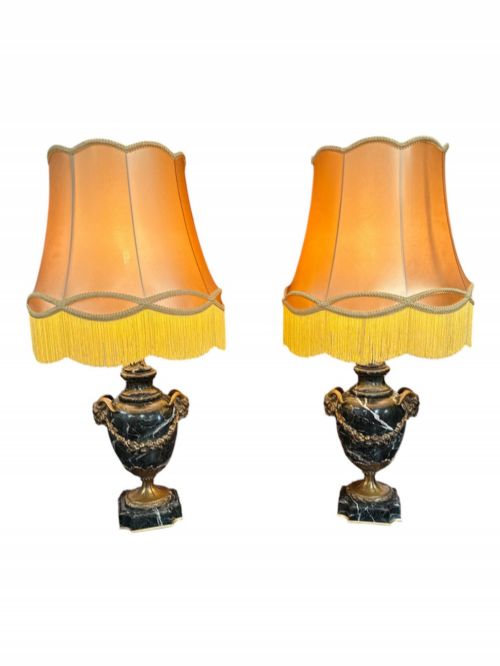
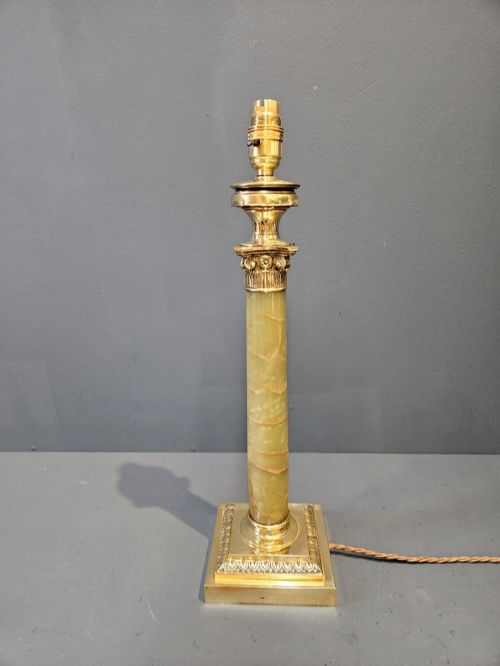
A neoclassical marble table lamp brings classical architectural forms into interior spaces through column structures, urn bodies, and cassolettes adapted for lighting. When you search for a neoclassical marble table lamp, you encounter pieces designed in styles ranging from French Empire and Louis XVI to Neoclassical Revival, predominantly originating from the nineteenth and early twentieth centuries.
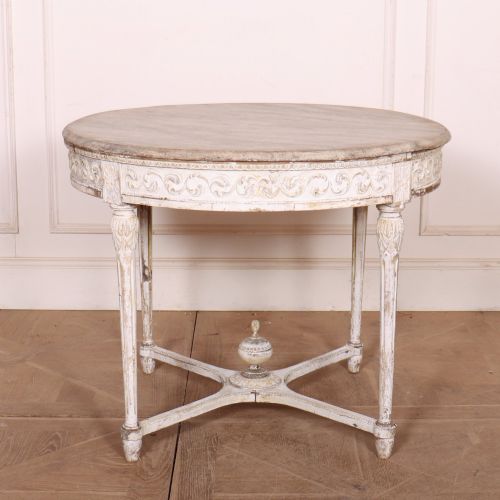
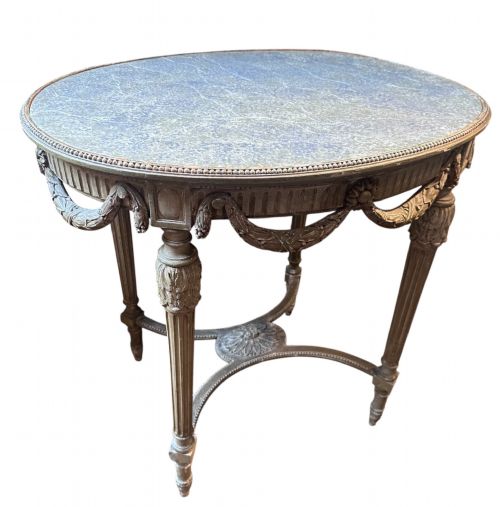
The selections on this page span table lamps alongside related occasional, side, and centre tables that share the same material vocabulary. White marble, rouge marble, alabaster, and onyx provide the stone foundations, paired with metal components.
Makers and manufacturers of these pieces drew upon historical vocabularies, producing lamps that echo ancient columns and amphorae. These objects serve as functional light sources while retaining the decorative presence of sculptural stone.
Materials and construction
Makers constructed these lamps from natural stones including white and rouge marble, translucent alabaster, and banded onyx, shaped into turned columns, urns, or cassolettes. These stone bodies are combined with cast metals such as brass, gilt bronze, and ormolu mounts, which secure the stone components and add decorative detail.
Fabric shades complete the assemblies, while older examples utilise metal and gilt accents to join the stone bases to the electrical or original lighting fittings. The pairing of polished stone with chased metalwork relies on mechanical fixings concealed within the central columns or urn bodies.
Listings feature materials such as alabaster, onyx, and rouge marble alongside cast brass and ormolu mounts.
Quality and execution
Quality in these lamps rests upon the selection and turning of the stone, where consistent mineral veining and smooth polishing distinguish superior examples from plain or heavily flawed material. The weight and crispness of the cast ormolu, gilt bronze, and brass mounts further separate standard production from exceptional work.
The refinement of the casting and the precision of the joinery between stone and metal determine the overall harmony of the object. Heavier mountings, finely chased botanical or classical motifs, and unblemished alabaster or marble indicate higher craftsmanship during the manufacturing process.
The Neoclassical Marble Table Lamp Glossary
- Cassolette
- A decorative vessel shaped like a vase or urn, often adapted from incense burners to form lamp bodies with removable or reversible lids.
- Ormolu
- Finely ground high-carat gold applied to a bronze base using a mercury-gilding technique, producing a rich metallic surface common in French mounts.
- Alabaster
- A fine-grained, translucent stone softer than marble, used for lamp bodies that diffuse light through their crystalline structure.
- Gueridon
- A small round table on a central pillar or three legs, often sharing the marble tops and gilt mounts found on contemporaneous table lamps.
- Empire
- A style originating in nineteenth-century France characterised by military motifs, classical columns, and heavy metal mounts.
Neoclassical Marble Table Lamp: Frequently Asked Questions
What periods do these lamps come from?
The pieces span the nineteenth century through the early decades of the twentieth century, including Victorian, Edwardian, and interwar production periods.
Design influences draw heavily from earlier eighteenth-century French Louis XVI styles, as well as nineteenth-century Empire revivals.
How do alabaster and marble differ?
Marble is a hard, crystalline limestone capable of taking a high polish, whereas alabaster is a softer, gypsum-based stone with a translucent quality.
Lamps made from alabaster often allow light to pass through the stone body itself, creating a softer glow than solid marble.
Were these originally made as lamps?
Many pieces began life as decorative objects such as cassolettes, urns, or architectural columns before being converted for electrical use.
Later adaptations frequently occurred during the twentieth century while retaining the original stone and metal bases.
How do you identify Empire style?
Empire style pieces incorporate distinct classical motifs including paw feet, rams' heads, and military symbols cast in bronze or brass.
The overall silhouette emphasises symmetry, architectural austerity, and rich contrast between polished stone and gilt metal mounts.