



Marble Art Deco Lamp
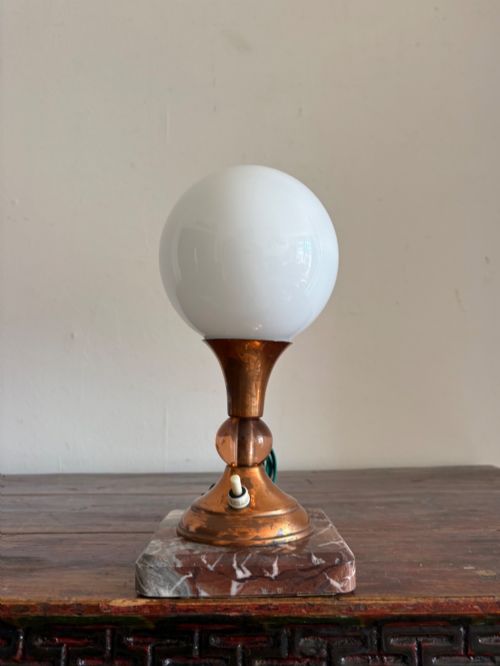
A marble art deco lamp brings heavy stone bases and sculptural figures together, offering the quintessential lighting of the interwar years.
Marble Art Deco Lamp
A marble art deco lamp combines dense natural stone with metal figures, glass shades, and practical lighting formats suited for interwar interiors. When searching for a marble art deco lamp, buyers encounter various configurations ranging from compact night lights to substantial standard and table lamps.
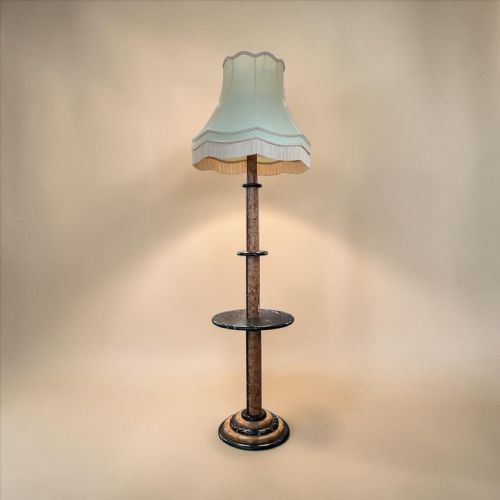
The selections span different regional tastes, notably French and Italian workshops, alongside English examples from the early twentieth century. These pieces frequently integrate functional elements such as side tables, clocks, or ashtrays directly into the stone base.
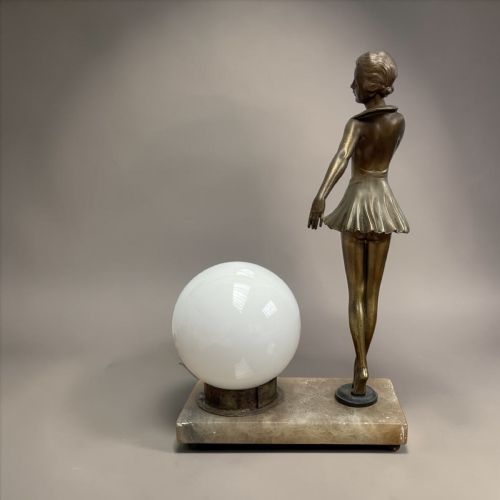
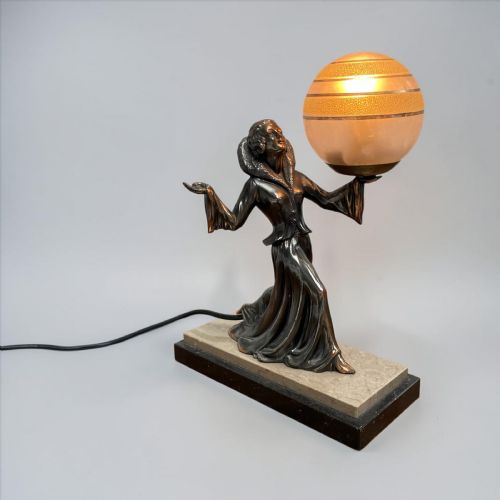
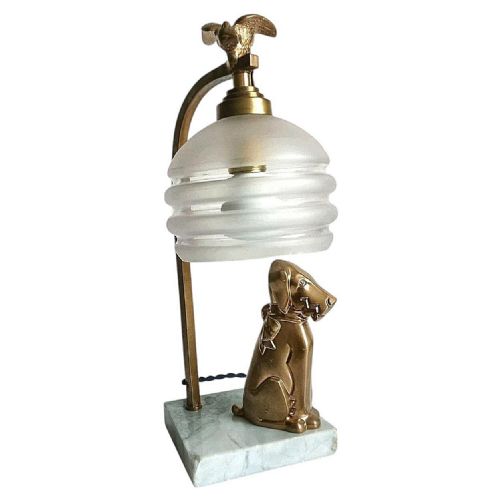
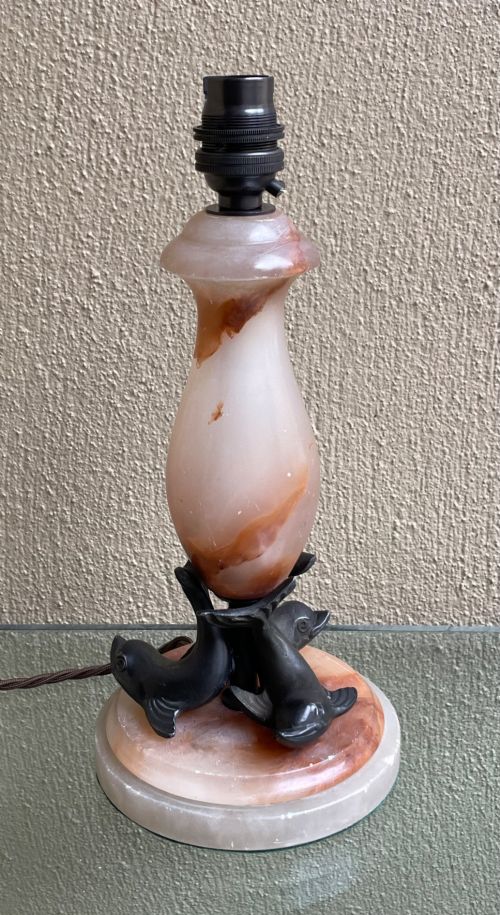
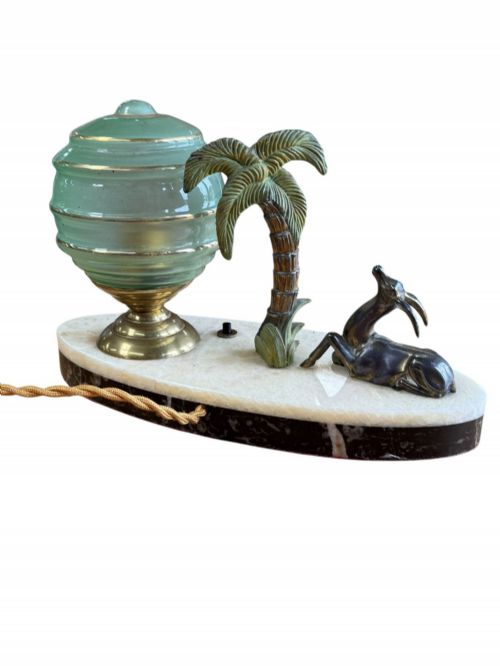
Figural subjects dominate the selection, including ladies, animals like dogs, seagulls, and dolphins, paired with geometric or stepped bases typical of the period. The stone itself provides the heavy weight required to anchor taller standards and multi-component figural groupings.
Materials and construction
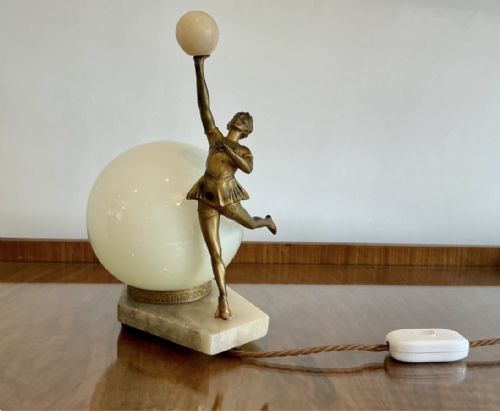
Makers paired solid marble or onyx bases with cast metals such as brass, bronze, patinated spelter, and chrome. These metal components are bolted directly into heavy stone plinths to support delicate glass, opaline, or celluloid shades.
Figural elements like ladies and animals were cast in metal and patinated or bronzed before mounting on the stone. Wiring and lamp holders were integrated into the stone and metal chassis, often incorporating switches or adjustable joints for desk and table use.
Several night lights feature animated scenes of seagulls in flight, greyhounds, and a pierrot playing the accordion.
Evaluating craftsmanship
Quality rests in the weight and figuring of the marble or onyx base, and the crispness of the metal casting mounted upon it. Superior examples show refined detail in figural elements like ladies, birds, and dogs, rather than soft or generalized casts.
The integration of materials dictates the overall success of the piece, where original glass shades match the proportions of the stone and metal base. The complexity of the design, such as combined lamp tables or multi-figure night lights, also elevates the piece.
P. Sega
The Marble Art Deco Lamp Glossary
- Spelter
- An alloy of zinc and lead used for casting figures and decorative elements. It was frequently bronzed or patinated to resemble heavier metals.
- Opaline
- A milky, translucent glass used for lamp shades to diffuse light evenly. It appears in various tones across the period pieces.
- Vide poche
- A small tray or dish incorporated into a desk or table lamp design for holding small items. These catch-alls are often found on functional office and desk models.
- Alabaster
- A fine-grained, translucent stone used for carved lamp bases and figures. It allows light to pass through the material when illuminated.
- Amsterdam School
- An architectural and design style originating in the Netherlands. It emphasises rounded brickwork, expressive forms, and traditional craft materials.
Marble Art Deco Lamp: Frequently Asked Questions
What is a marble art deco lamp?
A marble art deco lamp is an interwar lighting fixture featuring a heavy stone base paired with metal figures, glass shades, or integrated furniture.
These pieces range from small bedside night lights to large standard lamps and combined side tables.
How do I date a marble art deco lamp?
Dating relies on stylistic markers from the 1920s and 1930s, including stepped geometric bases, patinated metal figures, and specific glass shade types.
Many pieces reflect French or Italian manufacturing traits characteristic of the interwar period.
Where were these lamps used?
These lamps functioned as task lighting on desks, ambient mood lighting on sideboards, or combined utility pieces alongside seating.
Versions incorporating tables or plant stands served multiple functions within compact interwar living spaces.
How do I care for marble and onyx bases?
Stone bases require gentle dusting with a dry cloth and protection from moisture or acidic spills that can etch polished surfaces.
Metal components and glass shades should be cleaned separately to avoid damaging the original patination or finish.