
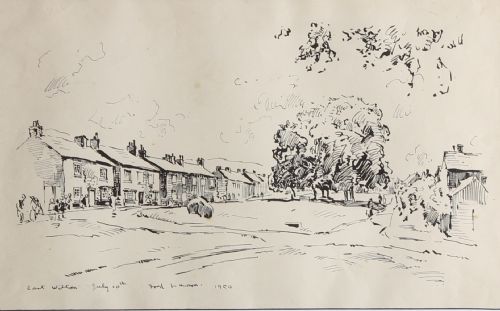
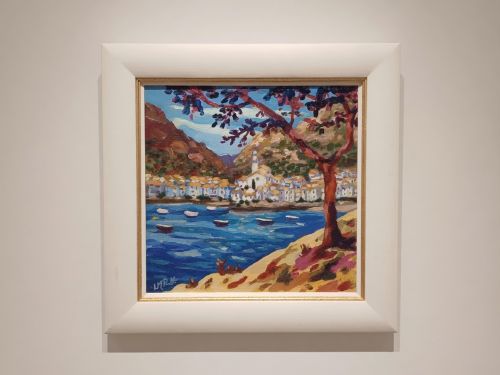
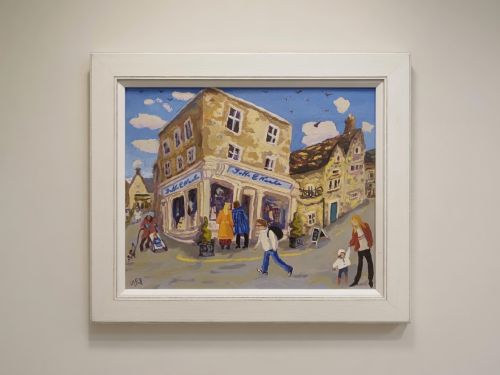
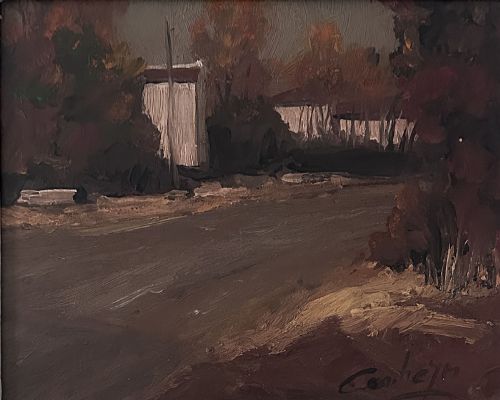


Village Scene Artwork
Village scene artwork captures rural community life through paintings, watercolours, and drawings spanning multiple centuries.
Village Scene Artwork
Village scene artwork captures the daily life, architecture, and surrounding landscapes of rural communities through various artistic mediums. Buyers searching for village scene artwork encounter works ranging from nineteenth-century watercolours to mid-century oil paintings.
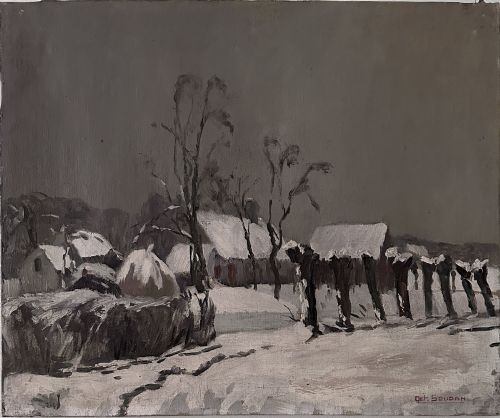
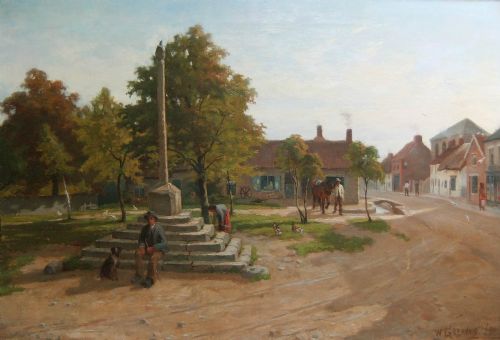
The selections on this page draw from periods including the Victorian era, the nineteenth century, and the early to mid-twentieth century. Common formats include framed oil paintings on canvas or board, detailed watercolours on paper, and pastel drawings.
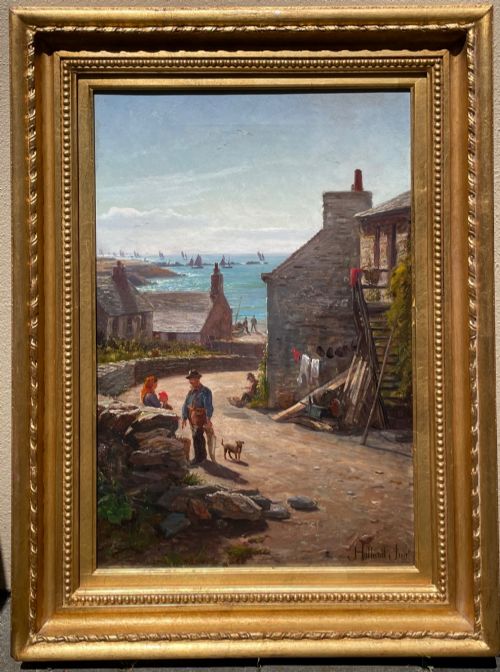
Origin points span British localities like Yorkshire, Cornwall, and Sussex alongside continental European and international subjects. These pieces record rural topography, harbour settlements, and agricultural occupations across different historical moments.
Materials and methods
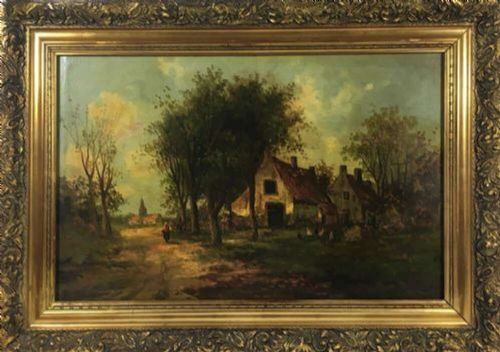
Artists create these works using oil paint on canvas or board, alongside watercolours, gouache, and pastels applied to paper or fabric. Oil pigments provide depth and rich texture, particularly in nineteenth-century and early twentieth-century landscapes.
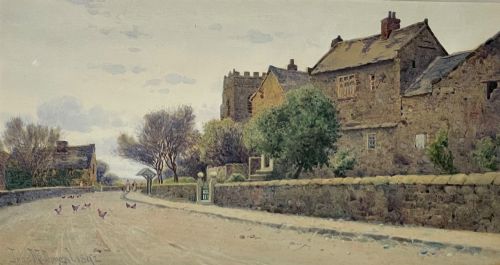
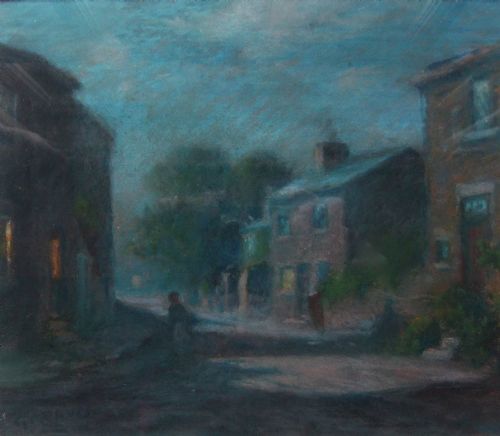
Watercolour and gouache techniques offer lighter, fluid interpretations of rural streets and coastal harbours, often utilising paper supports. Pastel drawings capture soft atmospheric effects, frequently depicting evening light or winter conditions.
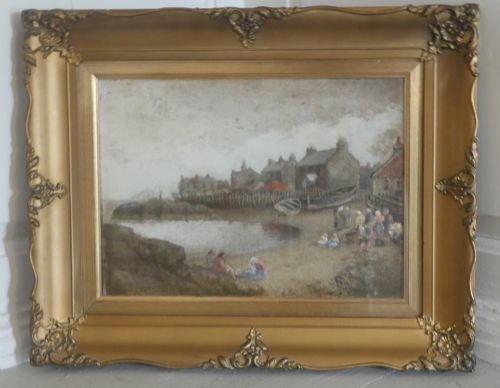
Many works retain their period framing, utilising gilt wooden structures that complement the canvas or paper within. Supporting materials include glass for works on paper and wooden stretchers for canvas pieces.
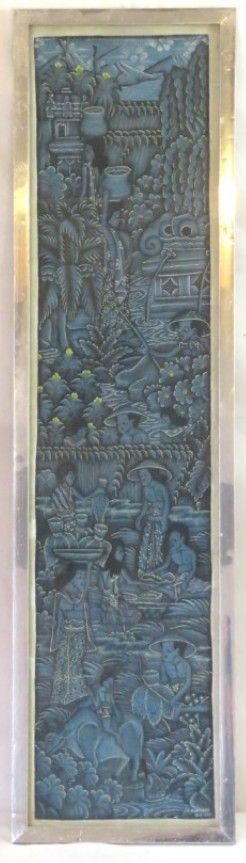
Mediums documented in the archive include oil on canvas, pastel drawings, watercolours on fabric, and gouache.
Quality differences
Quality in these works rests upon the artist's handling of light, perspective, and atmospheric depth within the composition. Masterful brushwork distinguishes accomplished painters from lesser practitioners, even within similar subject matter.
The preservation of the medium dictates longevity and visual impact, whether maintaining the original vibrancy of oil pigments or preventing foxing on historic paper supports. Original period framing also contributes to the integrity of the piece.
John McDougal·Edward Mills·Fred Lawson·Lucy Pratt·William Greaves·John Holland·Gaston Cornil·George Turland Goosey·Arthur Tucker·David Teniers II·M. C. Hider·Charles Vickers·James Watson·Louie Stanley Maurice Prince·Helena Maguire·George Gregory·John Smith Atherton·Robert Hollands Walker·Joseph W. Milliken·Percy Brooke·David Woodlock
The Village Scene Artwork Glossary
- Watercolour
- A paint consisting of pigment suspended in a water-based solution, typically applied to paper. This medium allows for transparent washes and delicate tonal variations.
- Gouache
- An opaque water-based paint that includes a white pigment to create denser, heavier colour applications. It often appears alongside watercolour to add highlights.
- Impressionism
- An artistic style characterised by relatively small, thin, yet visible brush strokes and an emphasis on accurate depiction of light. Practitioners focus on ordinary subject matter captured in shifting illumination.
- Gilt frame
- A wooden picture surround coated with a thin layer of gold leaf or metallic gilt paint. These frames frequently date to the period of the artwork they enclose.
- Pastel
- A dry art medium in the form of a stick, consisting of powdered pigment and a binder. It produces rich, velvety colours resembling the texture of paint.
Village Scene Artwork: Frequently Asked Questions
What periods do these village artworks cover?
The works span from the seventeenth century through the Victorian era and into the mid-twentieth century. Mid-century and Edwardian pieces sit alongside nineteenth-century examples.
Different decades bring distinct aesthetic approaches, ranging from traditional topographical records to Impressionist interpretations.
Which materials are commonly used?
Artists utilised oil paint on canvas or board, watercolour and gouache on paper, and pastels. Oil works offer textured brushwork, while watercolours provide translucent clarity.
Support materials also include fabric and glass-fronted frames protecting delicate paper drawings.
Where do these scenes originate?
Subjects depict British locations in Yorkshire, Cornwall, and Sussex, alongside European destinations including Dutch and French villages. International and tropical scenes also appear among the selections.
Topographical subjects range from quiet rural lanes to bustling harbour settlements and winter landscapes.
How should I care for these works?
Works on paper require protection from direct sunlight to prevent fading of watercolours and pastels. Maintaining stable humidity levels preserves both paper supports and canvas structures.
Framed oil paintings benefit from gentle dusting with a soft, dry brush while avoiding moisture on exposed canvas backs.