

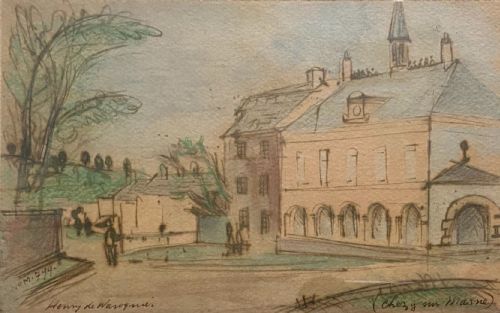


Mid Century Ink Drawing
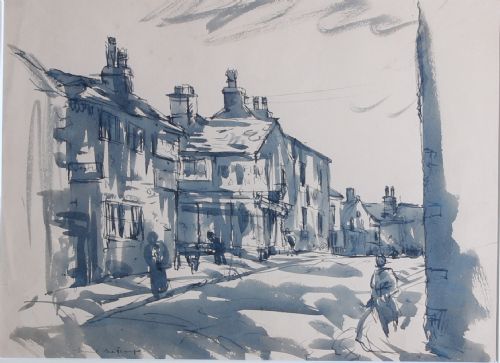
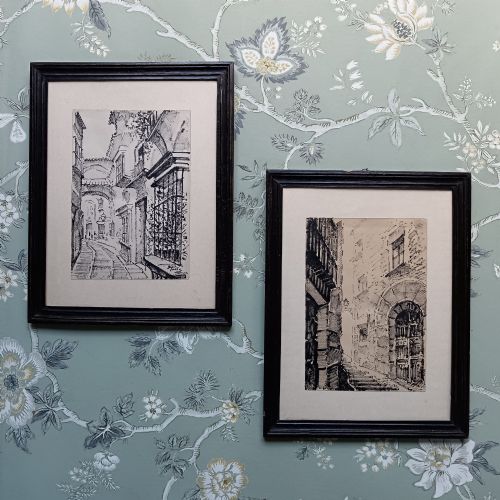
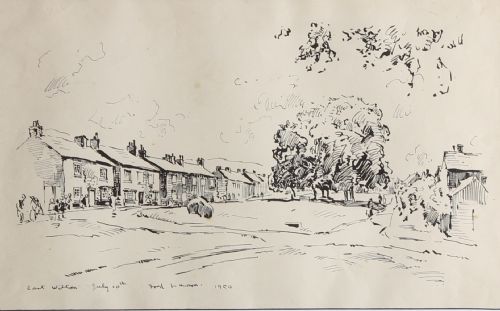
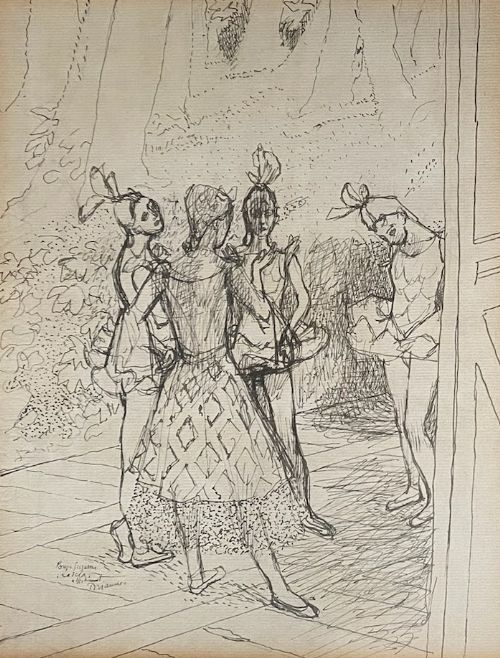
These mid century ink drawing pieces are original works on paper capturing mid-century modernism through rapid line and monochrome tone.
Mid Century Ink Drawing
When you search for a mid century ink drawing, you encounter original works on paper produced during the 1940s, 1950s, and 1960s. These pieces span landscape views, figure studies, architectural studies, and character sketches created within British and French modernist traditions.
The selections available here predominantly feature original drawings framed behind glass in wood surrounds. You will frequently find works attributed to named artists alongside unsigned studies and anonymous architectural or anatomical representations.
Subject matter ranges from Yorkshire castles and coastal scenes to backstage ballet dancers and still life arrangements. The works utilise the immediate, direct nature of ink to record rapid observations and finished compositions alike.
Materials and technique
The works rely fundamentally on ink applied to paper support, often augmented with watercolour, crayon, or wash to build tone and colour. Artists utilise fine pen lines alongside broader brush application to define form.
Framing typically involves wood and glass to protect fragile paper surfaces from atmospheric degradation. Mixed media examples combine ink line work with watercolour washes directly upon paper substrates.
Mid Century Ink Drawing Retail Price Guide 2026
Typical asking prices for mid century ink drawing among the pieces listed under this phrase on Sellingantiques today, from the lower quarter to the upper quarter. They describe what is for sale here now, not the wider market.
The documented periods span the decades of 1940, 1950, and 1960.
Judging quality in mid-century works on paper
Quality rests upon the confidence of the line and the decisiveness of the composition rather than the finish. Stronger examples demonstrate an assured economy of mark-making where every stroke defines space or volume.
Provenance and attribution elevate specific pieces, particularly when accompanied by documented signatures, personal headed paper, or direct connection to established artists of the period. The relationship between the subject and the boundaries of the paper dictates visual balance.
Fred Lawson·Maurice Brianchon·Henry de Waroquier·James Tower·Lucien Freud·Lawrence Stephen Lowry·Dame Laura Knight·Markey Robinson
The Mid Century Ink Drawing Glossary
- Works on paper
- A classification encompassing drawings, watercolours, and prints executed upon a paper substrate. This category forms the core of the selection.
- Mixed media
- An artwork combining more than one medium, such as ink and watercolour used together on paper. These materials interact to create layered tones.
- Monochrome
- Composed of shades of a single colour, typically black or brown ink in these linear studies. It allows line and shadow to carry the entire composition.
- Provenance
- The documented history of ownership of an object, establishing its authenticity. This record often includes letters, exhibition labels, or gallery receipts.
Mid Century Ink Drawing: Frequently Asked Questions
How should I hang a mid century ink drawing?
Keep works on paper away from direct sunlight to prevent the ink and paper support from fading over time. Utilise UV-filtering glass within the wooden frame to protect the fragile medium.
Position the piece at eye level on an interior wall where room temperature and humidity remain stable. Avoid damp spaces such as unventilated kitchens or bathrooms.
Are these drawings signed by the artists?
Many examples bear signatures, inscriptions, or studio stamps from the period, while others remain completely anonymous. Attributions often rely on stylistic comparison or accompanying documentation such as letters.
Unsigned works on paper from this era frequently emerge from artist estates and sketchbooks. The lack of a signature does not diminish the quality of the line work.
How do I identify a 1940s ink drawing?
Artworks from the 1940s frequently reflect wartime conditions through restricted materials, intimate scale, and subjects sourced locally. Paper stocks from this decade often display specific weights and textures characteristic of mid-century manufacture.
Stylistic markers include modernist simplifications of form and architectural focus. Comparison with dated works by the same artists or schools confirms the production era.