


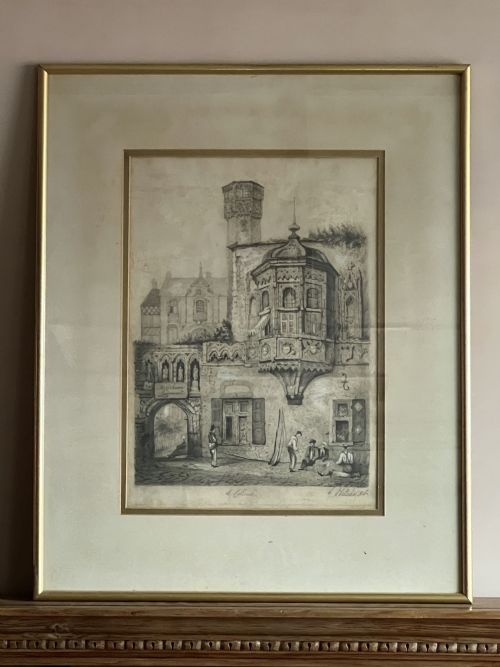


Original Ink Landscape Drawing
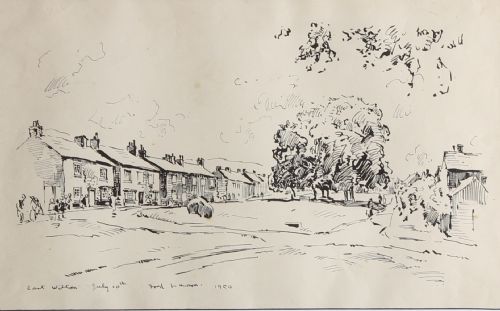
An original ink landscape drawing captures the topography of a region through direct line and wash on paper, offering an intimate glimpse into past terrain.
Original Ink Landscape Drawing
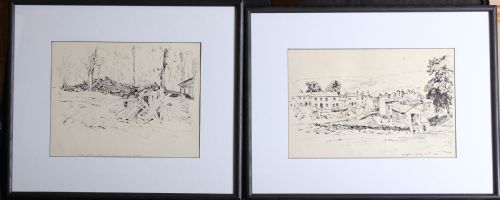
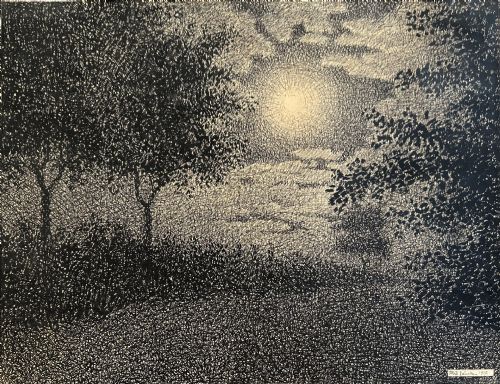
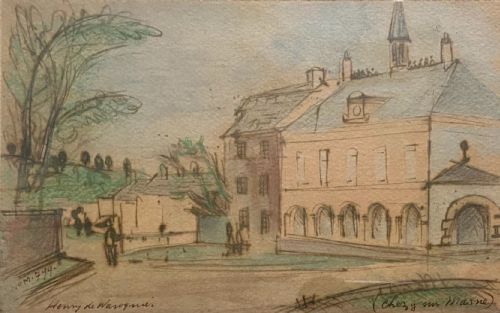
An original ink landscape drawing comprises works executed on paper using ink alongside media such as watercolour, pencil, wash, crayon, gouache or pastel. These pieces capture rural views, townscapes, castles and coastal scenes across various British and European schools.
The selection ranges from Georgian sketches and nineteenth-century studies to twentieth-century works, including pieces by named artists and regional schools. Buyers frequently encounter works from the early twentieth century alongside eighteenth and nineteenth-century examples.
Common formats include framed works on paper, individual sheets, pairs and sketchbook leaves depicting specific British locations such as Yorkshire, the Lake District and Scotland, alongside continental scenes.
How they were made
Artists typically applied ink using pens or fine nibs to establish the primary contours and architectural details of a landscape. This linear framework was frequently augmented with watercolour washes, sepia tones or pencil shading to build depth and atmospheric shadow.
The physical support centres on various grades of paper, sometimes paired with backing boards, and presentation often involves wooden frames behind glass. Mixed media approaches incorporate crayon, pastel or gouache to enrich the textural quality of the paper surface.
What varies in quality
Quality rests upon the sureness of the draughtsmanship and the artist's ability to render light, distance and topography economically within the limits of ink and wash. Stronger examples display confident line work and harmonious tonal balance between the ink structure and any applied watercolour.
Condition also distinguishes the pieces, particularly the preservation of the paper support, the stability of the ink, and the absence of heavy foxing or fading from light exposure. Original framing and provenance further differentiate standard archival sketches from finished exhibition pieces.
Fred Lawson·Stanley Orchart·Edward Dayes·Thomas Rowlandson·John Thistle·Markey Robinson·Henry de Waroquier·Alfred Wainwright·William Paton Burton·Lady Julia Isabella Lavinia Gordon
The Original Ink Landscape Drawing Glossary
- Wash
- A thin, semi-transparent layer of diluted ink or watercolour applied to paper to create shadows or background tones. This technique establishes atmospheric depth behind the primary ink lines.
- Gouache
- An opaque water-based paint that provides solid highlights and heavier colour application compared to transparent watercolour. It appears alongside ink to build opaque areas of light.
- Sepia
- A dark brown pigment derived from the cuttlefish, frequently used for monochrome ink drawings and tonal landscape sketches during the eighteenth and nineteenth centuries.
- School
- A group of artists working in a similar style or region during a specific period, such as the English School or Modern British movement.
- Support
- The physical material, primarily paper in these works, upon which the ink and secondary mediums are applied.
Original Ink Landscape Drawing: Frequently Asked Questions
What is an original ink landscape drawing?
An original ink landscape drawing is a unique work on paper executed by hand using pen and ink, often combined with washes, watercolour or pencil.
These pieces represent direct observations of natural scenery, towns or architectural landmarks by historical artists rather than mechanical reproductions.
How should I frame and display these drawings?
Paper works require conservation framing behind glass to protect them from dust, physical damage and atmospheric moisture.
Keep them away from direct sunlight to prevent the ink and any accompanying watercolours from fading over time.
How do I identify the period of a drawing?
Dating relies on stylistic clues within the draughtsmanship, the type of paper used, and any inscribed dates, signatures or collector marks.
Georgian and nineteenth-century works typically employ different paper watermarks and sepia or monotone palettes compared to twentieth-century Modern British pieces.
Were these drawings meant to be finished artworks?
Some pieces served as preparatory sketches for larger paintings, while others were completed as independent topographical studies or sketchbook entries.
Artists often produced them during field excursions to record specific views before returning to the studio.