
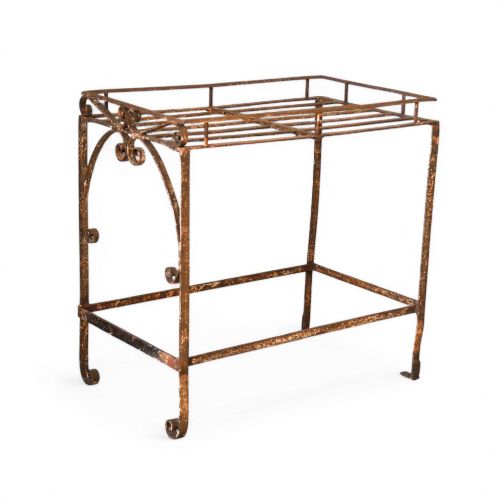
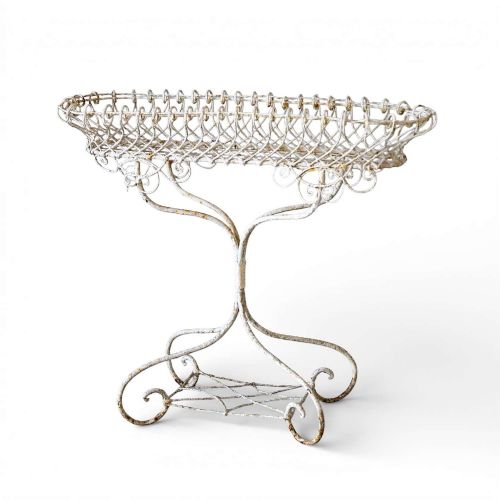

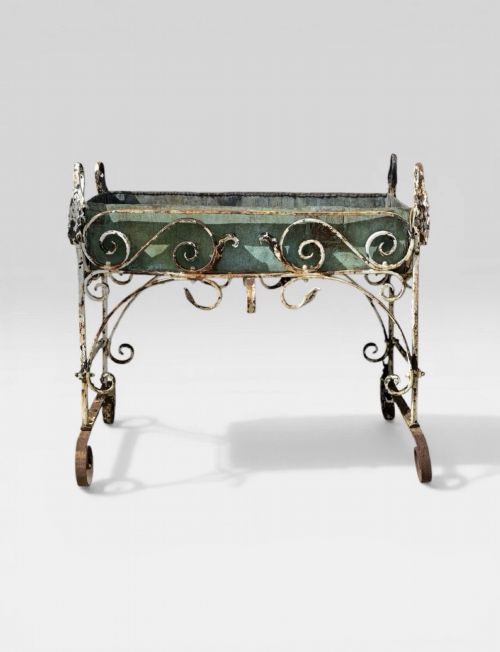
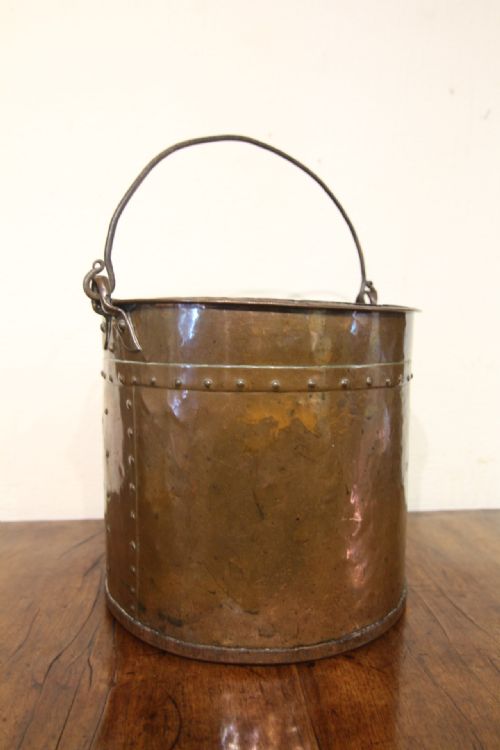
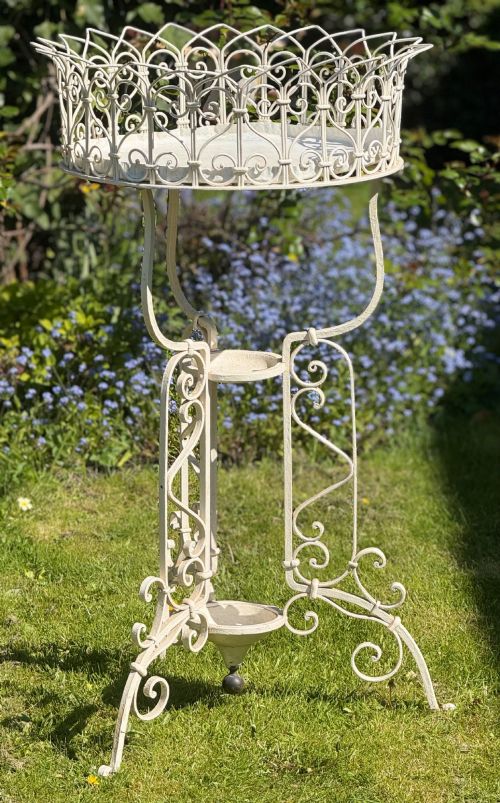


Victorian Wrought Iron Planter
These Victorian wrought iron planter pieces are sturdy garden vessels built to hold greenery and bring enduring character to outdoor spaces.
Victorian Wrought Iron Planter
A Victorian wrought iron planter brings functional metalwork into the garden or conservatory, taking forms such as plant stands, jardinieres, garden racks, and hay racks. The pieces found here span multiple periods, with nineteenth-century and Edwardian examples appearing alongside Georgian and later iterations.
Makers utilised iron, wrought iron, and wirework, often pairing them with copper, sheet metal, cast iron, and zinc inserts or bowls. Styles range from straightforward country house utility to decorative scrollwork, lattice basket tops, and strapwork designs.
The selection extends to related vessels and stands, including cauldrons, log buckets, and coal buckets that share the same metal construction and utilitarian heritage. Buyers encounter both single statement urns and matched pairs designed for grand symmetrical placement.
How they were made
Blacksmiths shaped wrought iron by hand, hammering heated metal into rigid frames, scrollwork, strapwork, and sturdy handles. Wirework pieces required intricate bending and twisting of thinner metal strands to create lightweight yet resilient tiered stands and baskets.
Metal vessels often combined multiple materials, joining iron frames with riveted copper bowls, zinc liners, or sheet metal components. Surfaces were finished with paint or left to weather naturally, developing patinas over decades of outdoor exposure.
A nineteenth-century fairground boat ride sneaks into the metalwork selection, proving blacksmiths built thrills as well as plant stands.
What varies in quality
The refinement of the hand-forging separates standard utility items from finer decorative examples, seen in the fluency of scrollwork and the precision of lattice basket tops. Heavier gauge ironwork and robust structural joinery indicate superior durability for prolonged garden use.
The integration of secondary materials like hand-riveted copper or zinc liners adds sophistication to the construction. Well-balanced proportions and intact original surfaces distinguish pieces designed for prominent conservatory display from purely functional estate equipment.
The Victorian Wrought Iron Planter Glossary
- Wrought iron
- A tough, malleable form of iron that can be heated and hammered into decorative and structural shapes. Blacksmiths favoured it for garden structures because it withstands outdoor stress.
- Wirework
- Metalwork constructed from thin, drawn wire bent and joined into open lattices or tiered frames. This technique produced lightweight plant stands popular in Victorian conservatories.
- Jardiniere
- An ornamental pot or stand designed to hold growing plants or flowers. These vessels often feature decorative metal bases or ceramic inserts.
- Hay rack
- A slatted metal rack originally designed for feeding livestock, repurposed in domestic settings as a wall-mounted plant holder. They display robust iron strapwork and deep trough forms.
- Strapwork
- Flat bands of metal applied in geometrical patterns across the surface of a piece. The technique provides both structural reinforcement and visual rhythm.
Victorian Wrought Iron Planter: Frequently Asked Questions
How do I care for a wrought iron planter?
Keep the metal clean and dry when possible, and apply a protective wax or rust-inhibiting coating if it stays outdoors.
Lift planters off damp ground during winter months to minimise moisture retention and preserve the original surface.
Can I use these planters outdoors year round?
Most pieces were built for exterior estate use and handle garden environments well.
Severe winter frost can affect delicate wirework or nested metal liners, so sheltered placement during freezing weather is wise.
How do I distinguish Victorian wirework from later pieces?
Examine the gauge of the wire and the nature of the joints, as older work often shows hand-formed twists and heavier structural cores.
Patina, oxidation patterns, and construction methods help align pieces with nineteenth-century or Edwardian manufacturing standards.
Were these stands meant for gardens or interiors?
Makers designed them for both settings, with sturdier iron frames serving gardens and lighter wirework gracing Victorian conservatories.
Many styles transition easily between patio displays and indoor plant arrangements.