


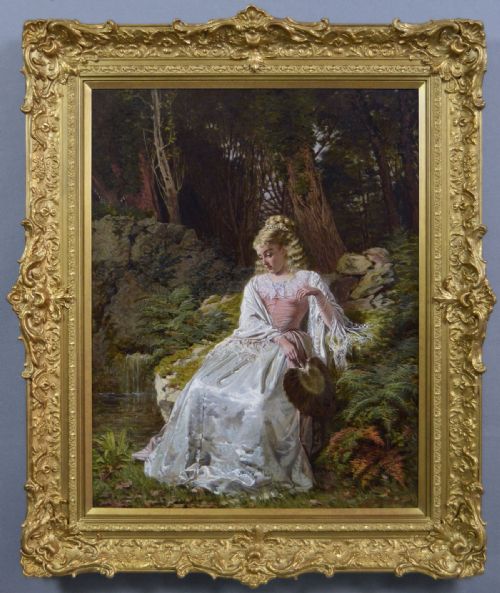


Victorian Woodland Art
Victorian woodland art captures forest glades, riversides and shaded paths through nineteenth-century oils and watercolours.
Victorian Woodland Art
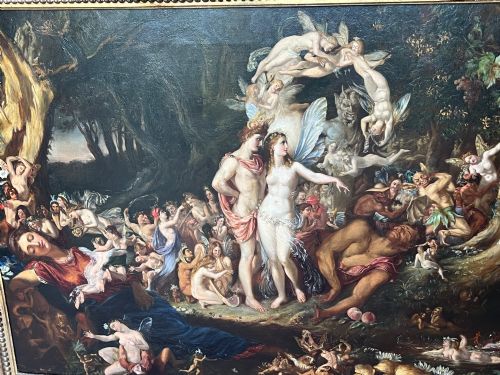
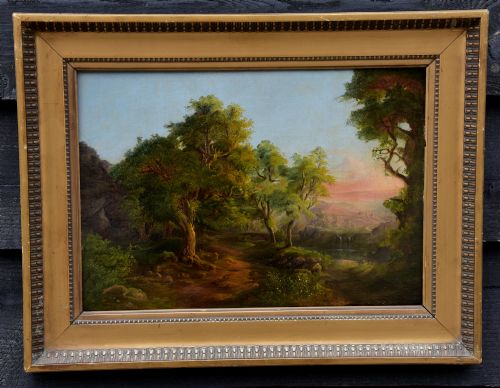
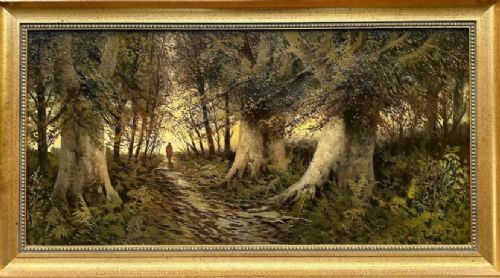
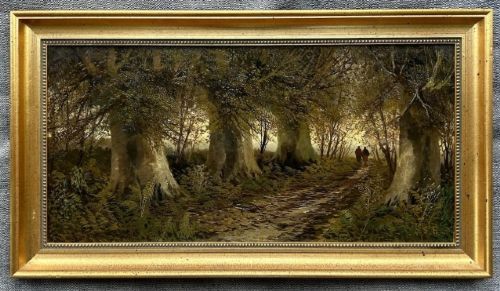
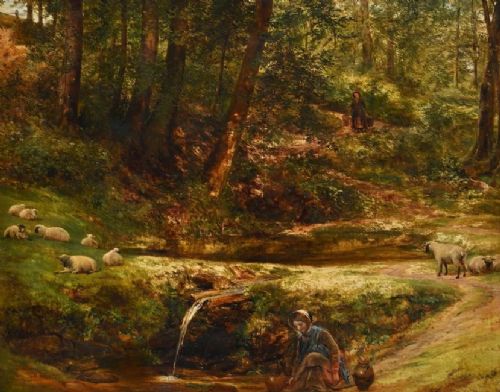
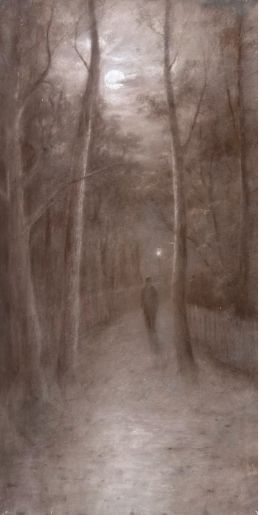
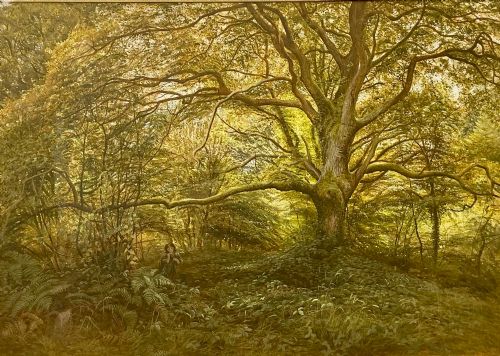
Victorian woodland art encompasses nineteenth-century paintings and watercolours depicting natural forest scenes, leafy riverscapes and rural groves. These works reflect a period fascination with the British countryside, often combining naturalism with romantic or pastoral elements.
The pieces on this page are predominantly oil paintings on canvas or board, alongside watercolours on paper. Most examples focus on quiet rural vistas, river glens and figures gathering wood or flowers beneath forest canopies.
Materials and construction
Artists utilised oil paint on canvas or prepared wood panels, building rich pigment layers to capture dappled light and dense foliage. Watercolours on paper appear frequently, executed with fine brushwork to achieve luminous transparency in river scenes and woodland paths.
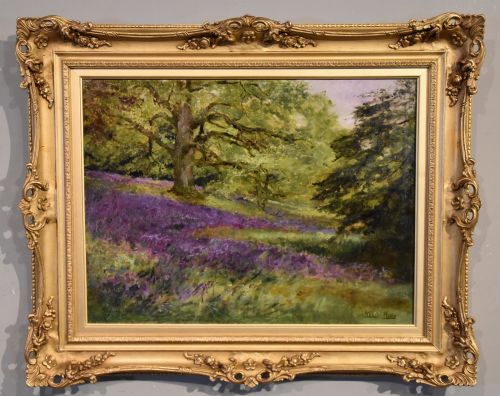
Frames of the period typically consist of giltwood and gesso moulded profiles, which complement the depth of the painted landscapes. Support structures rely on traditional stretcher frames for canvases and heavy mounting boards for works on paper.
Several canvases capture cows pausing for a drink, reminding us that even Victorian cattle appreciated a shady woodland stream.
Factors of quality
Quality rests upon the artist's handling of light, atmosphere and depth within the wooded landscape. Superior works demonstrate precise brushwork in foliage and convincing rendering of natural illumination.
The distinction between standard decorative pieces and finer works lies in the subtlety of colour harmony and the descriptive precision of natural forms. Well-preserved surfaces retain their original pigment vibrancy without heavy overpainting.
Sir Joseph Noel Paton·Richard Sebastian Bond·Thomas W Lascelles·Richard Redgrave·Henry Yeen King·Arthur Herbert Rigg·Thomas Bromley Blacklock·Thomas Edward Roberts·James Mallard Bromley·Clarence Henry Roe·William Mellor·Alfred Grey RHA·John Wright Oakes·Walter Follen Bishop·Edmund George Warren·Abraham Hulk Jnr·Alfred W Parsons·Harold Swanwick·William Lucas·Thomas Hollingsworth·Charles James Adams·Charles Edward Holloway·Frederick Golden Short·Edward H Holder·George F Wetherbee
The Victorian Woodland Art Glossary
- Gesso
- A plaster-like material applied to wood frames before gilding. It provides a smooth surface for intricate moulded ornament.
- Oil on canvas
- Pigments bound in drying oil applied to a woven fabric support. This combination allows for rich colour blending and textured brushwork.
- Watercolour
- Paint consisting of colour pigments suspended in a water-soluble binder. It is traditionally applied to paper to create transparent washes of colour.
- Giltwood
- Wood carved and coated with thin gold leaf or metal powder. It frames many nineteenth-century paintings with a reflective metallic finish.
- Naturalism
- An artistic movement focused on the accurate depiction of the natural world. It avoids idealistic conventions in favour of empirical observation.
Victorian Woodland Art: Frequently Asked Questions
What subjects appear in these paintings?
These works depict rural forests, shaded rivers, leafy glens and rural paths. Figures occasionally appear gathering firewood, walking or resting beneath trees.
Scenes frequently capture seasonal shifts, including autumn foliage, spring blossoms and sunlit summer canopies across British landscapes.
How should I display these paintings?
Display these works away from direct sunlight and excessive humidity to protect the canvas, paper and giltwood frames. Stable interior environments prevent pigment degradation and warping.
Hang them at eye level on neutral walls to let the natural tones of the nineteenth-century palette stand out clearly.
How do I identify the period?
Examine the canvas stretcher, framing style and pigment characteristics. Nineteenth-century works often bear signatures, dates or framing elements typical of the Victorian era.
Stylistic markers such as Victorian naturalism and romanticism point directly to the aesthetic priorities of the period.
Were these works made outdoors?
Artists often sketched motifs directly from nature in the woods before completing the final composition in the studio. This method combined direct observation with traditional studio painting techniques.
Watercolours were frequently executed on location to capture immediate atmospheric effects in natural light.