



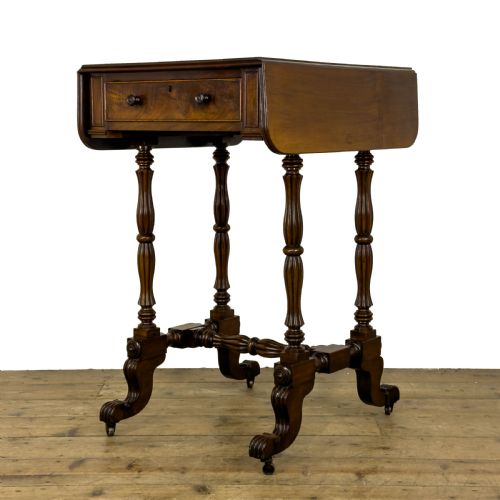

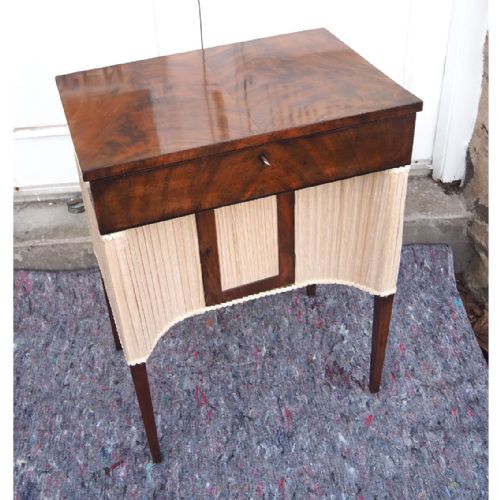


Victorian Wooden Sewing Table
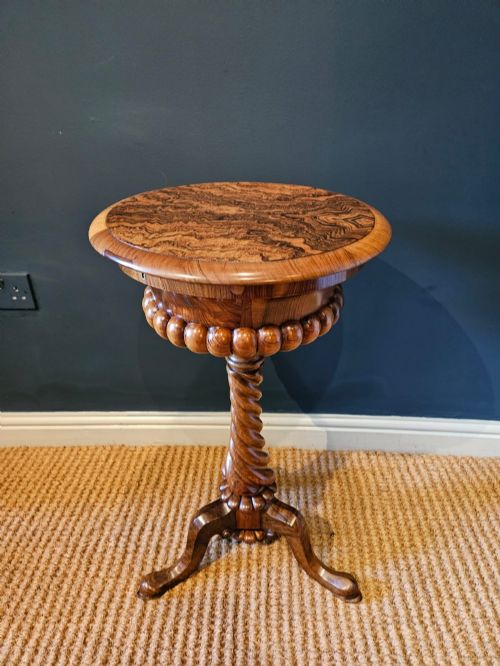
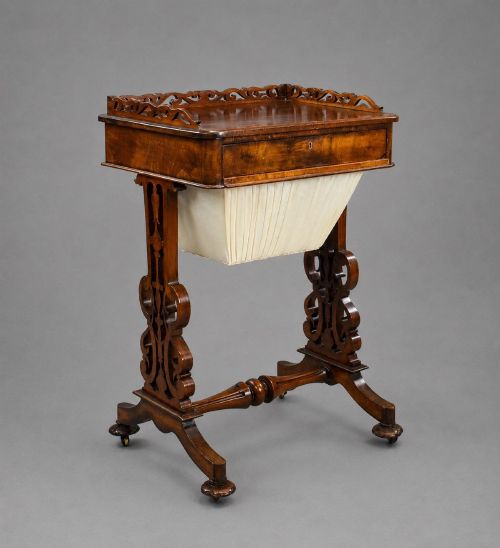
A victorian wooden sewing table brings refined timber and clever compartmented storage directly beside a chair.
Victorian Wooden Sewing Table
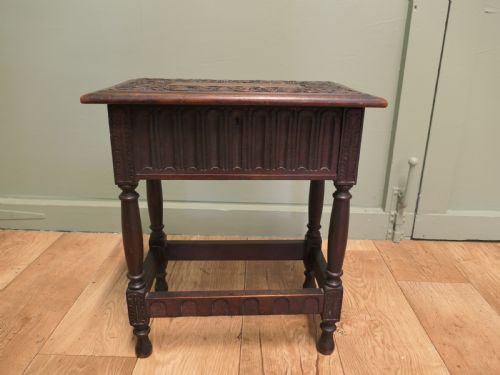
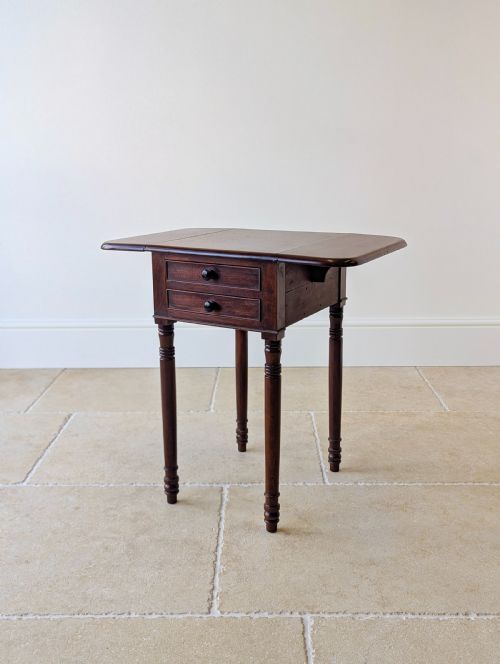
A victorian wooden sewing table functions as a multipurpose piece designed for needlework, correspondence, and occasional display beside a chair. Buyers searching for a victorian wooden sewing table will find that mahogany, rosewood, and walnut dominate the selection, often appearing as drop-leaf, pembroke, or freestanding variants with fitted internal compartments.
Most examples originate from the nineteenth century, spanning periods from early Victorian and William IV through to later revival styles like Louis XV and Sheraton. The form regularly overlaps with work tables, games tables, and side tables, reflecting the versatile domestic habits of the era.
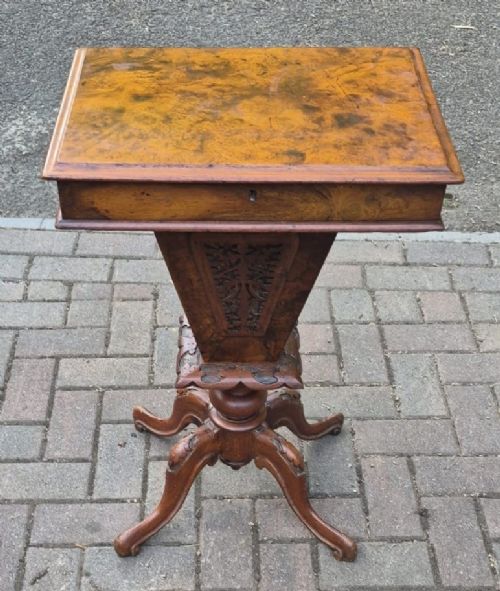
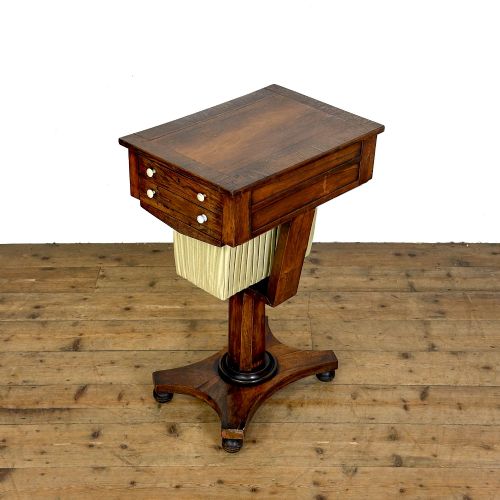
Makers utilised various secondary forms, including occasional tables, jewellery boxes, and vanity units, yet the core purpose remained centred on housing sewing implements and textiles. The typical piece encountered on this page pairs a hinged lid with a suspended fabric bag or solid wooden box below.
Materials and Construction Methods
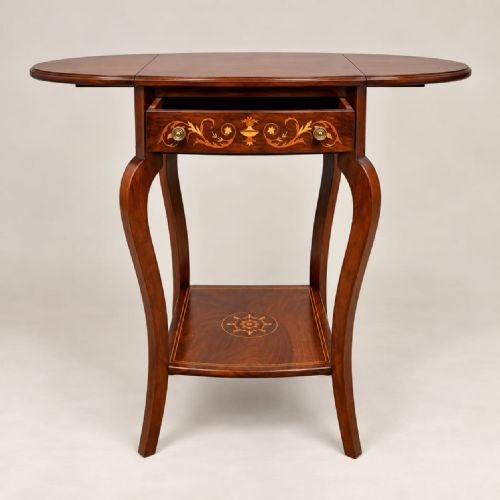
Cabinetmakers built these tables using dense hardwoods such as mahogany, rosewood, and burr walnut, frequently enhancing surfaces with contrasting wood inlay, marquetry, or satinwood banding. Structural integrity relied on traditional joinery, with drop leaves supported by swing brackets and hinged lids opening to reveal compartmentalised interiors.
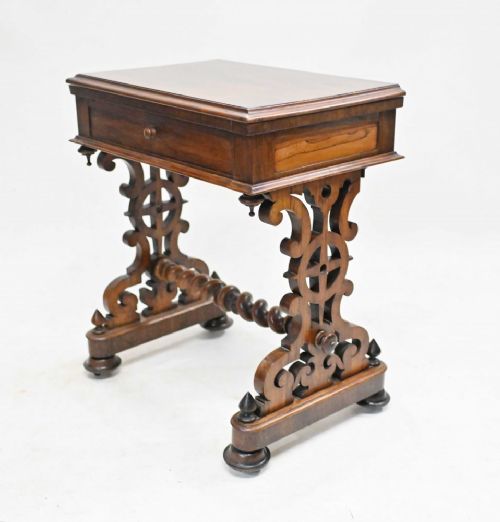
Decorative elements often incorporated brass hardware, ormolu mounts, and hand-painted details, while specialised versions integrated leather tops or backgammon and chess boards into the upper surface. The underframes commonly featured turned pillars, pillar-and-claw supports, or shaped legs that balanced portability with stability.
Several tables manage to conceal chess boards, backgammon grids, and sewing bins all within the footprint of a modest occasional stand.
Distinguishing Quality and Craftsmanship
Quality in a victorian wooden sewing table rests upon the choice of timber veneer, particularly the depth and movement found in burr walnut or flame mahogany figures. Superior examples display precise, tight marquetry and wood inlay that aligns seamlessly across opening lids and drawer fronts.
The sophistication of the internal compartmentalisation dictates the grade of the piece, with finer workshops providing dedicated, lidded compartments for spools, needles, and bobbins. Furthermore, the crispness of carved wooden details and the integration of substantial brass fittings separate standard production items from master-finished examples.
The Victorian Wooden Sewing Table Glossary
- Work Table
- A multi-purpose domestic table equipped with internal compartments or an attached bag for holding sewing materials and needlework. These items were essential furnishings in nineteenth-century sitting rooms.
- Pembroke Table
- A small occasional table featuring two hinged drop leaves on opposing sides. It offers adjustable surface space and typically includes one or more functional drawers.
- Marquetry
- Decorative patterns formed by fitting together thin veneers of different coloured woods, ivory, or shell. This technique creates elaborate pictorial or geometric designs across table tops.
- Drop Leaf
- A hinged flap of wood attached to the main table top that can be raised to extend the surface area or dropped down when space is restricted. Support brackets swing out to hold the leaf steady.
- Burr Walnut
- Timber harvested from the gnarled growth on walnut trees, prized for its swirling, highly figured grain patterns. It was frequently used as a premium veneer on Victorian furniture.
Victorian Wooden Sewing Table: Frequently Asked Questions
What is a work table used for?
A work table served as a versatile piece of nineteenth-century furniture designed to hold sewing gear, threads, and small handicraft projects. The top surface remained clear for writing or reading, while internal compartments kept tools organised.
Over time, these pieces adapted to general use as lamp stands or side tables in sitting rooms, retaining their hidden storage beneath hinged lids.
How do I identify a Victorian sewing table?
Look for characteristic nineteenth-century timber choices such as mahogany, rosewood, or burr walnut, often paired with turned legs or pillar supports. The defining feature is the internal compartment layout beneath the lid, sometimes accompanied by a suspended fabric sewing bag.
Dating relies on stylistic clues like William IV heavy pedestals, mid-century marquetry inlay, or later revival decorative painting from the late nineteenth century.
Where should I place a sewing table at home?
These compact tables fit exceptionally well beside an armchair or sofa as an occasional or lamp table. Their narrow footprint and drop leaves allow them to sit comfortably in smaller spaces without overwhelming the room.
The internal compartments also make them practical for storing modern odds and ends, jewellery, or stationery within easy reach.
How do drop leaves function on these tables?
Drop leaves are hinged flaps attached to the main table top that fold down to save floor space or lift up to create a larger surface. Wooden brackets or swing legs pivot outward from beneath the table to support the raised leaves.
Checking the movement of these support arms ensures the leaves remain level and stable when extended for use.