

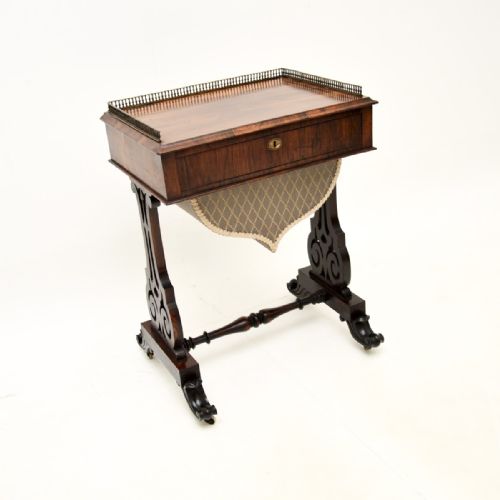


Victorian Drop Well Table
These Victorian drop well table pieces are ingenious nineteenth-century sewing and occasional furniture built to house needles, threads, and delicate needlework.
Victorian Drop Well Table
A Victorian drop well table is fundamentally a work table, sewing table, or occasional table designed for domestic utility and needlecraft. When you search for a Victorian drop well table, you encounter nineteenth-century forms primarily fashioned in rosewood, burr walnut, and mahogany.
The pieces listed here date from the nineteenth century, including specific years like 1850, 1860, 1870, 1890, and the William IV period. Alongside sewing and work tables, you will find side tables, occasional tables, writing tables, and vanity tables sharing similar structural characteristics.
How they were made
Cabinet makers utilised choice hardwoods such as rich rosewood, figured burr walnut, and dense mahogany to construct the carcase and framing. These timbers were often selected for their prominent grain patterns and polished to a high lustre.
Interiors and fitted compartments frequently incorporated textiles, fabric, and velvet to line the drop wells and work boxes where sewing implements rested. Brass fittings and occasional inlay work added decorative accents to the structural woodwork.
Listings feature woods including rosewood, burr walnut, and mahogany, alongside textiles such as velvet and fabric.
What varies in quality
The grade of timber selection largely dictates the visual merit of each piece, with highly figured burr walnut and richly grained rosewood commanding greater attention than plain mahogany. Expert manipulation of veneer and careful matching of wood grain separate standard examples from finer productions.
The sophistication of the interior fitments, including the execution of the drop well compartment and the quality of any textile or velvet lining, marks the distinction between utilitarian items and more ambitious pieces designed for refined parlours.
The Victorian Drop Well Table Glossary
- Drop well
- A recessed compartment or suspended bag integrated into a sewing table to hold unfinished needlework and threads. This feature defines the primary functional utility of the form.
- Burr walnut
- A highly decorative wood veneer taken from the growth excrescences of walnut trees. It exhibits intricate, swirling grain patterns prized by nineteenth-century cabinet makers.
- Rosewood
- A dense, heavy timber with a dark, richly figured appearance often utilised during the Victorian and William IV periods. It takes a fine polish and provides a stable surface for occasional furniture.
- Work table
- A specialised piece of nineteenth-century furniture equipped with drawers, boxes, or wells for sewing and crafts. These items served both practical domestic tasks and social display.
- William IV
- A transitional design style spanning the 1830s that bridges late Regency and early Victorian aesthetics. Pieces from this era often display robust proportions and classical restraint.
Victorian Drop Well Table: Frequently Asked Questions
What is a drop well table used for?
These pieces were designed for nineteenth-century needlework, holding threads, fabrics, and sewing tools within integrated wells or boxes.
They also functioned as occasional or writing tables in period parlours and drawing rooms.
How do I identify a Victorian work table?
Look for characteristic timber choices such as rosewood, mahogany, and burr walnut combined with fitted interior compartments.
Most examples date from the nineteenth century and carry traditional joinery methods appropriate to that era.
Are these tables suitable for modern rooms?
Their compact proportions make them effective as side tables or lamp tables beside seating in contemporary spaces.
The enclosed wells also provide convenient hidden storage for small household items.
What is the difference between William IV and Victorian styles?
William IV pieces sit at the beginning of the nineteenth century, often displaying heavy, robust forms influenced by classical precedents.
Victorian pieces span a broader later period with diverse stylistic revivals and varied timber treatments.