


Victorian Wooden Purdonium
Victorian wooden purdonium designs are handsome fireside fuel boxes that keep coal neatly stowed beside the hearth while adding period warmth.
Victorian Wooden Purdonium
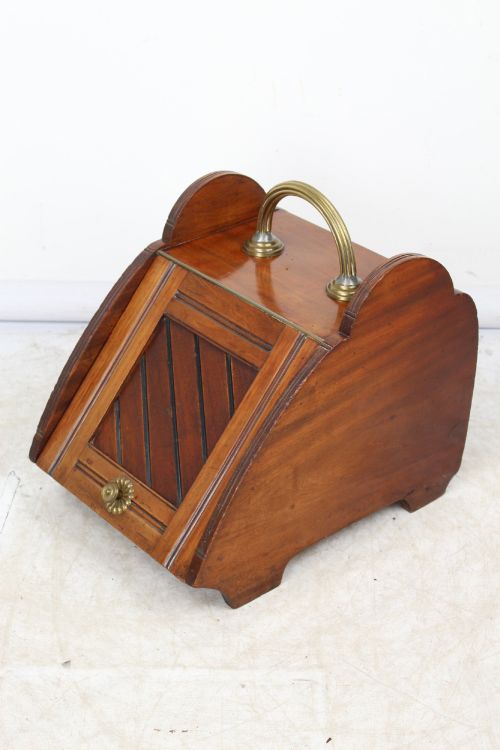
A victorian wooden purdonium is a dedicated fireside storage box created to house coal without scattering dust across the carpet. These practical containers appear most frequently in rich timbers like mahogany, walnut, and oak, often styled to match the reception rooms of their day.
The inventory on this page spans the Victorian and Edwardian eras, encompassing related forms such as coal scuttles, coal boxes, and fireside companions. Pieces range from plain vernacular oak bins to elaborate examples finished with marquetry inlay or brass mountings.
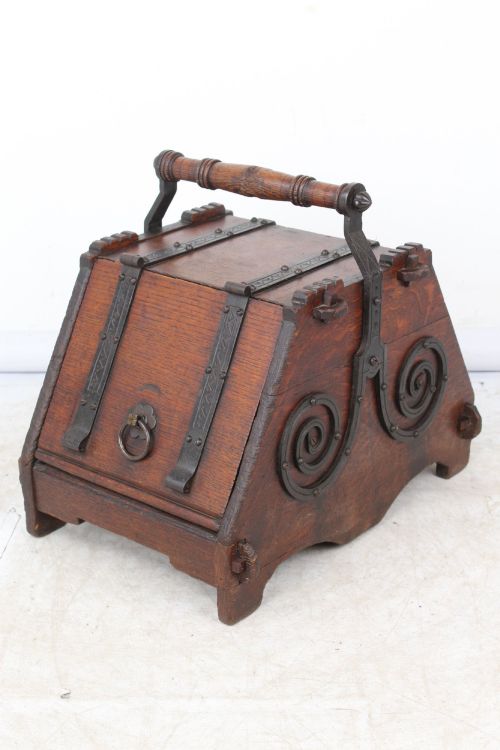
Originating primarily from English and Scottish workshops, these boxes reflect the diverse decorative tastes of the nineteenth century. Buyers encounter everything from austere Gothic Revival models to flowing Art Nouveau shapes and curvaceous Louis XV style depots.
Materials and construction
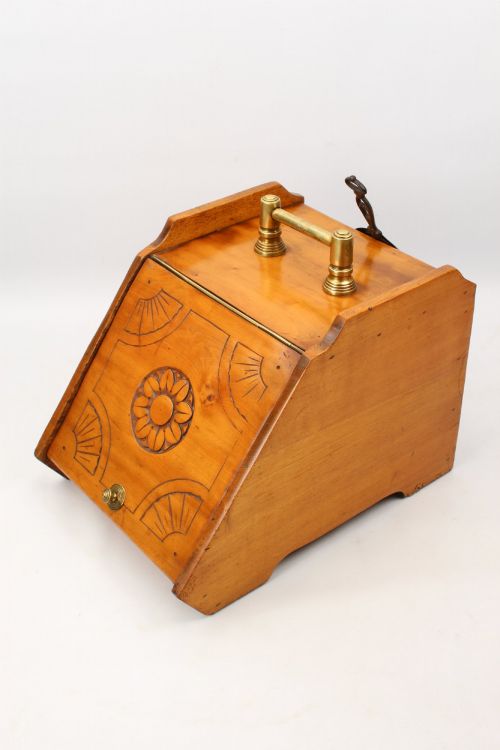
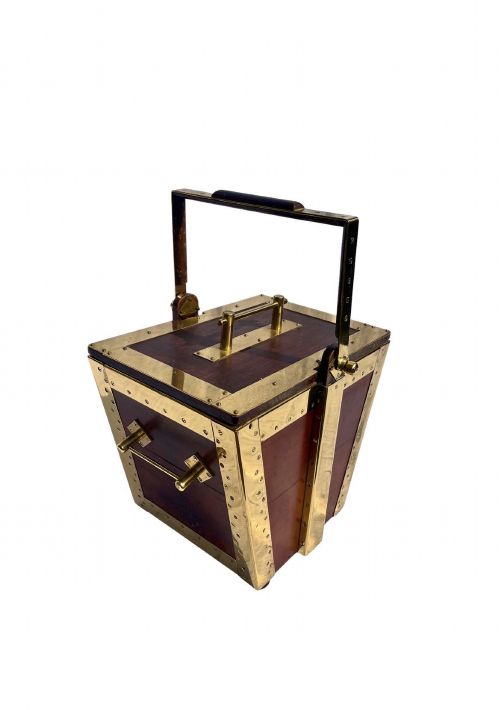
Cabinetmakers built these fuel stores from durable hardwoods including mahogany, walnut, oak, and pollard oak, sometimes incorporating rosewood for finer decorative effect. Marquetry inlay and carved fronts added architectural interest to the wooden bodies, while heavy brass handles and mountings provided structural reinforcement.
Practical interiors required robust metal liners and scoops or shovels to handle heavy loads of coal safely. Ormolu mounts and specialised hinges occasionally appeared on grander items designed for prominent display in formal drawing rooms.
Period styles represented include Victorian, Edwardian, Gothic Revival, Art Nouveau, and Louis XV Revival.
Defining quality in wooden fuel stores
Quality rests in the selection of timber and the crispness of any carving or marquetry inlay. Dense walnut and figured mahogany with strong grain patterns elevate a piece above standard utility boxes.
Hardware and internal fittings dictate the tier of craftsmanship. Substantial brass mountings, intact original metal liners, and matching shovels distinguish finer workshop output from simpler domestic containers.
Christopher Dresser·Liberty
The Victorian Wooden Purdonium Glossary
- Purdonium
- A specialised coal box or cabinet designed for domestic hearths, usually featuring a drop-front or sloping lid. It hides dirty fuel behind neat cabinetry.
- Marquetry inlay
- Decorative patterns formed by fitting small pieces of contrasting veneer into the wooden surface. This technique creates floral or geometric motifs.
- Ormolu
- Gilded bronze mounts applied to furniture and boxes for ornamentation. It adds a bright metallic contrast to dark woods.
- Pollard oak
- Timber taken from trees that have been pollarded, resulting in a tightly knotted and highly decorative grain. It was favoured for distinctive Victorian cabinet work.
- Metamorphic
- Descriptive term for furniture or accessories that transform or conceal their primary function. In this context, it refers to boxes that unfold or tilt to reveal coal compartments.
Victorian Wooden Purdonium: Frequently Asked Questions
What is a wooden purdonium?
A wooden purdonium is a specialised cabinet or box designed to hold coal near a fireplace. It keeps fuel contained and conceals it behind decorative woodwork.
These pieces typically feature a sloping front or drop-down door, often accompanied by a metal liner and matching shovel. They served as both practical storage and decorative fireside furniture.
How do I use a purdonium today?
Purdoniums make excellent storage bins for kindling, logs, or coal beside a working fireplace. Their enclosed design keeps hearth debris out of sight.
Beyond the fireplace, many owners repurpose them as distinctive umbrella stands, hallway bins, or large planters. The lift-out metal liners make cleaning straightforward.
How do I date a wooden coal box?
Dating relies on timber choices, construction methods, and stylistic cues like brass hardware and decorative carving. Victorian examples often show heavier mouldings or Gothic Revival elements.
Edwardian pieces tend toward lighter inlays, satinwood banding, or Art Nouveau influences. The presence of original metal liners and shovels also helps establish period authenticity.
Are these boxes difficult to maintain?
Maintaining a wooden fuel box requires simple dusting and occasional treatment with suitable furniture wax to nourish the timber. Brass hardware can be polished or left with its natural aged patina.
Ensuring the interior metal liner remains clean and dry prevents any moisture damage to the surrounding wood structure.