


Vintage Mahogany Coal Box
A vintage mahogany coal box is a fireside essential that brings polished timber and brass detail to your hearth.
Vintage Mahogany Coal Box
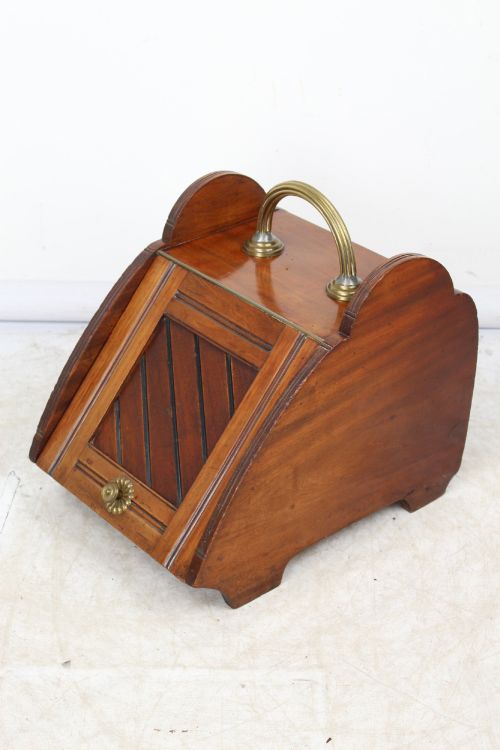
A vintage mahogany coal box is a practical hearth accessory designed to store solid fuel near an open fire. These items range from simple scuttles to elaborate cabinet purdoniums that conceal the coal entirely.
The pieces on this page span the Victorian and Edwardian eras, executed in rich mahogany with characteristic period proportions. You will frequently find them functioning as decorative storage containers in modern living spaces.
The form embraces several variations including traditional scuttles, upright purdonium cabinets and lidded bins. Many examples incorporate metal linings and dedicated compartments for companion shovels.
How they were made
Joiners built these fireside containers using solid mahogany and mahogany veneers, frequently incorporating secondary timbers like oak. Surfaces often display decorative boxwood inlay, marquetry patterns or carved details.
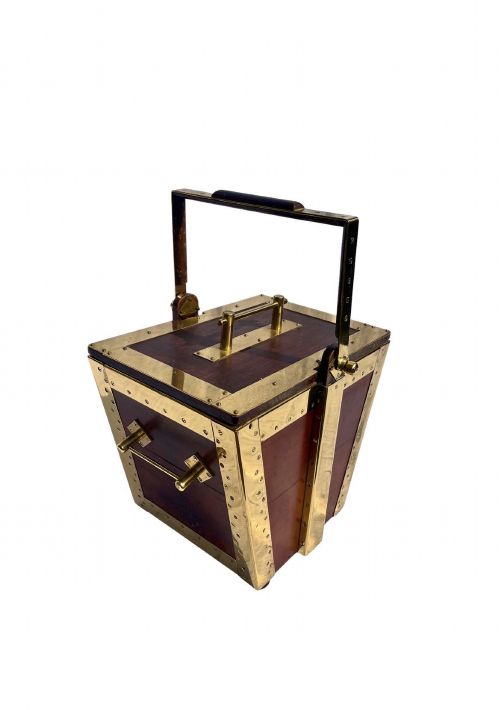
Functional hardware played a central role in construction, utilising brass handles, hinges and ormolu mounts. Many versions included removable metal or zinc liners to contain coal dust and protect the wooden structure.
Victorian households relied on servants to lug coal in these fancy boxes, so your modern wood-storing routine has aristocratic roots.
What varies in quality
Quality rests upon the crispness of the cabinetwork and the weight of the brass mounts. Finer examples display meticulous boxwood inlay and well-executed carving rather than simple pressed decoration.
The Vintage Mahogany Coal Box Glossary
- Purdonium
- A specialised coal cabinet featuring a sloping drop front designed to hold domestic fuel. These pieces usually contain a removable metal liner.
- Scuttle
- A traditional open-topped container with a handle, used for carrying coal to the fire. They often include a hinged lid and a shovel tucked into a back sleeve.
- Ormolu
- Gilded bronze or brass mounts applied for decorative effect. This French technique appears on revivalist pieces to add metallic contrast against dark mahogany.
- Marquetry
- Elaborate veneer work forming decorative patterns using various contrasting woods. Craftsmen applied this technique to the sloping lids of finer coal boxes.
- Boxwood Inlay
- Contrasting light wood inserted into recesses within the darker mahogany surface. This linear detailing characterises Edwardian cabinetwork.
Vintage Mahogany Coal Box: Frequently Asked Questions
How were these boxes used?
Households used these boxes to store and transport coal from a cellar or outside bunker directly to the hearth. The internal metal liner allowed users to lift out the fuel and empty it easily.
Many examples included a matching metal shovel stored in a compartment at the back or side. This kept all necessary stoking tools together in one tidy unit.
How do I date a coal box?
Dating relies on stylistic clues and construction methods spanning the Victorian and Edwardian periods. Earlier Victorian examples often feature heavier brass handles and robust carved details.
Later Edwardian versions frequently incorporate delicate boxwood stringing and inlaid motifs. Ormolu mounts and revival styles like Louis XV also point towards specific Victorian manufacturing tastes.
Can I use them for modern storage?
These pieces adapt easily to modern interiors as umbrella stands, toy chests or general fireside bins. Their enclosed designs hide clutter while adding polished timber character to a room.
Retaining the original metal liner allows you to use the interior for logs or kindling without damaging the wood. They fit naturally beside both traditional and contemporary wood-burning stoves.