
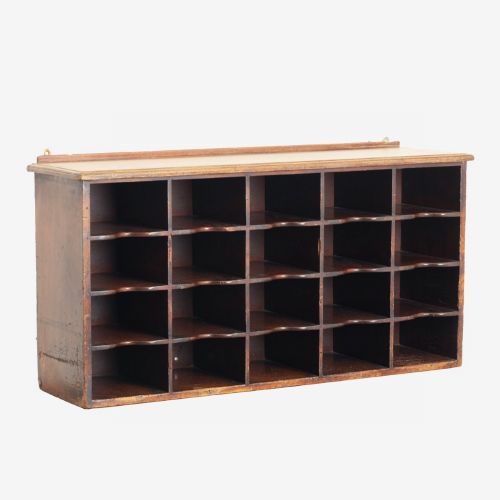


Victorian Wooden Letter Organiser
A victorian wooden letter organiser is a desk accessory that brings order to correspondence, combining practical compartments with period craftsmanship.
Victorian Wooden Letter Organiser
A victorian wooden letter organiser encompasses a variety of desk accessories, stationery boxes, and correspondence chests designed to keep mail in order. Buyers searching for a victorian wooden letter organiser frequently encounter desk tidies, letter racks, and wall organisers made during the nineteenth century.
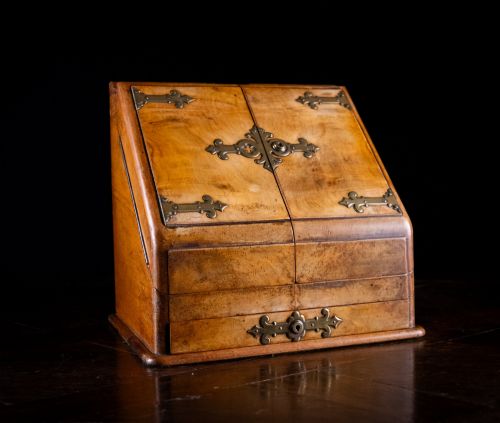
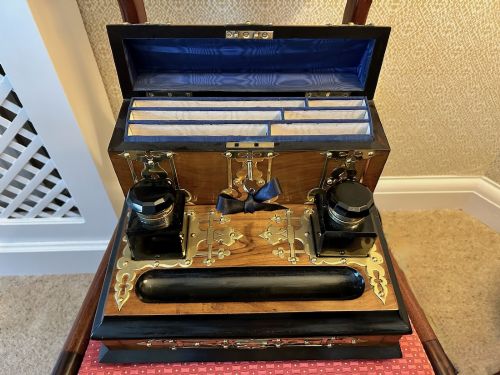
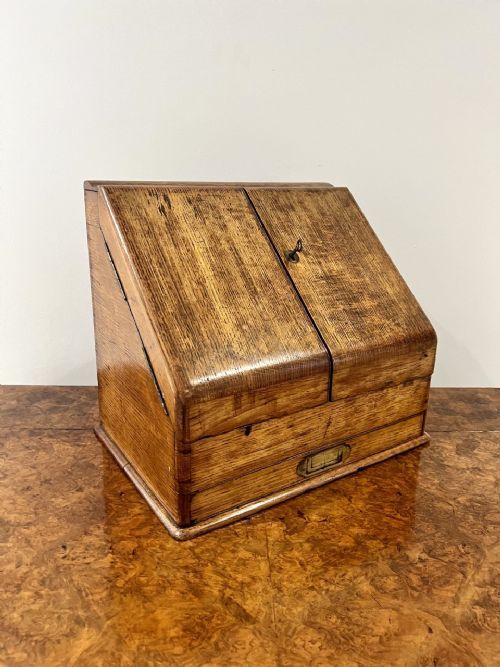
The forms range from simple open letter racks to elaborate drop-front stationery cabinets with pigeon holes and ink bottles. Many examples reflect specific periods such as Arts and Crafts or Gothic Revival, showing the distinct taste of Victorian and late Victorian makers.
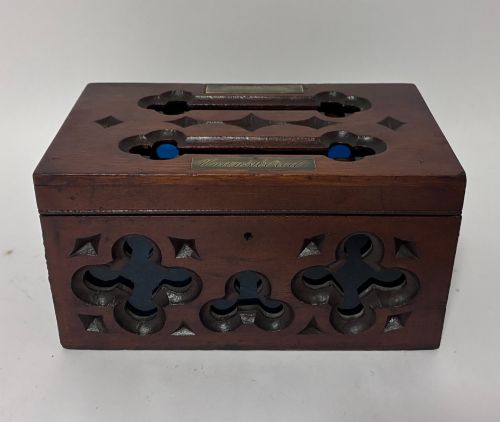
Country house post boxes and desktop stationery cabinets appear regularly on this page, offering compartmentalised storage for letters and papers. These pieces served practical roles in studies, offices, and country houses before digital correspondence changed daily habits.
How they were made
Cabinet makers utilised dense hardwoods such as oak, mahogany, walnut, rosewood, and coromandel to construct these letter organisers. These timbers provided the structural stability needed for drop-front cabinets, pigeon holes, and heavy correspondence boxes.
Makers frequently mounted the timber with brass hardware, including hinges, locks, handles, and escutcheons, occasionally incorporating glass ink bottles or fabric linings. Some pieces display intricate inlaid decoration, carved details, or specialised techniques such as Tunbridge Ware.
Construction methods varied from traditional dovetail joints on boxes to tiered desk tidies raised on bun feet. Makers integrated functional details like adjustable dates, secret drawers, and drop fronts to enhance the utility of the desk accessories.
Some nineteenth century boxes included clever labels for sorted mail, reminding owners which letters required attention.
What varies in quality
The quality of a victorian wooden letter organiser depends on the selection of timber and the precision of the cabinet work. Finer examples utilise superior veneers, solid oak or walnut, and carefully fitted interior pigeon holes rather than basic box construction.
Hardware and secondary materials distinguish standard pieces from exceptional ones. Solid brass mounts, well-fitted glass ink bottles, and functioning locks with keys elevate a desk tidy or correspondence box.
Decorative ambition separates the range, from plain utilitarian oak letter racks to inlaid mahogany cabinets and carved Gothic revival boxes. The presence of makers' labels or specialised forms like drop-front stationery cabinets marks the upper tier of quality.
Edmund Nye·F Waller
The Victorian Wooden Letter Organiser Glossary
- Stationery box
- A box specifically constructed to hold writing paper, envelopes, and correspondence. These often feature sloping lids or vertical compartments.
- Desk tidy
- A desktop accessory designed to hold miscellaneous writing implements, letters, and small office supplies in an organised manner. They frequently incorporate inkwells or small drawers.
- Pigeon hole
- A small, open compartment within a cabinet or desk used for sorting letters and documents. They form the internal framework of many stationery cabinets.
- Drop-front
- A hinged panel that folds downwards to provide access to internal compartments, letter slots, and writing surfaces. This mechanism appears on many refined nineteenth century cabinets.
- Tunbridge Ware
- Small wooden decorative objects adorned with intricate mosaic patterns made from tiny wood blocks of various natural colours. This technique created geometric or pictorial designs on boxes.
- Standish
- A traditional desk stand holding inkwells, sanders, and penholders, sometimes combined with a letter rack or box. They formed the central writing equipment on a Victorian desk.
Victorian Wooden Letter Organiser: Frequently Asked Questions
What is a correspondence box?
A correspondence box is a lidded container designed to hold incoming and outgoing letters neatly on a desk or table. These boxes often feature internal dividers to separate answered and unanswered mail.
They served as portable or desktop storage before wall-mounted systems and modern filing cabinets became common in offices and homes.
How were desk tidies used?
Desk tidies held daily writing materials including pens, ink, stamps, and letters within easy reach of the writer. They kept work surfaces clear by gathering loose stationery into designated compartments.
Most examples sat upon study desks, library tables, or writing-slopes in Victorian households.
How do I identify Gothic Revival pieces?
Gothic Revival letter organisers display architectural motifs inspired by medieval building styles, such as pointed arches, tracery, and heavy carved details. These pieces often utilise dark oak and prominent brass hinges.
The style became popular during the nineteenth century as part of a wider revival of historic design.