


Victorian Wooden Elbow Chair
A victorian wooden elbow chair brings sturdy nineteenth-century craftsmanship and practical seating to a room.
Victorian Wooden Elbow Chair
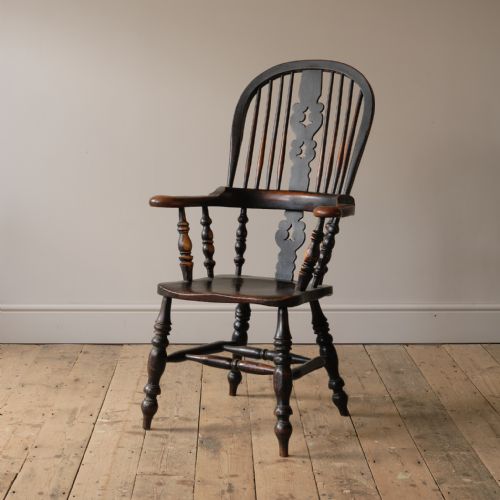
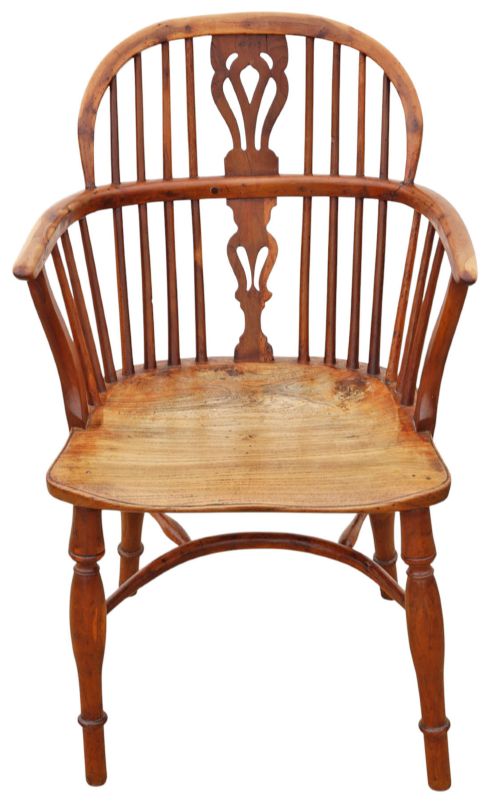
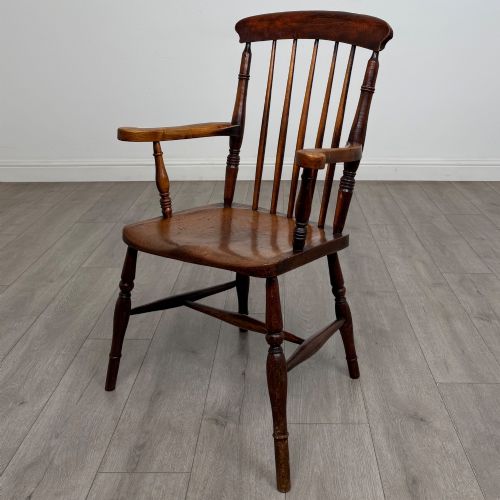
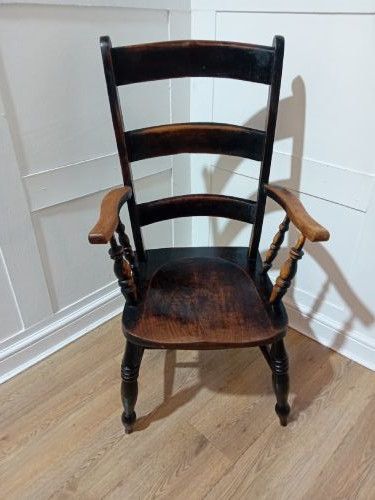
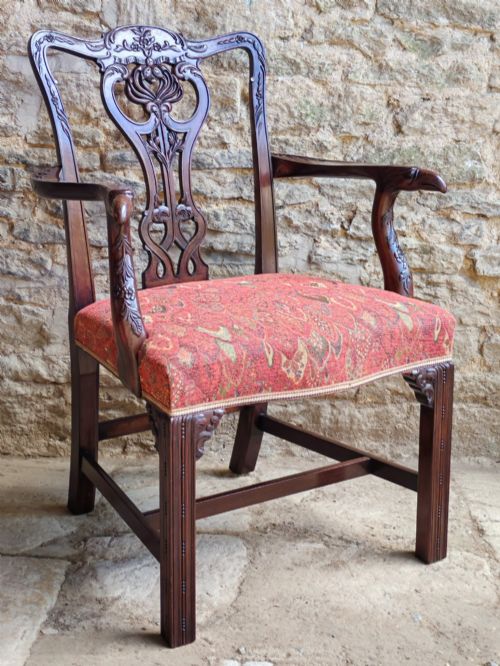
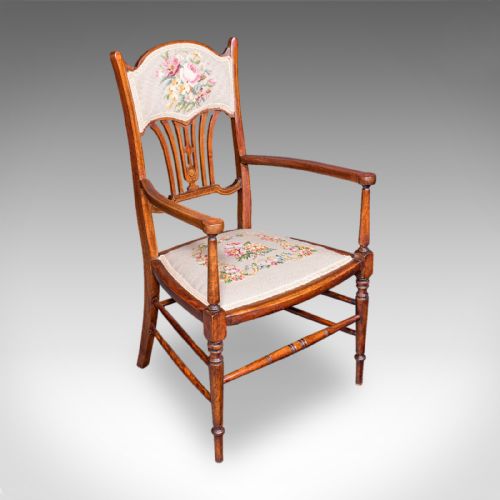
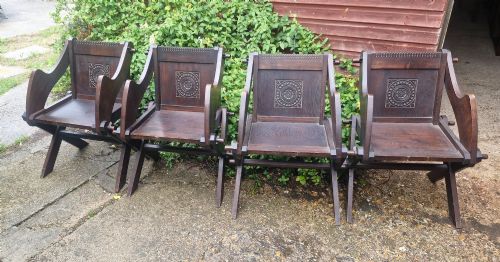
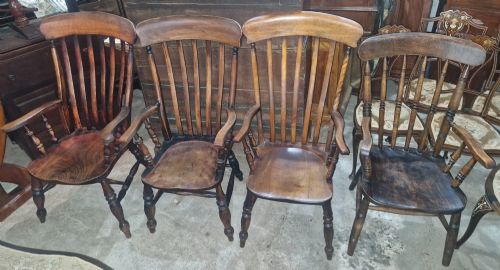
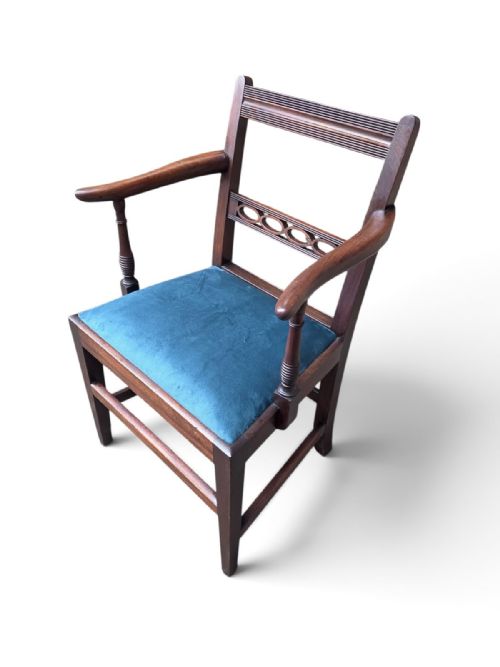
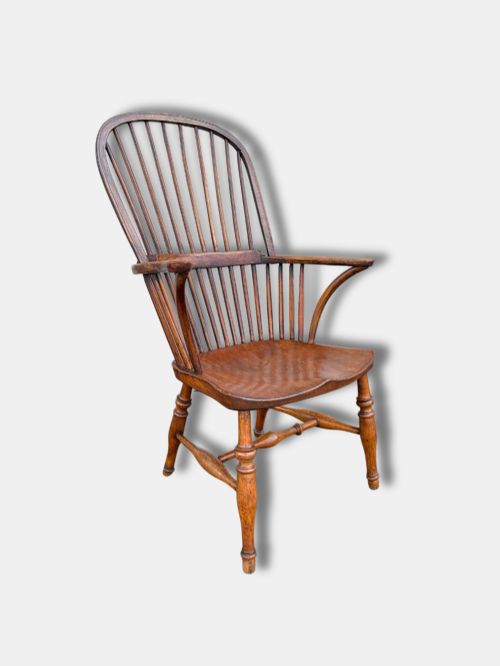
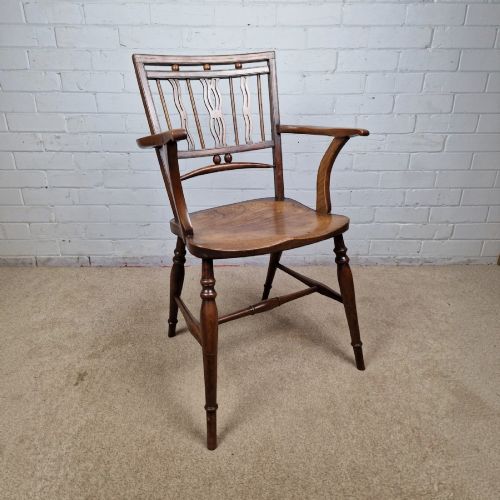
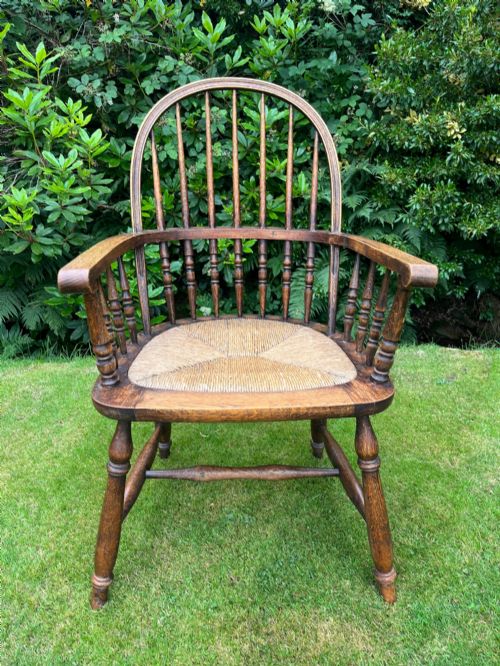
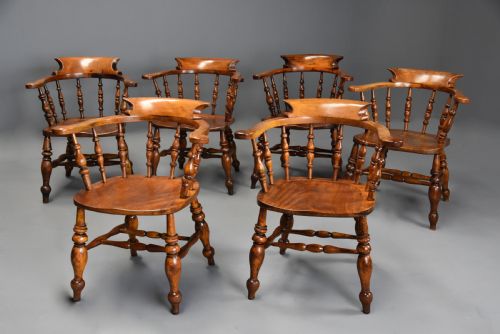
A victorian wooden elbow chair encompasses a variety of sturdy seating options spanning the nineteenth century, most frequently appearing as country Windsors, smokers bows, and occasional armchairs. Buyers examining this page encounter traditional forms constructed for daily use in farmhouses, morning rooms, and cottages across England. The selection draws heavily on regional variations featuring stick backs, lath backs, and carved splats designed to support the arms.
Judging quality and character
Quality rests upon the integrity of the timber selection and the retention of original surface finishes rather than overly polished restoration. Chairs featuring richly grained yew or well-figured elm seats command attention through their material depth and balanced proportions.
Constructional stability distinguishes standard utilitarian examples from finer pieces, particularly where turned members remain crisp and joints stay tight without intrusive modern replacements. The harmony between the bentwood bow and the carved arm supports dictates the visual success of each piece.
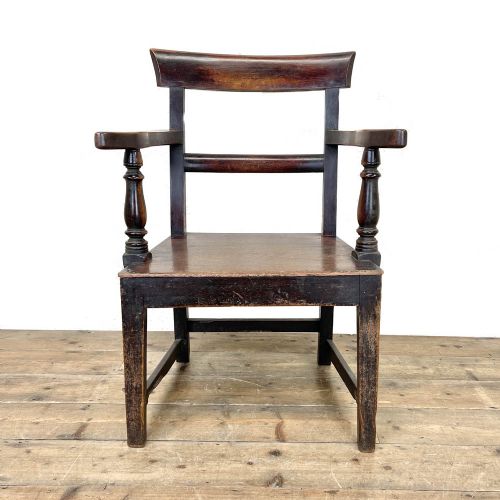
Some nineteenth-century writing chairs feature an exaggerated flat arm specifically widened for balancing an inkwell and a ledger.
Howard and Sons·E W Godwin
The Victorian Wooden Elbow Chair Glossary
- Windsor chair
- A wooden chair built with a solid saddle-shaped seat into which the back and legs are separately dowelled. These chairs rely on a heavy undercarriage for rigidity.
- Smokers bow
- A low-backed Windsor variant also known as a captain's chair, featuring a continuous curved armrail supported by turned spindles. They were common in nineteenth-century public houses and parlours.
- Broad arm
- A chair design featuring a widened flat wooden armrest intended for writing or resting. This feature appears frequently on country ash and elm armchairs.
- Stick back
- A chair back constructed from multiple plain turned spindles inserted into the seat and top rail. This method provides robust support with minimal ornamentation.
- Turner's chair
- A sturdy seat constructed entirely from heavy turned wooden members intersecting in a grid pattern. Also known as a Saxon chair, this form follows ancient vernacular traditions.
Victorian Wooden Elbow Chair: Frequently Asked Questions
What is a Windsor chair?
A Windsor chair is a wooden seat constructed by inserting legs and back spindles directly into a thick solid wooden seat.
This method creates a robust piece of furniture where the frame holds together through tight joints rather than a central box frame.
Where were these chairs used?
These chairs served utilitarian purposes across nineteenth-century farmhouses, cottages, kitchens, and morning rooms.
Their sturdy construction made them ideal for daily domestic tasks and heavy communal use.
How do I care for wooden chairs?
Maintain the wood by applying occasional clear wax and keeping the furniture away from direct heat sources.
Avoid excessive moisture to preserve the original finish and prevent the timber from drying out.
How do I identify a Victorian elbow chair?
Look for nineteenth-century timber choices such as elm, ash, and yew combined with traditional stick back or Windsor construction.
Details like saddle-shaped seats and turned arm supports point directly to this era of regional woodworking.