


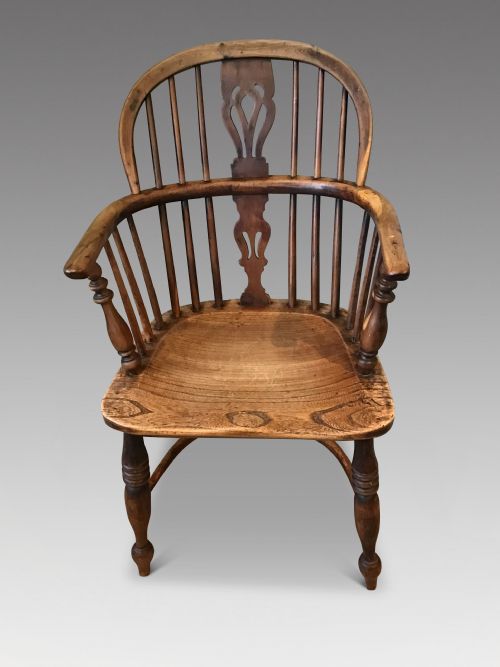

Yewwood Windsor Armchair
These yewwood windsor armchair examples combine timber and craft into seating built to last.
Yewwood Windsor Armchair
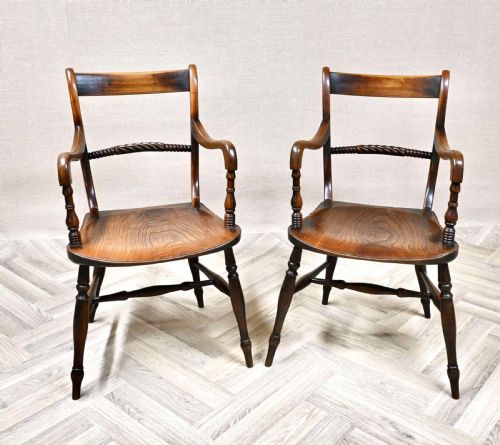
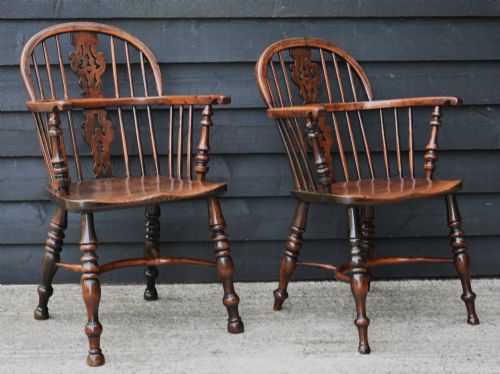
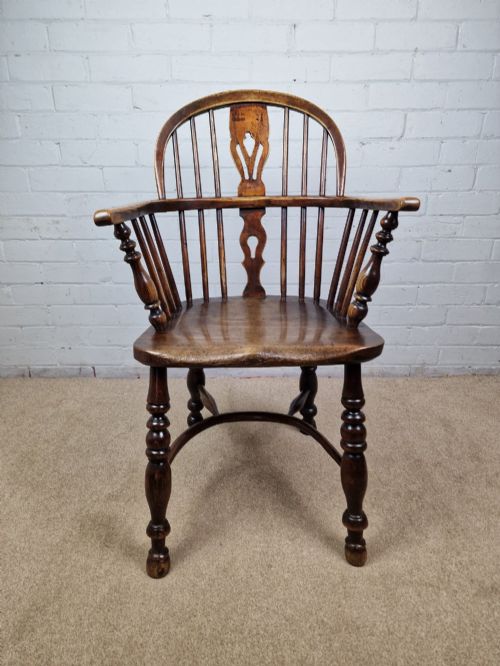
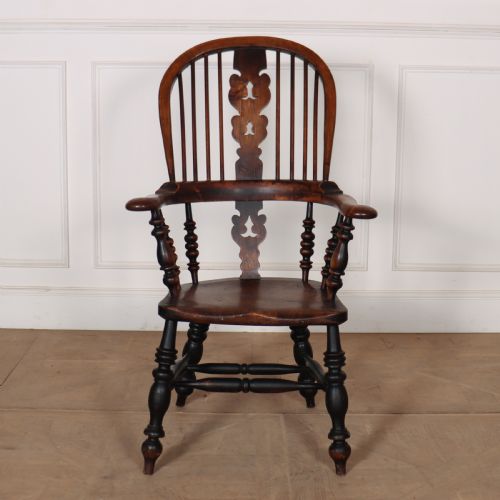
A yewwood windsor armchair represents traditional seating rooted in English country vernacular styles, featuring heavily in nineteenth century and Georgian periods. These armchairs typically combine a sculpted wooden seat with turned legs and spindled backs, built for both parlour and farmhouse use.
On this page, you will most frequently meet nineteenth century and Georgian examples, often incorporating elm, ash, and beech alongside yewwood. Regional variations emerge from places like Nottinghamshire, Yorkshire, and the Thames Valley, showing distinct local turning patterns and back designs.
How they were made
Maker construction methods rely on socketing spindles and legs directly into a solid timber seat, usually shaped from elm. This solid plank foundation provides stability for the steam-bent wood components and upright supports.
Turned beech and ash form the structural undercarriages and spindles, whilst yewwood supplies rich grain figures for the arms and upper back structures. Cabinet makers utilised native hardwoods, often pairing dark yew with paler elm and fruitwood in a single frame.
Some makers ingeniously spliced green ash and yew together, letting the natural tension of the wood lock the joints permanently.
What varies in quality
Quality differences rest in the selection of timbers and the complexity of the back design, such as high comb backs, barbacks, or draught backs. Richly figured yew wood combined with thick elm seats separates standard regional chairs from exceptional workshop pieces.
The refinement of the spindle turnings and the ergonomic shaping of the comb or bow dictate aesthetic merit. Master turners created balanced proportions with crisp detail, whereas utilitarian pieces display simpler, heavier forms.
Allsop Worksop
The Yewwood Windsor Armchair Glossary
- Comb back
- A Windsor chair style where the central spindles extend upward into a horizontal top rail resembling a comb. This design offers elevated back support.
- Draught back
- A chair featuring extended wing pieces or solid wooden shields beside the head to deflect cold air. These were practical additions for fireside placement.
- Barback
- A design incorporating a horizontal wooden slat across the upper spindles instead of a continuous bent bow. This provides a distinct profile common in nineteenth century seating.
- Vernacular
- Objects built by local tradesmen following regional traditions rather than strict London fashion. These pieces reflect local timber availability and practical utility.
Yewwood Windsor Armchair: Frequently Asked Questions
What is a yewwood windsor armchair?
A yewwood windsor armchair is a traditional wooden seat featuring a solid plank saddle seat with spindles inserted directly into the base.
These chairs combine native timbers like yew, elm, and ash, developing through regional English styles during the Georgian and nineteenth century periods.
How do I identify regional styles?
Regional origins appear through specific turning details on the legs and the structural configuration of the back rails and armbows.
Workshops in places like Yorkshire, Nottinghamshire, and the Thames Valley utilised local turning patterns and timber combinations unique to their district.
Are these chairs comfortable for daily use?
The saddle-shaped wooden seats are ergonomically carved to fit the body, offering surprising support for upright sitting.
Adding a loose cushion provides extra comfort whilst preserving the exposed timber grain and historic structure of the seat.
What woods were used besides yew?
Elm served as the primary choice for the solid plank seat because its interlocking grain resisted splitting under inserted legs.
Ash, beech, and fruitwood supplied strong, flexible timber for the steam-bent bows, slender spindles, and turned undercarriage legs.