




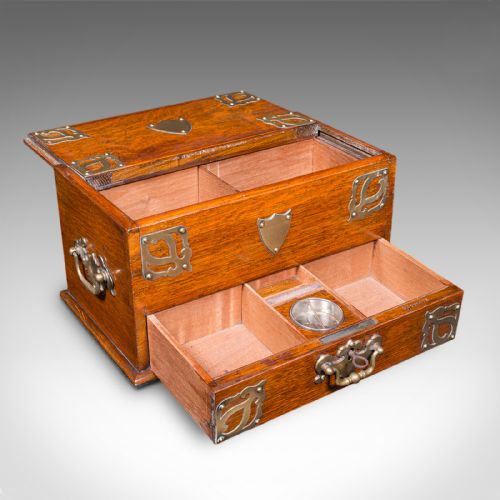


Victorian Wooden Caddy Box
These Victorian wooden caddy box pieces, from tea caddies to stationery boxes, bring tactile 19th-century craftsmanship into a modern room.
Victorian Wooden Caddy Box
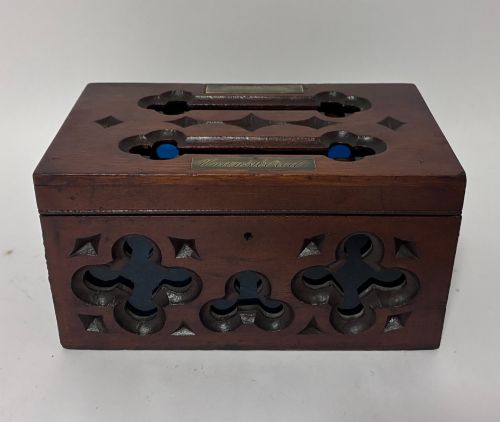
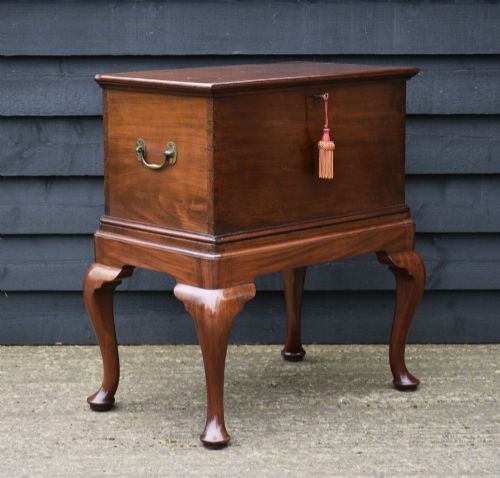
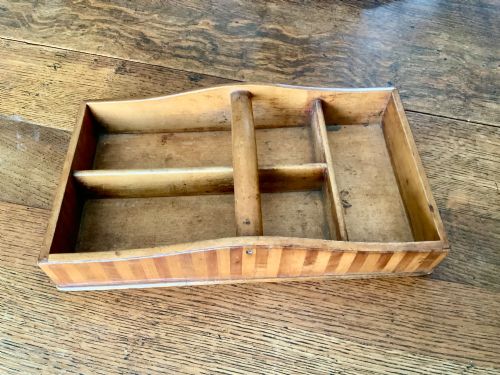
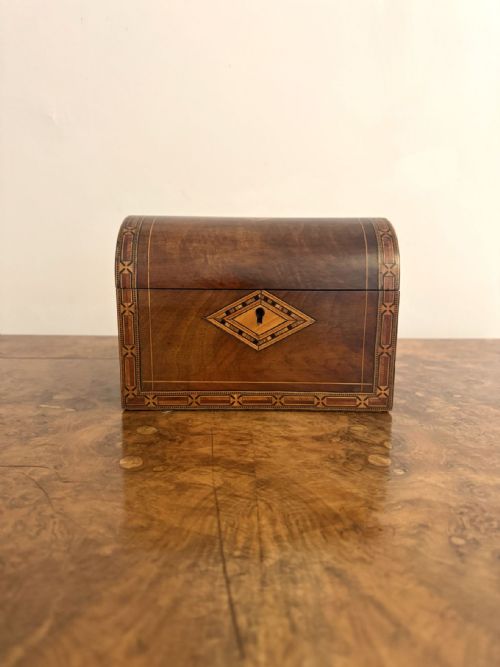
A victorian wooden caddy box encompasses a range of lidded containers designed to hold tea, letters, or small personal effects. The forms span from sarcophagus-shaped tea caddies to desk stationery boxes and decorative caskets.
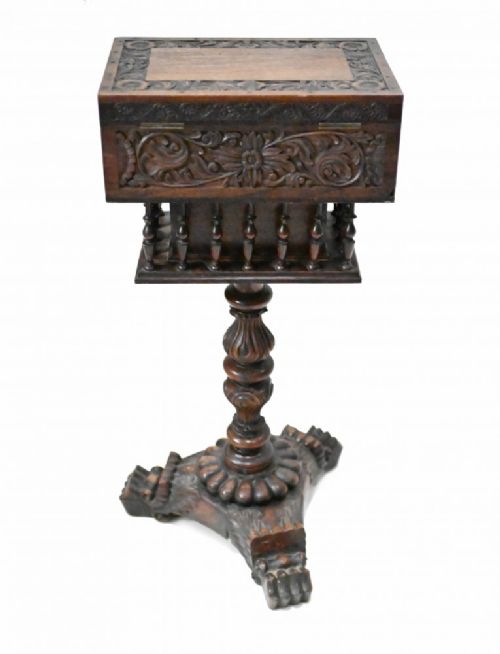
Most pieces date from the nineteenth century, including specific decades like the 1850s, 1860s, 1880s, and 1890s, with Edwardian examples also appearing. The selection includes work boxes, teapoys, and document cases alongside traditional tea storage.
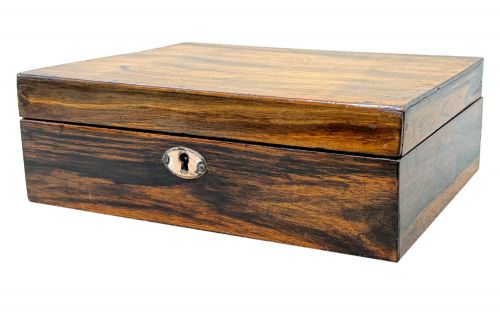
Rosewood, mahogany, and walnut dominate the offerings, often shaped into dome-top or rectangular profiles. Buyers encounter both plain timber grains and highly decorated surfaces.
How they were made
Cabinetmakers utilised dense hardwoods such as rosewood, mahogany, oak, and walnut as the structural base for each victorian wooden caddy box. These woods were chosen for stability and distinctive grain patterns like flame mahogany and burr walnut.
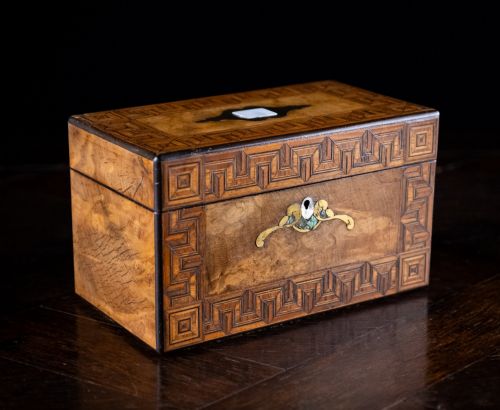
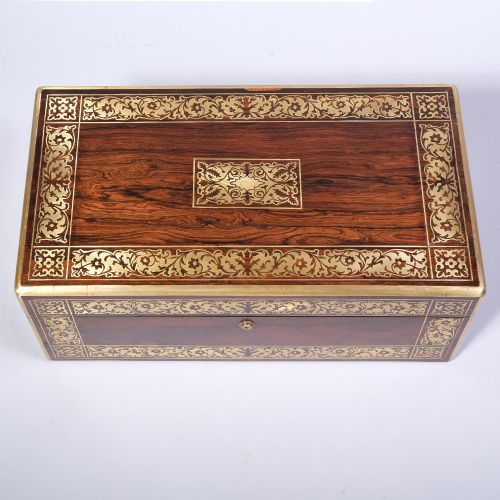
Surface decoration involved intricate brass mounting, mother-of-pearl inlay, parquetry, and Tunbridge Ware mosaic work. Metal handles, escutcheons, and silver plate elements complemented the woodwork.
Listings feature periods from the 1850s through to the Edwardian era, constructed in oak, rosewood, walnut, and mahogany with brass and Tunbridge inlay.
What varies in quality
The sophistication of the timber preparation and veneer selection determines the visual impact of the piece. Highly figured burr veneers and matched grains elevate the status of a box.
Complexity of inlay work and the precision of brass or mother-of-pearl detailing separate standard utility containers from fine decorative pieces. Original keys, fitted internal compartments, and well-preserved hinges also influence the character of the box.
Henry Hollamby·Tahan of Paris·Freemans of Norwich
The Victorian Wooden Caddy Box Glossary
- Sarcophagus form
- A box shape featuring a domed or stepped lid tapering down to a broader base, reminiscent of a classical stone coffin. This profile was popular for tea caddies during the nineteenth century.
- Tunbridge Ware
- Small wooden objects decorated with mosaic patterns created from thousands of tiny tinted wood blocks. Named after the town of Tunbridge Wells, these mosaics depict geometric designs or pictorial scenes.
- Teapoy
- A small table fitted with a box or containers for holding tea, often mounted on a central pillar with tripod feet. They served as movable tea stations in the drawing room.
- Parquetry
- Geometric mosaic woodwork formed by fitting thin pieces of wood together to create a patterned surface. It differs from marquetry by relying on angular, repetitive shapes.
- Escutcheon
- A flat plate of brass or metal surrounding a keyhole to protect the surrounding wood. They often feature decorative engraving or shaped outlines.
- Boulle
- A form of marquetry consisting of tortoiseshell and brass inlay developed in France. It creates a shimmering contrast of dark shell and polished metal.
Victorian Wooden Caddy Box: Frequently Asked Questions
What was a tea caddy used for?
Tea caddies served as secure containers for storing precious tea leaves when tea was an expensive commodity. They often featured internal lidded compartments to keep different varieties separate.
Many examples included a small glass or crystal mixing bowl in the centre. The box remained locked to prevent domestic staff from accessing the valuable contents.
What is the difference between a tea caddy and a work box?
Tea caddies contain internal lidded canisters or foil-lined compartments specifically dimensioned for loose tea leaves. Work boxes are designed for sewing and crafting materials, containing trays with small partitioned spaces for thread, needles, and pins.
Work boxes often feature a velvet or silk-lined inner lid designed to hold pins or small tools. Their overall proportions tend to be broader and shallower than traditional tea containers.
Can I use these boxes for modern storage?
These historical containers adapt readily to holding contemporary items such as jewellery, trinkets, or stationery. Stationery boxes and correspondence chests work well on modern desks for letters and small documents.
Care should be taken to protect delicate interior linings from moisture or sharp objects. Placing them away from direct sunlight preserves the polished wood and inlay work.