



Victorian Wooden Barometer
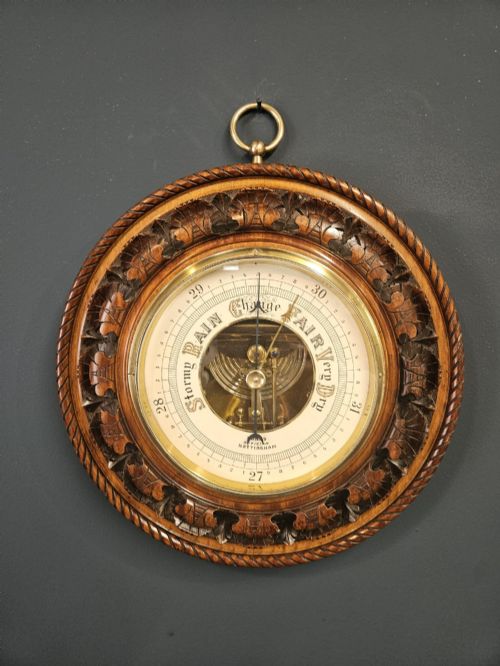
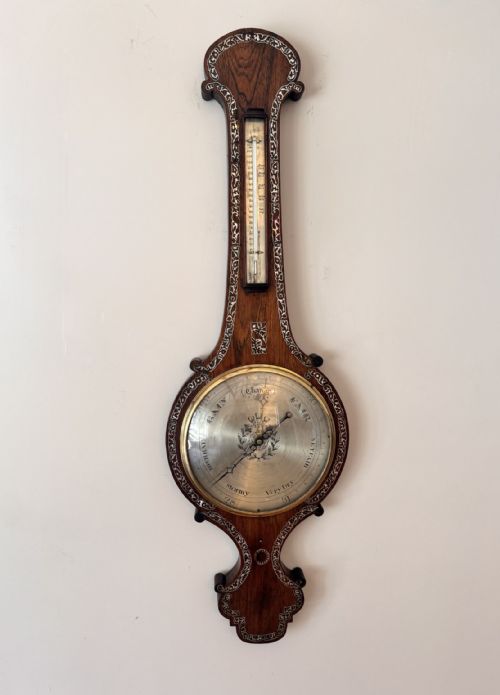
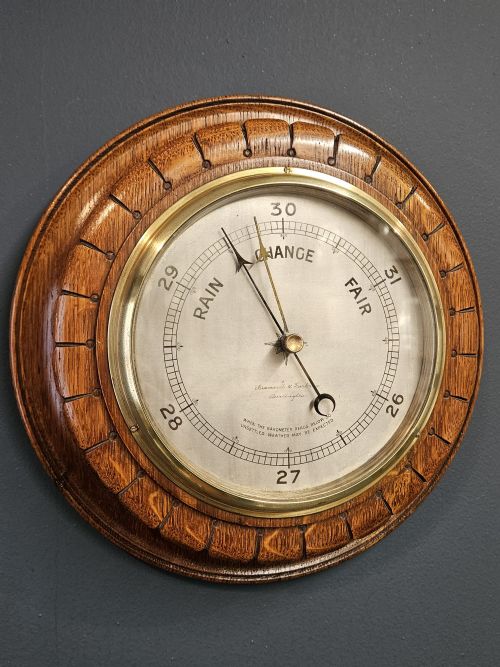
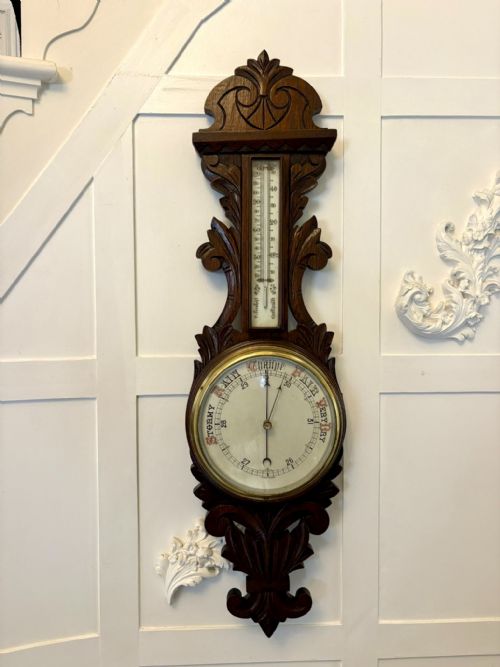
A victorian wooden barometer measures atmospheric pressure while anchoring a room with dense timber and crisp white dials.
Victorian Wooden Barometer
A victorian wooden barometer brings domestic science and functional wall furniture together into one instrument. The pieces found here span straightforward wall mountings to elaborate carved statements, reflecting how nineteenth-century households combined utility with display.
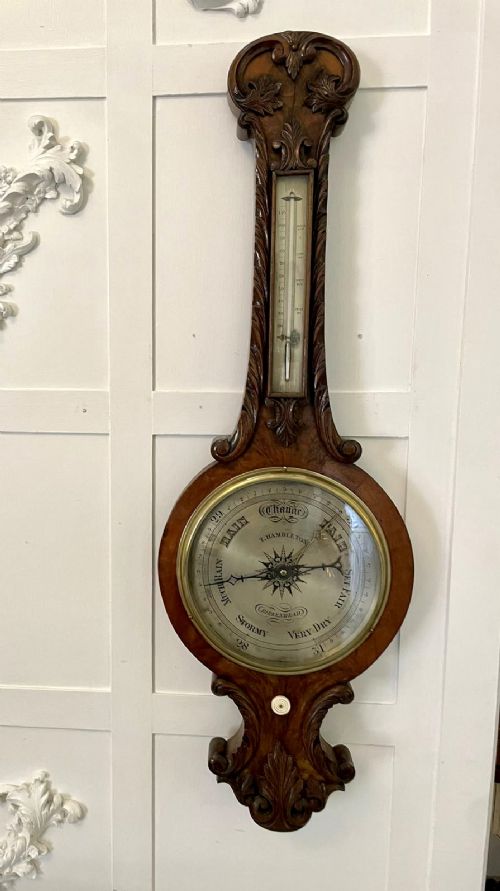
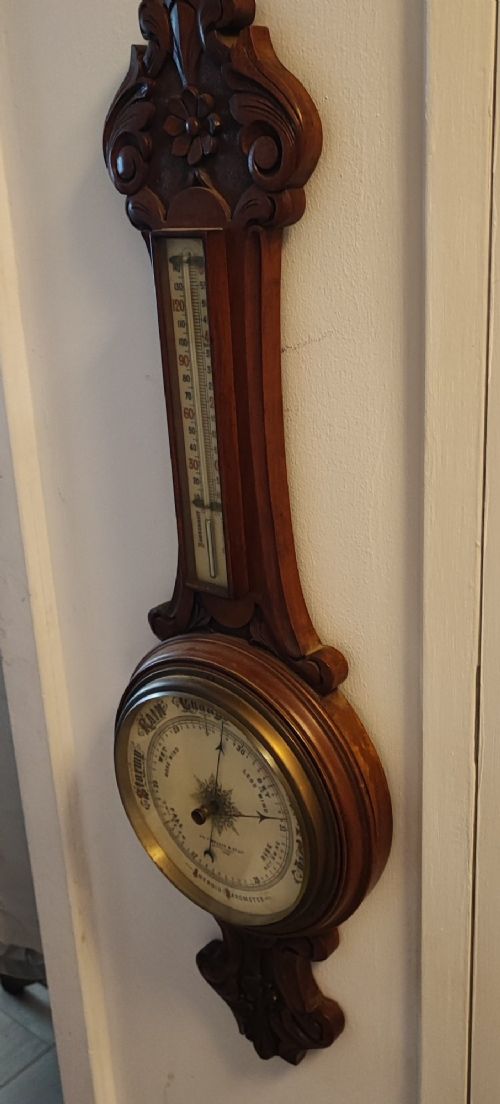
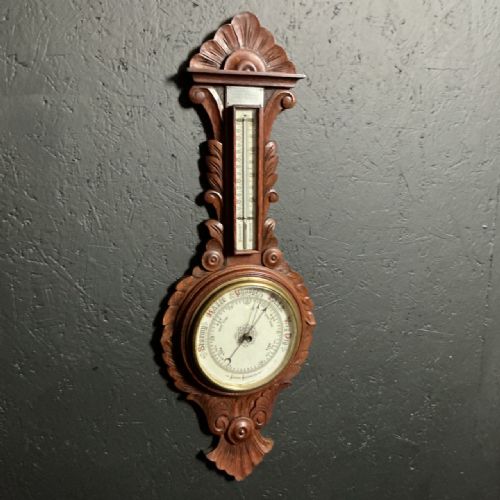
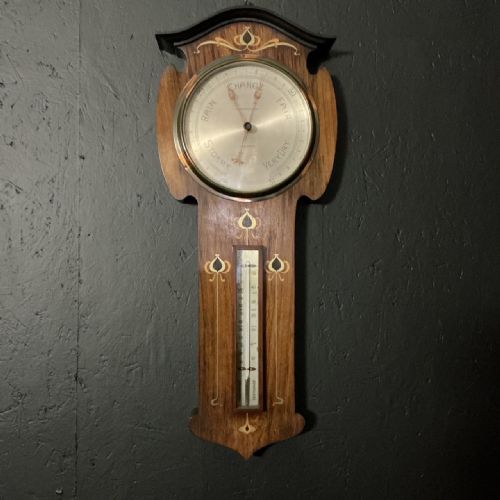
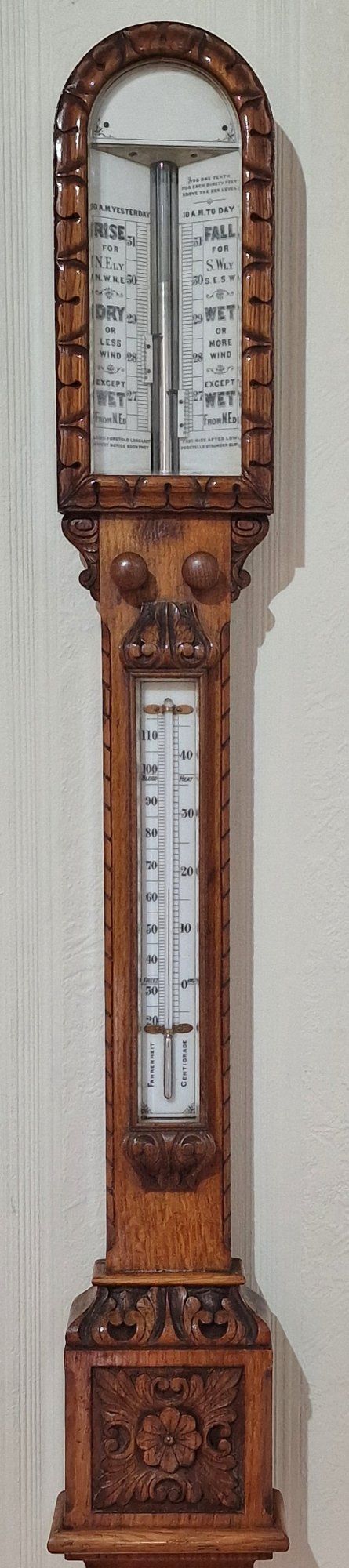
Banjo shapes and stick formats dominate the selection, often housing a thermometer alongside the main dial. Oak, walnut, and mahogany form the structural body of these items, showing the deep tones typical of the period.
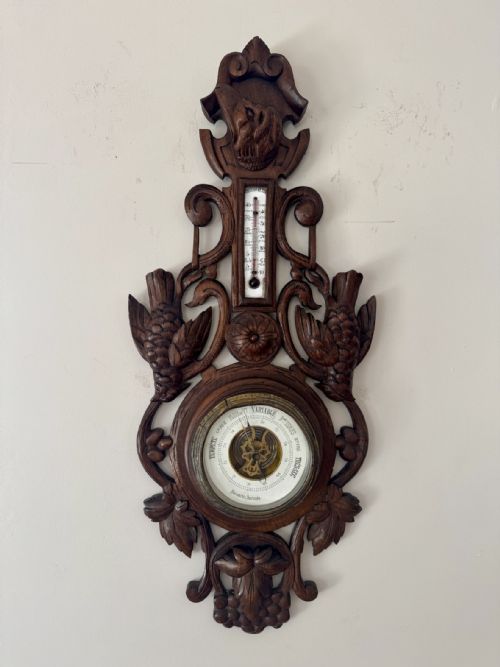
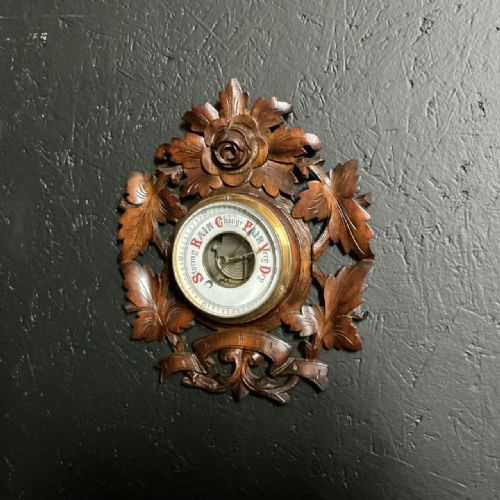
Black Forest interpretations introduce heavy carving depicting foliage and birds, while standard Victorian examples rely on geometric framing or clean wood grains. Certain specimens also incorporate clock movements or mother-of-pearl inlay into the wooden chassis.
Materials and construction
Makers shaped dense hardwoods including oak, walnut, mahogany, and rosewood to house fragile glass tubes and mechanical movements. Solid timber provided the weight needed for wall hanging, while veneers allowed artisans to display figured grain patterns across wider banjo bodies.
Carvers utilised hand tools to render deep relief foliage and animal motifs, particularly on Black Forest items, contrasting with the smooth polished surfaces of standard domestic models. Brassbezels protected the glass faces, and silvered metal dials received engraved markings for barometric pressure readings.
The listings include examples from the Victorian, Edwardian, and Arts and Crafts periods, constructed from oak, walnut, and mahogany.
Distinguishing quality
The crispness of the wood carving separates standard production from exceptional work, especially on pieces adorned with birds, leaves, or geometric patterns. Deep relief and sharp undercutting demonstrate the hand of a skilled artisan rather than routine workshop output.
The integration of secondary functions, such as thermometer scales, inlaid mother-of-pearl, or combined clock movements, alters the complexity of the piece. Cases with balanced proportions and well-preserved silvered dials retain greater visual authority on the wall.
Bramwell & Harbron of Darlington·W Watson & Sons·Jenkins Of Old Swindon·Negretti & Zambra·L Casatelli of Liverpool·W.E. Pain of Cambridge·James Pitkin London
The Victorian Wooden Barometer Glossary
- Aneroid barometer
- An instrument that measures air pressure using an internal expanding metal capsule rather than liquid mercury. These mechanical units made wall-mounted barometers safer and more common in homes.
- Banjo barometer
- A wall barometer featuring a rounded top head and an elongated vertical body shaped like the stringed musical instrument. This format often accommodates a thermometer and hygrometer along the stem.
- Stick barometer
- A tall, slender wall instrument containing a vertical glass tube filled with mercury. This traditional design offers a direct view of the column height.
- Silvered dial
- A metal face treated to achieve a frosted, silvery finish before the numbers and graduations are engraved and blackened. It provides high contrast behind the glass and brass bezel.
- Black Forest style
- A carving tradition originating in central Europe known for naturalistic depictions of animals and foliage. These items display dense ornamentation worked directly into walnut or lime wood.
Victorian Wooden Barometer: Frequently Asked Questions
How do aneroid barometers work?
Aneroid barometers use a sealed corrugated metal box that compresses or expands as air pressure changes. This movement transfers through levers and springs to turn the pointer on the dial.
Because they contain no liquid, these instruments could be mounted vertically on walls without special handling precautions.
Where were barometers placed in Victorian homes?
Households typically hung barometers in hallways, libraries, or parlours where family members and guests could consult the weather before heading outside.
Larger banjo models served as prominent decorative furniture pieces as well as practical instruments.
What is an Admiral Fitzroy barometer?
An Admiral Fitzroy barometer is a specific stick-type weather glass developed to help fishermen and coastal communities predict storms. These instruments often include printed instructions and remarks on the card behind the glass.
They combine a mercury tube with a thermometer and a secondary weather-prediction chart.
How do I care for wooden barometer cases?
Keep wooden barometer cases away from direct sunlight and steady heat sources to prevent the timber from splitting or warping. Dust the carved details gently with a dry brush.
Avoid applying modern liquid polishes that might build up within intricate wood carvings or damage fragile paper dials.