
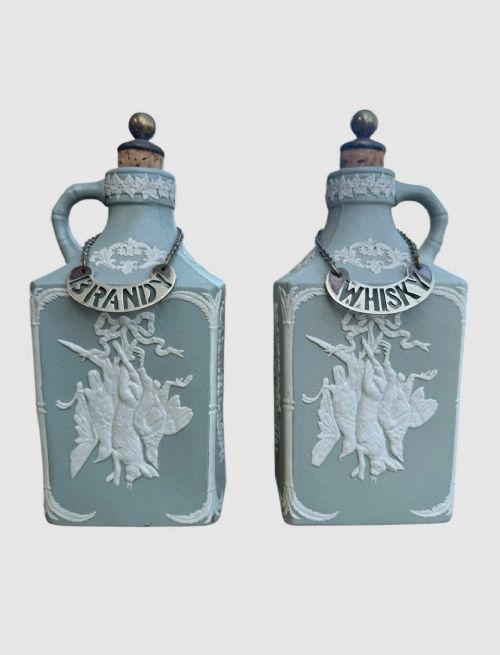


Victorian Whisky Flagon
A victorian whisky flagon brings heavy stoneware, cut glass, and silver mounts to the sideboard, offering a tangible link to nineteenth-century hospitality.
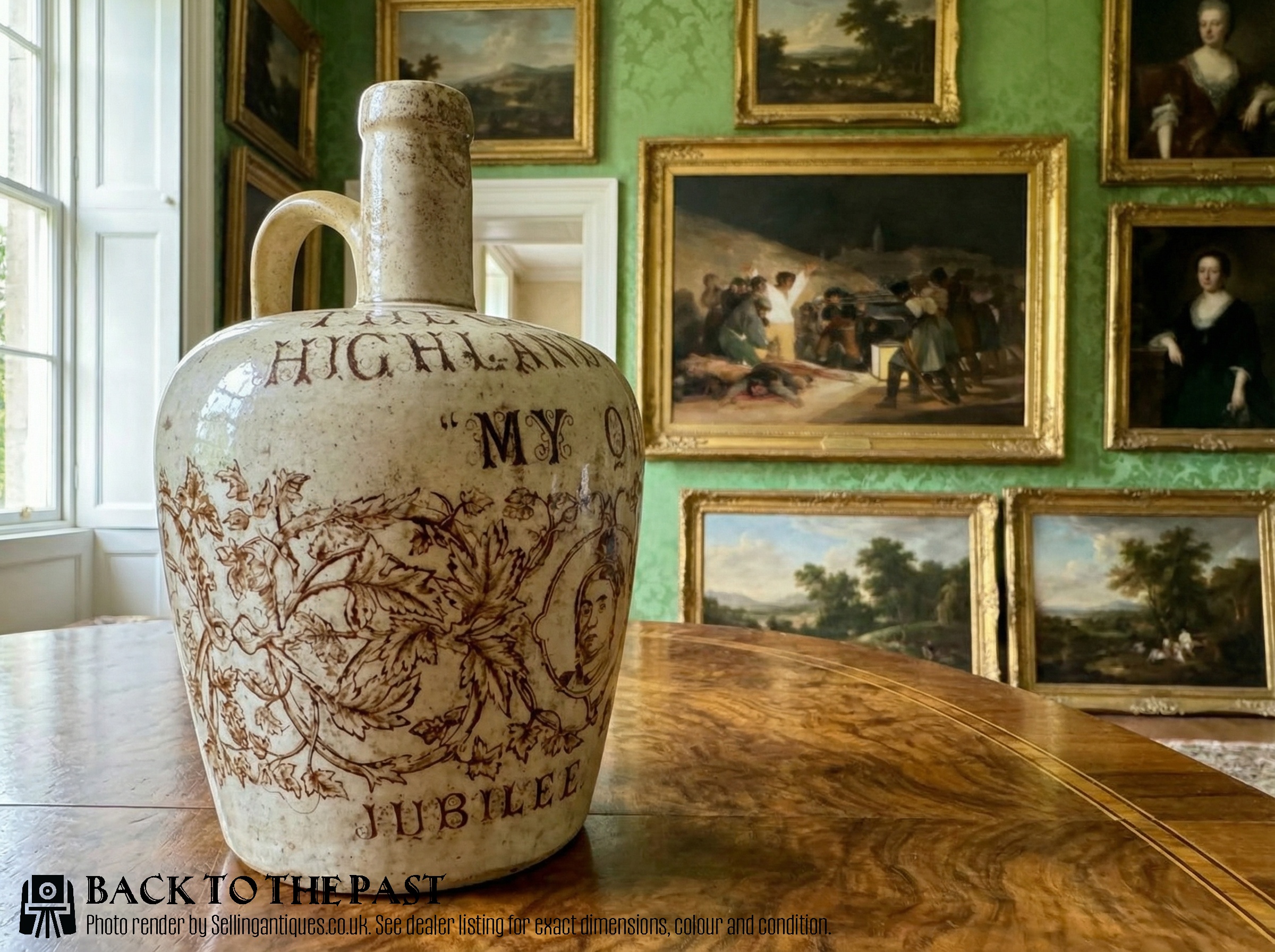
Victorian Whisky Flagon
A victorian whisky flagon encompasses robust stoneware jugs, leather-covered spirit bottles, and cut glass decanters designed for serving spirits during the nineteenth century and into the Edwardian era. Buyers seeking this search phrase encounter pieces ranging from brown-glazed ceramic flagons bearing specific motifs to ornate glass vessels fitted with silver mounts.
The material selection varies considerably across the listings, spanning ceramic, glass, stoneware, and silver plate, alongside functional additions like cork stoppers. Forms extend from simple carafes housed in caddies to decorated spirit flagons and decanters carrying hallmarks from cities such as Glasgow.
Originating predominantly from English and Scottish makers, these vessels reflect the robust manufacturing traditions of the period. Pieces frequently exhibit specific thematic decorations, including golfing motifs or floral etching, connecting utilitarian drinkware directly to period leisure pursuits.
Materials and Manufacture
Makers utilised durable materials such as dense stoneware and heavy-walled glass to withstand regular handling, while employing ceramic techniques to produce glazed flagons like those from Royal Doulton and Port Dundass. Stoneware jugs often received specialised brown glazing and applied relief decoration, such as sporting scenes.
Glass vessels required skilled cutting and engraving, demonstrated by facet-cut profiles and intricate floral etching across the body. Artisans then fitted these glass bodies with silver mounts, handles, and figurine tops, securing them with cork stoppers for daily service.
Materials represented across the selection include silver plate, glass, stoneware, leather, ceramic, and jasperware.
Assessing Quality and Execution
Quality rests in the crispness of the modelled or engraved decoration, whether evaluating the depth of cut glass facets or the sharp definition of a stoneware golfing motif. Superior examples display balanced proportions between the ceramic or glass body and any added metal mounts.
The integration of precious materials elevates a piece, distinguishing simple utilitarian containers from presentation items featuring hallmarked silver mounts and detailed figurine stoppers. Preservation of the original components, from corks to leather sleeves, dictates the overall integrity of the surviving vessel.
Royal Doulton·Port Dundass
The Victorian Whisky Flagon Glossary
- Stoneware
- A heavy, impermeable ceramic fired at high temperatures. It provides a durable body suitable for storing and serving spirits without absorption.
- Jasperware
- A fine stoneware developed with a matte surface, often featuring contrasting applied white reliefs against a coloured ground. It appears on decorative spirit flagons.
- Silver Mount
- A fitted collar, handle, or rim cast in silver and attached to glass or ceramic bodies. These mounts frequently bear assay office hallmarks and date letters.
- Decanter
- A decorative vessel designed for holding and serving wine or spirits. Unlike standard bottles, they often incorporate stoppers and distinct faceted or engraved surfaces.
Victorian Whisky Flagon: Frequently Asked Questions
What distinguishes a flagon from a decanter?
A flagon traditionally denotes a heavy, handled jug often made of stoneware or ceramic for holding liquids, while a decanter typically refers to a glass vessel intended for serving.
In nineteenth-century usage, the terms sometimes overlap in marketplace descriptions, particularly when both are used for serving whisky.
Were these flagons used for daily dining?
Middle and upper-class households utilised these vessels for decanting spirits from larger storage containers onto the dining table or sideboard.
Stoneware versions were equally suited to tavern or club settings, whilst glass and silver-mounted pieces occupied more formal domestic spaces.
How should I clean a glass whisky flagon?
Careful hand washing in warm water with a mild detergent preserves both the glass and any remaining silver mounts.
Harsh abrasives must be avoided to protect engraved surfaces and delicate metal elements from unnecessary wear.
Can I still use these for storing whisky?
Many ceramic and glass vessels remain mechanically sound for serving spirits during gatherings or meals.
Historical cork stoppers may require replacement or careful handling to ensure a proper seal.
How do I date a silver-mounted piece?
Hallmarks stamped onto the silver mounts provide city marks, standard marks, and date letters that identify the exact year of assay.
Matching these stamps with regional records offers a precise manufacturing date for the metal components.