




Victorian Whiskey Bottle
A victorian whiskey bottle brings heavy cut glass and secure locking frames to the sideboard.
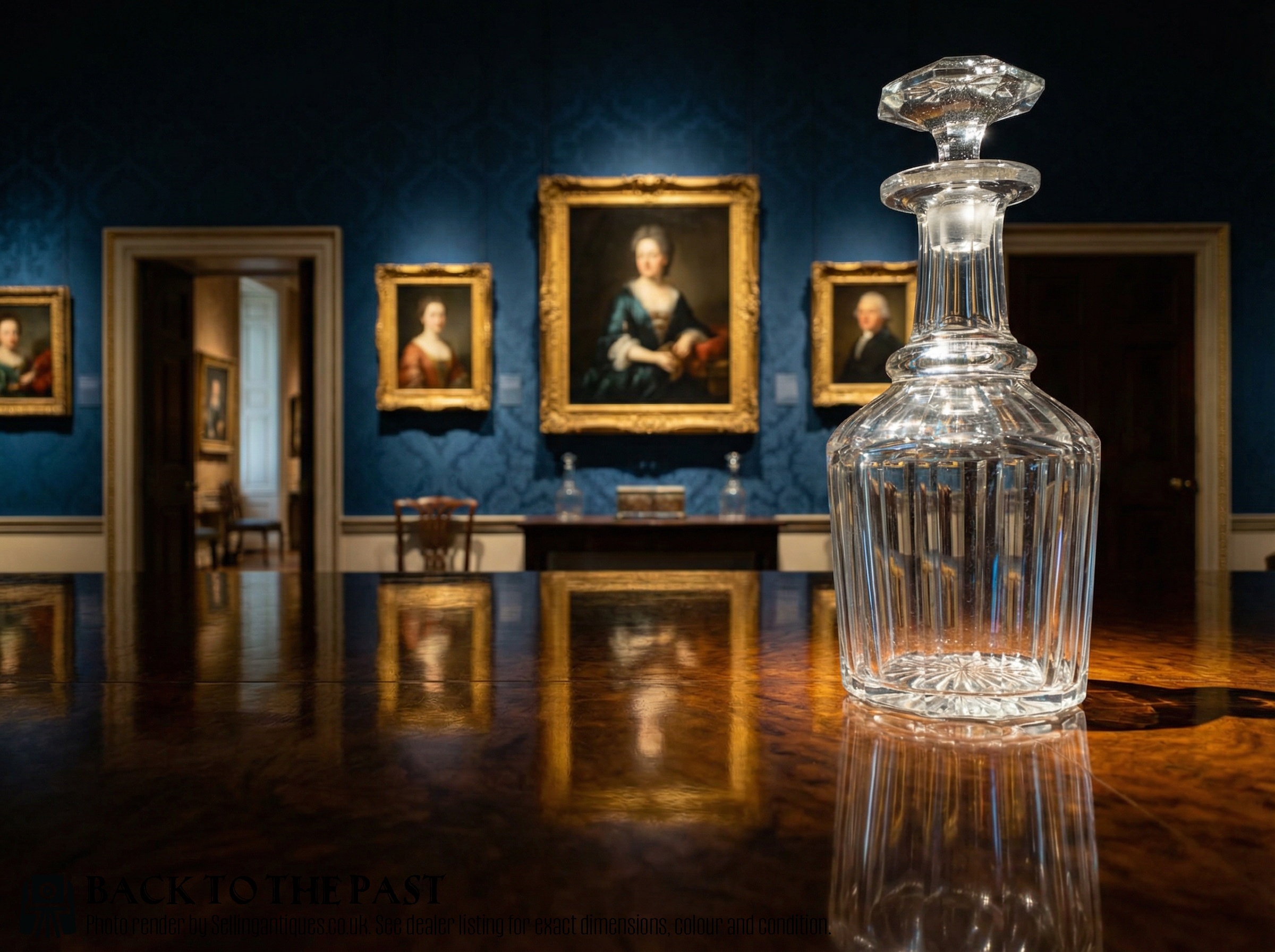
Victorian Whiskey Bottle
When searching for a victorian whiskey bottle, buyers encounter everything from single glass decanters to multi-bottle tantalus sets housed in oak or satinwood frames. These vessels served the Victorian dining room and drawing room for dispensing spirits after dinner.
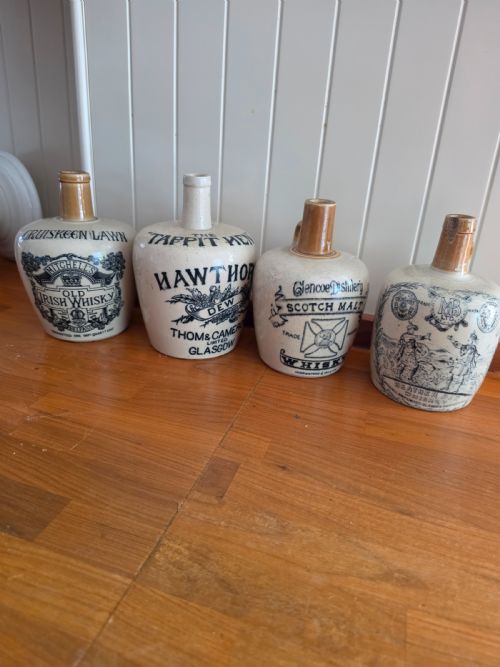
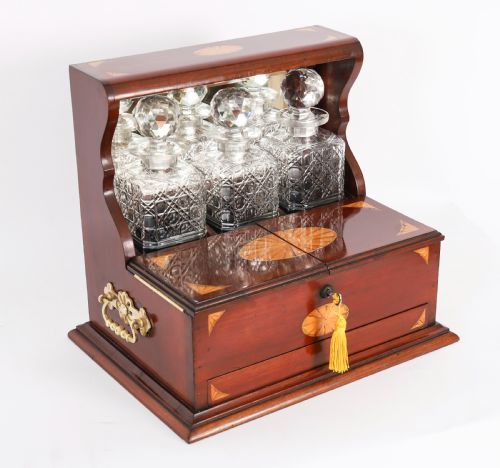
The most common forms on this page include cut glass decanters, stoneware flagons, and framed tantalus sets fitted with brass mounts or silver plate. Many examples originate from Scottish and English makers, reflecting regional blending traditions of the nineteenth century.
How They Were Made
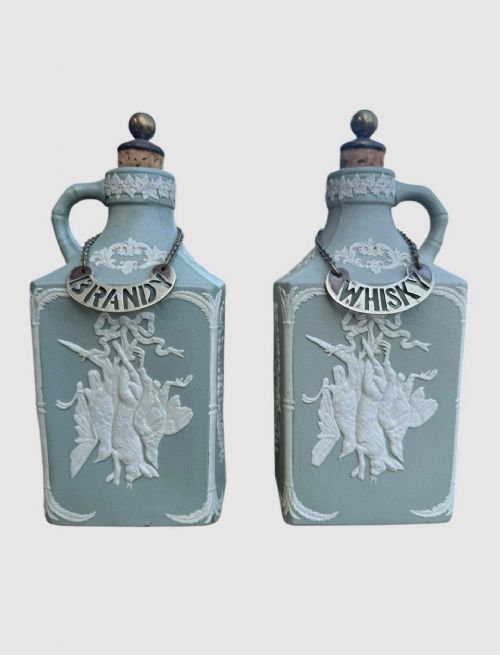
Glass vessels rely on heavy cutting and crystal blowing, often finished with silver collars, mounts, or engraved floral motifs. Stoneware pieces utilise salt-glazing techniques, producing brown or jasper bodies suited to advertising flasks.
Cabinet work involves solid oak and satinwood frames fitted with brass lock mechanisms and silver plating. Cork stoppers and metal bottle fittings complete the assembly, securing contents within locking decanter sets.
Victorian Whiskey Bottle Retail Price Guide 2026
Typical asking prices for victorian whiskey bottle among the pieces listed under this phrase on Sellingantiques today, from the lower quarter to the upper quarter. They describe what is for sale here now, not the wider market.
Listings feature periods spanning the Victorian era through the Edwardian period, incorporating oak, brass, and cut crystal.
What Varies in Quality
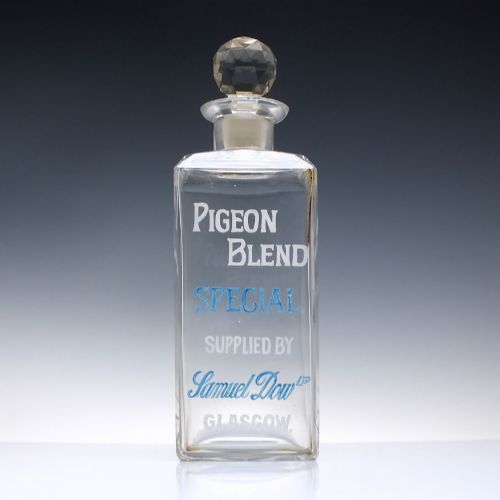
Quality rests in the depth of crystal cutting, the clarity of the glass, and the weight of the silver or brass mounts. Finer decanters display sharp diamond facets and matching stoppers, whilst lesser examples show simpler moulded bodies.
Framed pieces depend on the joinery of the timber and the precision of the locking mechanism. Complete sets with matching bottles and functional brass locks command greater interest than assembled or replacement groups.
Royal Doulton Kingsware·Elkington·Hukin and Heath·Betjemann Brothers·Port Dundass
The Victorian Whiskey Bottle Glossary
- Tantalus
- A locking frame that holds spirit decanters securely visible while preventing access without a key. The design frustrates guests by locking the bottles in place.
- Stoneware
- A dense, impermeable ceramic fired at high temperatures, frequently used for durable advertising and spirit flasks. Brown glazes protect the porous clay beneath.
- Silver Plate
- A thin layer of silver fused to a base metal, commonly utilised for decanter stands and bottle collars. It offers the appearance of solid silver at a lower weight.
- Mell Decanter
- A specific regional form of Scottish glass decanter, often produced in blue glass. These bottles served local whisky houses and blending operations.
Victorian Whiskey Bottle: Frequently Asked Questions
What is a tantalus?
A tantalus is a wooden frame fitted with a locking metal bar that secures whiskey bottles across the neck. This device kept expensive spirits locked away from domestic staff while displaying them on the sideboard.
The locking mechanism uses a key to release the top bar, allowing the decanters to be lifted free. Oak and satinwood were standard materials for the frames, often reinforced with brass corners.
How do I identify a Victorian decanter?
Victorian decanters typically feature heavy cut glass or crystal bodies with deep geometric facets and star-cut bases. Silver collars and etched floral motifs frequently accompany these nineteenth-century pieces.
Dates are often indicated by the style of the silver mounts and registration marks stamped into the metal. Stoneware jugs and flagons from the same era display brown salt-glazes and moulded lettering.
Were these bottles used for Scotch?
Many decanters and flagons held Scotch whisky, often bearing enamel labels or regional names from Glasgow and Aberdeen. Stoneware flasks frequently advertised specific blends and distilleries directly on the ceramic body.
Leather cases and fitted wooden boxes also transported whisky bottles for travellers and mountaineers of the period. These portable sets kept glass flagons secure during transit.
How should I clean antique glass?
Antique glass requires gentle washing in warm water with mild soap, avoiding sudden temperature changes that can crack old crystal. Cork stoppers should be kept dry to prevent deterioration of the natural material.
Silver mounts and brass hardware benefit from occasional polishing with a soft cloth to maintain the metal finish. Care must be taken around enamelled lettering or fragile etched details on the glass surface.