

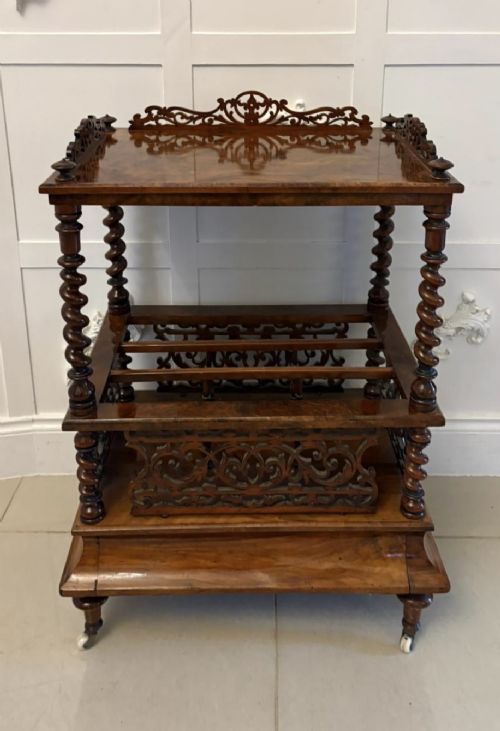
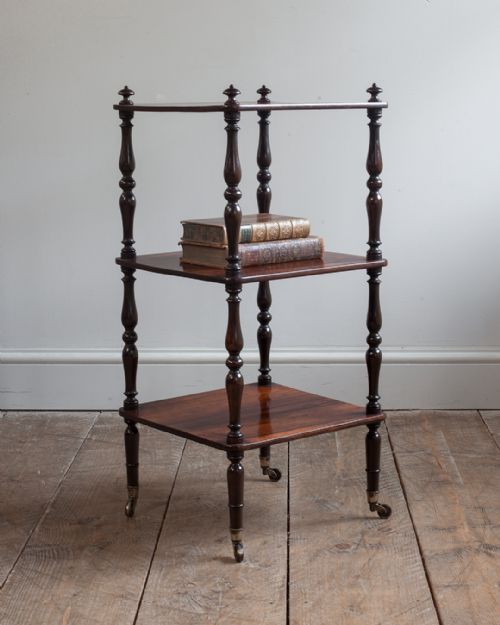
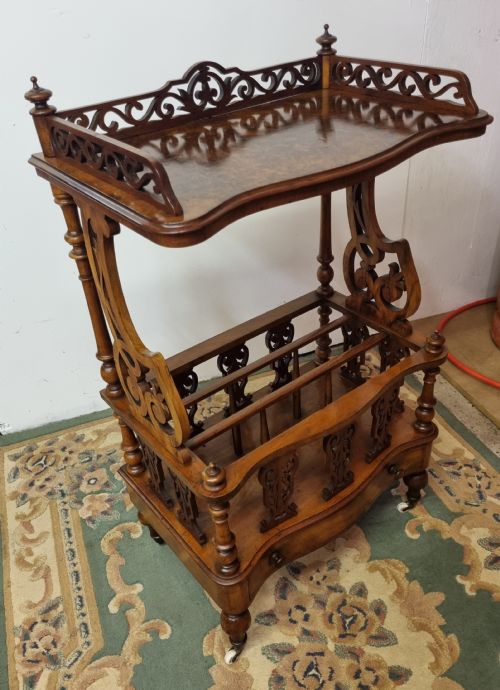
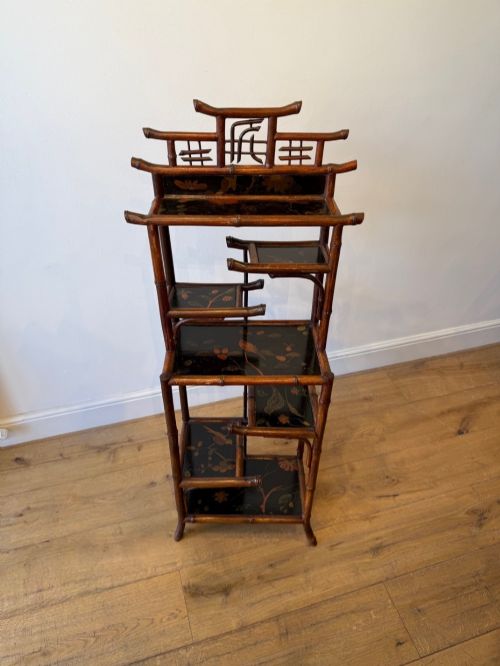


Victorian What Not Stand
A Victorian what not stand offers tiered shelving designed to display ornaments and hold books.
Victorian What Not Stand
When you search for a Victorian what not stand, you encounter multi-tiered display furniture originating primarily across the nineteenth century. These pieces appear frequently as freestanding shelves, corner units, or combined with canterburys and music cabinets.
The domestic role of these items centres on display and storage, often holding ceramics, books, or writing materials in principal rooms. Mahogany, walnut, and rosewood forms dominate the selection, reflecting the preferred hardwoods of the period.
Distinctions in craftsmanship
The refinement of the timber selection largely separates standard utility items from exhibition-grade pieces. Figured burr walnut veneers and intricate marquetry indicate higher workshop standards.
Structural complexity, such as integrated drawers, serpentine shaping, or combined canterbury sections, demonstrates superior cabinet work. The crispness of turned supports and the integration of brass hardware further distinguish finer examples.
Object forms range from simple three-tier corner shelves to complex combinations with drawers and magazine racks.
Gillows·Holland & Sons
The Victorian What Not Stand Glossary
- Whatnot
- A piece of furniture consisting of multiple open shelves for displaying small objects. These tiered stands developed during the nineteenth century for drawing rooms.
- Canterbury
- A low stand featuring partitioned sections for holding sheet music, newspapers, or magazines. Many nineteenth-century examples combine this function with upper display shelves.
- Etagere
- A French term for a piece of furniture with a series of open shelves for display. These pieces mirror the function of British multi-tiered stands.
- Marquetry
- Decorative woodwork where pieces of veneer are fitted into a background to form geometric or floral designs. This technique frequently enhances walnut surfaces.
Victorian What Not Stand: Frequently Asked Questions
What is a Victorian what not stand used for?
These pieces served primarily to display ornaments, ceramics, and small decorative items in nineteenth-century drawing rooms. Many versions also incorporated lower sections to hold books, sheet music, or newspapers.
Over time, their utility expanded to include bedside use and general storage within domestic interiors.
How do I identify a 19th-century whatnot?
Authentic nineteenth-century pieces display traditional timber construction methods using dense hardwoods like mahogany, rosewood, and walnut. They typically feature stacked open shelves supported by turned or carved vertical columns.
Examining the secondary woods and the style of the turning helps confirm the period of manufacture.
Where should I place a whatnot in my home?
Freestanding multi-tiered stands suit living rooms or hallways where they function as display surfaces for collections. Corner variations fit efficiently into unused angles of a room.
Their narrow profile allows them to serve as side tables or bedside units without occupying excessive floor space.
What is the difference between an etagere and a whatnot?
The terms describe very similar multi-tiered shelving furniture, though etagere often denotes French stylistic influences. Both forms provide open shelves for display, sometimes incorporating small drawers or cabinets below.
British examples more commonly adopt the term whatnot or Canterbury depending on the lower storage function.