

Victorian Weather Barometer
A Victorian weather barometer brings the domestic science of the nineteenth century into the hall, combining timber cases with mercury or aneroid dials.
Victorian Weather Barometer
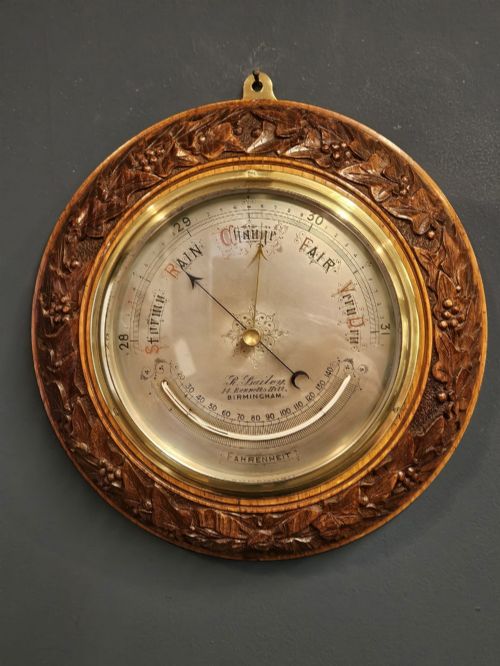
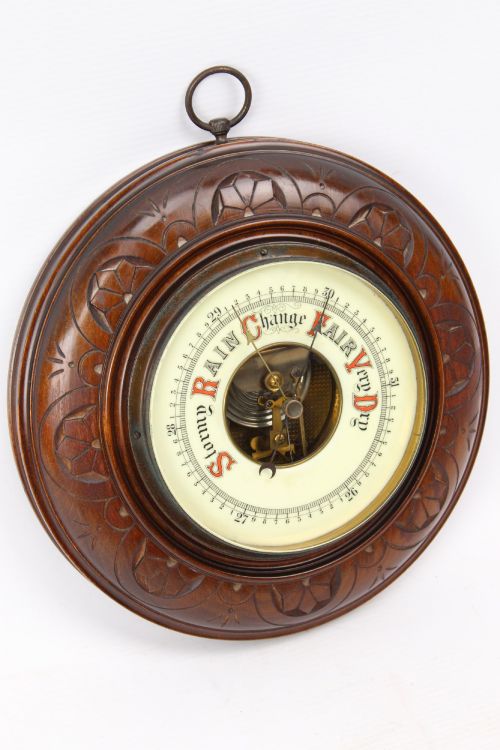
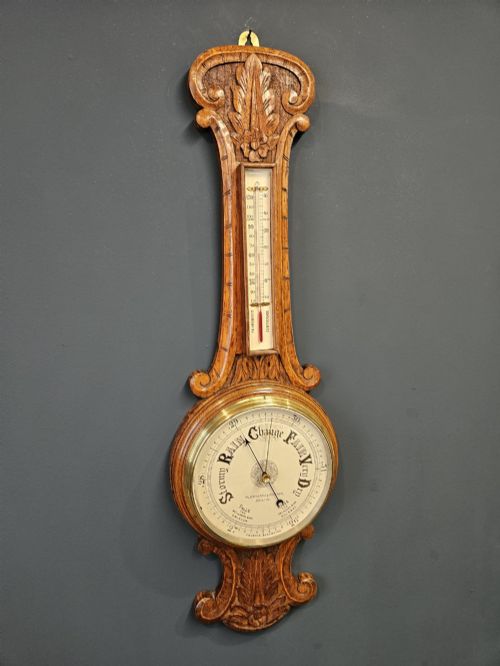
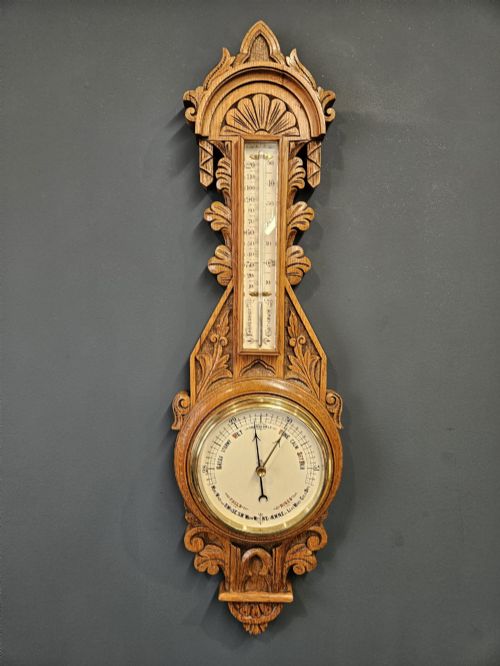
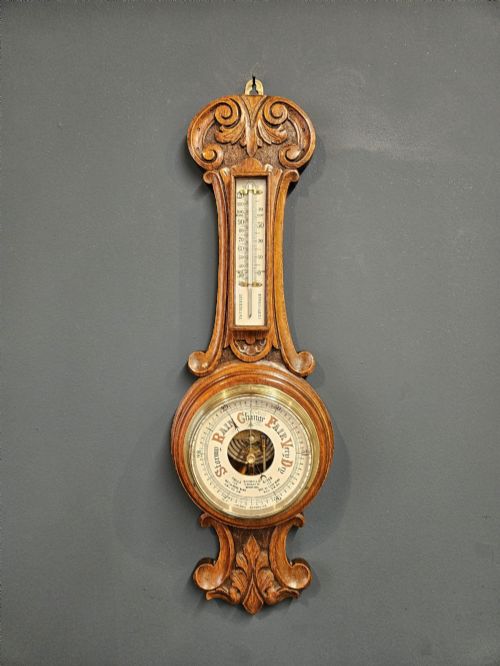
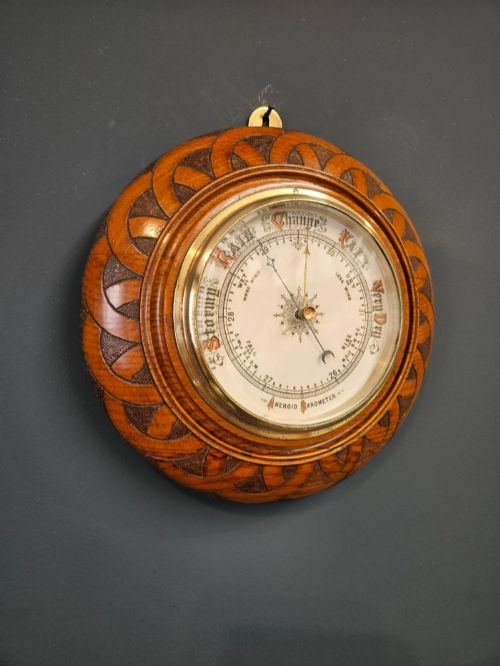
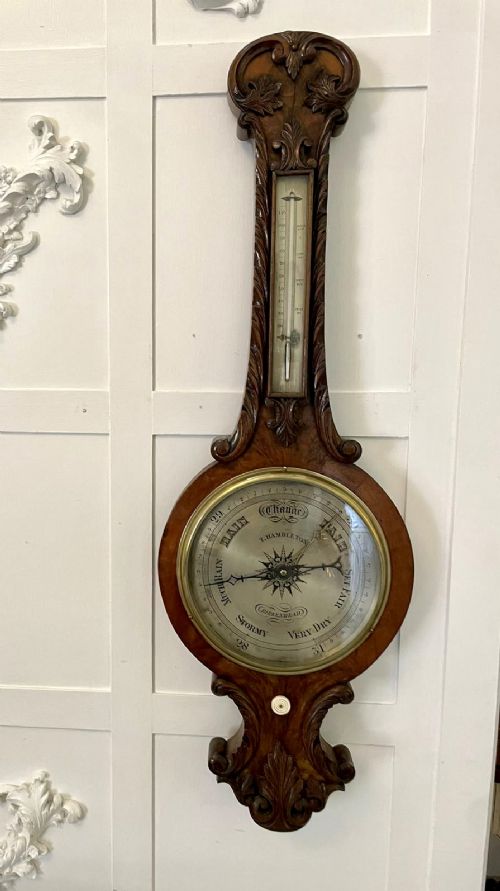
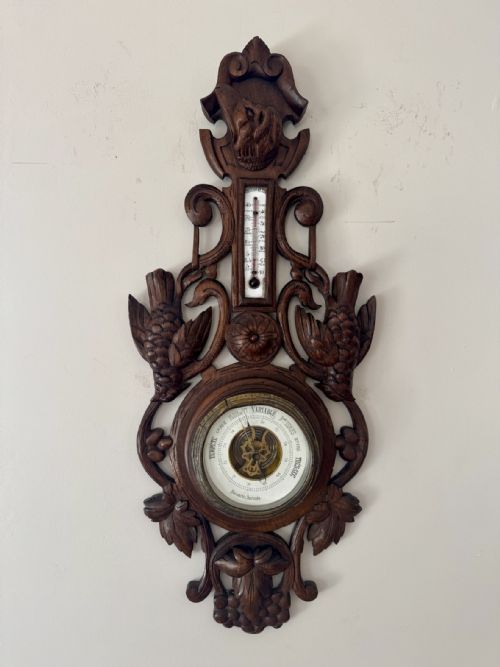
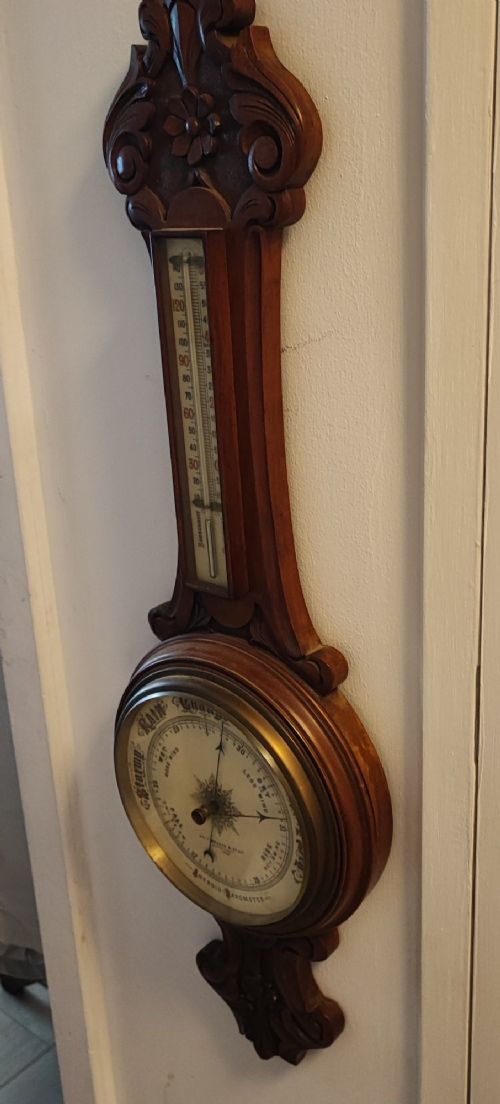
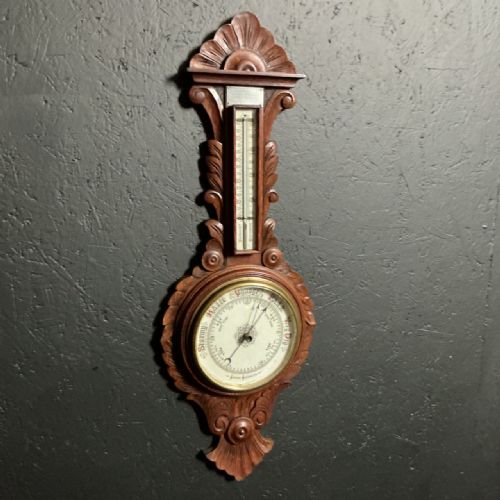
A buyer seeking a Victorian weather barometer encounters wall-mounted banjo shapes, carved wood wheel models, and stick barometers housed in mahogany, oak, or walnut. These instruments recorded atmospheric pressure for nineteenth-century households, often pairing the main dial with a thermometer or hygrometer.
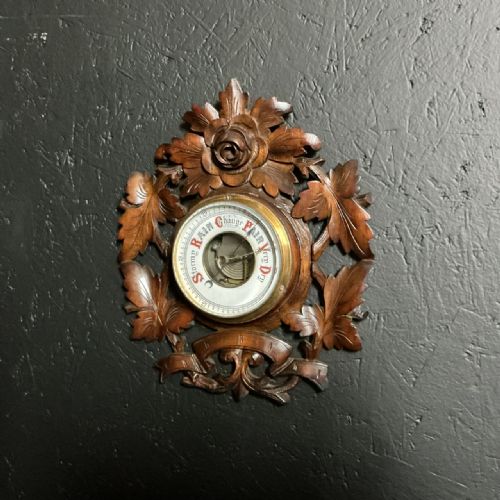
The selections span standard domestic banjo cases to regional Black Forest carvings and scientific stick barometers. Many examples originate from British makers in London or northern workshops, alongside portable pocket versions and desk-bound weather stations.
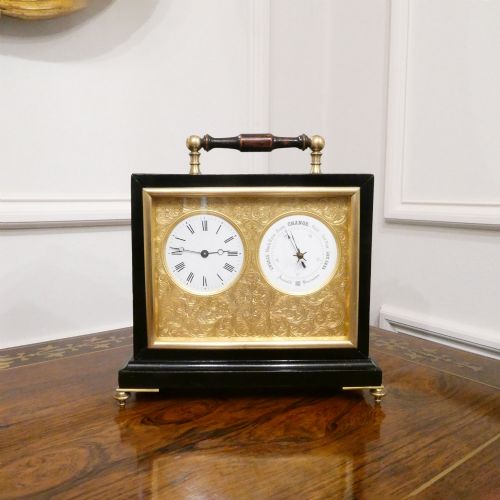
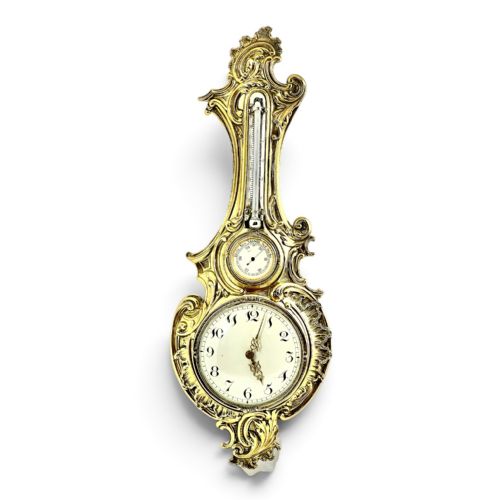
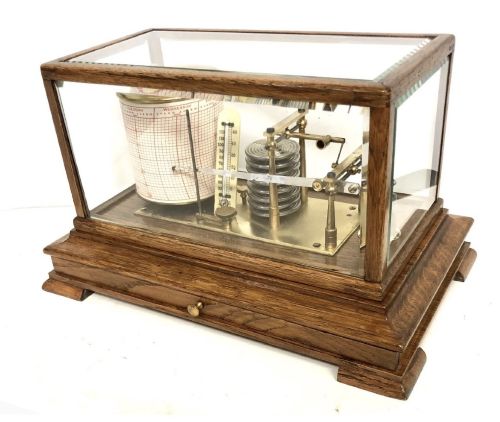
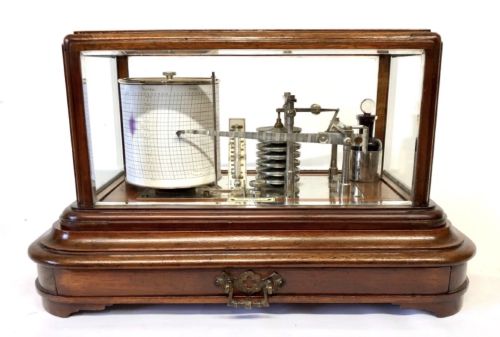
Mantel clocks and barographs also appear within this category, integrating mechanical timekeeping or rotating drum charts with pressure recording. The predominant forms reflect nineteenth-century interior tastes, favouring dark hardwoods and legible silvered or porcelain dials.
Materials and construction methods
Cabinetmakers built the enclosures from dense hardwoods like mahogany, walnut, oak, and rosewood, frequently applying geometric turnings, mother-of-pearl inlay, or deep relief carving in the Black Forest style. Bevelled glass protected the delicate paper charts of barographs and the engraved metal dials of aneroid movements.
Instrument makers utilised brass for bezels, skeletonised movement plates, and cistern covers, alongside silvered brass or porcelain for the numerical scales. Mercury filled the glass tubes of traditional stick barometers, whereas aneroid mechanisms relied on sealed metal vacuum chambers connected to internal linkage springs.
Victorian Weather Barometer Retail Price Guide 2026
Typical asking prices for victorian weather barometer among the pieces listed under this phrase on Sellingantiques today, from the lower quarter to the upper quarter. They describe what is for sale here now, not the wider market.
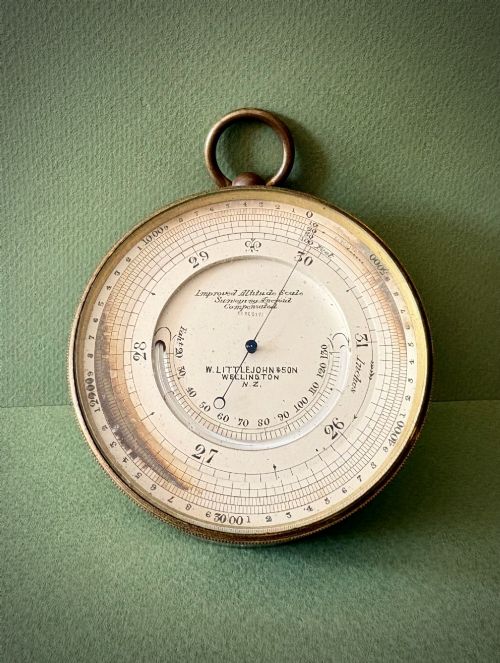
Some nineteenth-century pocket barometers doubled as altimeters for early balloon aeronauts drifting above the clouds.
Distinctions in construction and execution
Quality rests in the crispness of the timber carving, the choice of burr veneers, and the legibility of the engraved silvered dial scales. Finer instruments display signed maker plates, intricate skeletonised mechanical layouts, and secondary instruments such as working thermometers or hygrometers integrated neatly into the case.
Plain domestic items contrast with exhibition-grade pieces that combine mother-of-pearl inlay with substantial bevelled glass panels and specialised altimeter or barograph complications. The integrity of the original wooden case, from the carved crests of banjo barometers to the fitted chart drawers of barographs, dictates the standing of each piece.
Wilh. Lambrecht·Elliott Brothers·Short & Mason·G & L Guanziroli·Bramwell & Harbron·Negretti & Zambra
The Victorian Weather Barometer Glossary
- Aneroid barometer
- An instrument that measures atmospheric pressure by the expansion and contraction of a sealed metal capsule, omitting the need for liquid mercury. It became common in domestic weather instruments during the latter half of the nineteenth century.
- Stick barometer
- A tall, narrow wall instrument containing a vertical glass tube filled with mercury to measure atmospheric pressure directly against a barometric scale. These often feature exposed cistern covers at the base.
- Barograph
- A mechanical weather recording apparatus that plots barometric pressure continuously onto a paper chart wrapped around a rotating clockwork drum. They are typically housed in glazed mahogany or oak boxes with chart drawers.
- Hygrometer
- A scientific instrument used for measuring the humidity or moisture content of the air, frequently incorporated into nineteenth-century weather stations alongside thermometers.
- Skeletonised movement
- A clockwork or barometric mechanism designed with openwork brass plates that reveal the internal gears, levers, and escape wheels to the viewer.
- Silvered dial
- A brass or copper dial face treated with a silver solution and engraved with numerals, providing a matte finish that contrasts against black-filled markings.
Victorian Weather Barometer: Frequently Asked Questions
How do aneroid and stick barometers differ?
Stick barometers rely on a column of liquid mercury moving within a tall glass tube to indicate atmospheric pressure changes directly. Aneroid models use a sealed metal vacuum capsule connected to mechanical springs and a dial pointer.
This mechanical difference changed how instruments were housed, allowing aneroid movements to fit inside compact banjo frames, pocket cases, and mantel clocks.
Where should a wall barometer be placed?
Period instruments perform best on interior walls away from direct sunlight, radiators, and heavy vibrations from slamming doors. Fluctuating temperatures near heat sources can affect mechanical linkages and thermometer readings.
Most wall designs include a sturdy hanging loop or bracket on the reverse to secure the timber case safely at eye level.
What is a pocket barometer used for?
Pocket barometers and altimeters served travellers, mountaineers, and military observers who needed to calculate altitude changes or local weather shifts while outdoors. Their compact brass cases were often paired with leather travel fitted boxes.
They function through the same aneroid principle as larger wall models but utilise miniaturized internal springs and delicate indicator needles.
How do I read a barograph chart?
A barograph uses a pen arm connected to an aneroid vacuum stack that traces a continuous line onto a rotating paper chart secured to a clockwork drum. Rising lines indicate improving weather, while falling traces point toward approaching storms.
The clockwork cylinder typically completes one full rotation every week, requiring the user to wind the mechanism and replace the paper sheet periodically.