



Victorian Water Vessel
These Victorian water vessel pieces combine utility and craftsmanship, offering copper, brass, and stoneware designs for everyday service or display.
Victorian Water Vessel
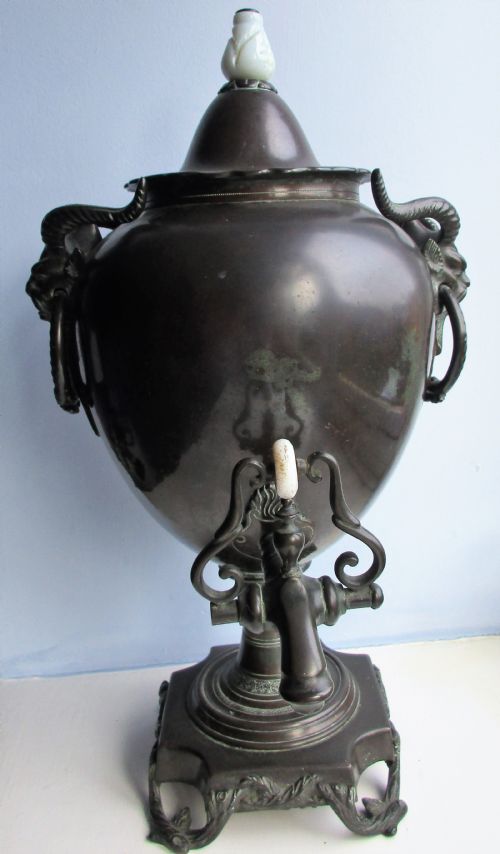
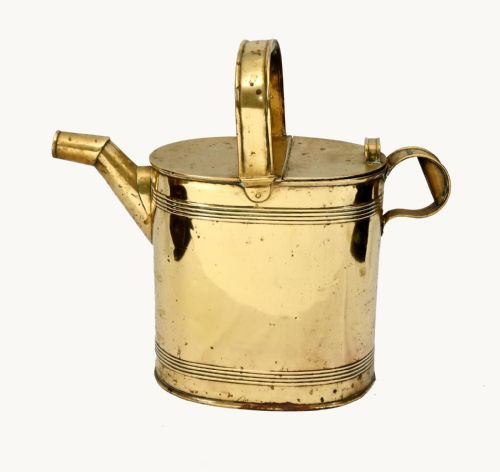
A Victorian water vessel on this page encompasses a diverse range of functional containers, from copper samovars and kettles to stoneware jugs, filters, and brass watering cans.
Most examples originate from nineteenth-century English workshops, alongside specific styles such as Arts and Crafts, Anglo-Indian brassware, and Doulton Lambeth art pottery.
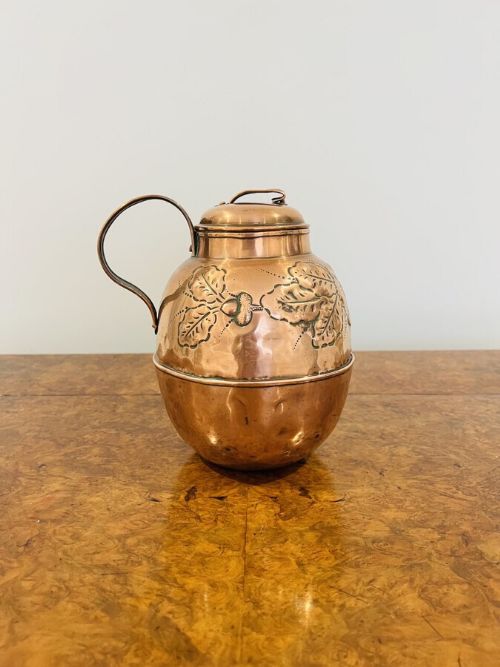
Buyers commonly encounter sturdy domestic items like copper flagons and Jersey cans, alongside decorative ewers and large ceramic pitchers intended for display.
Materials and Technique
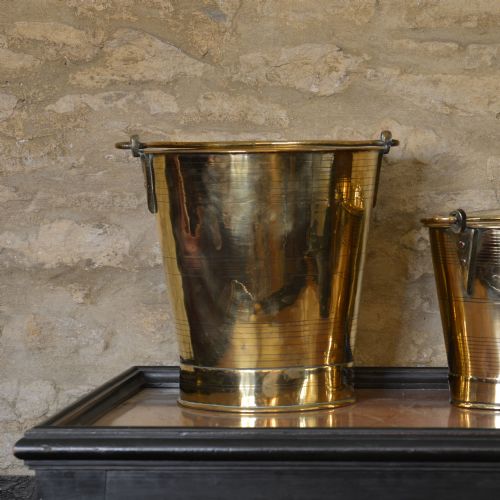
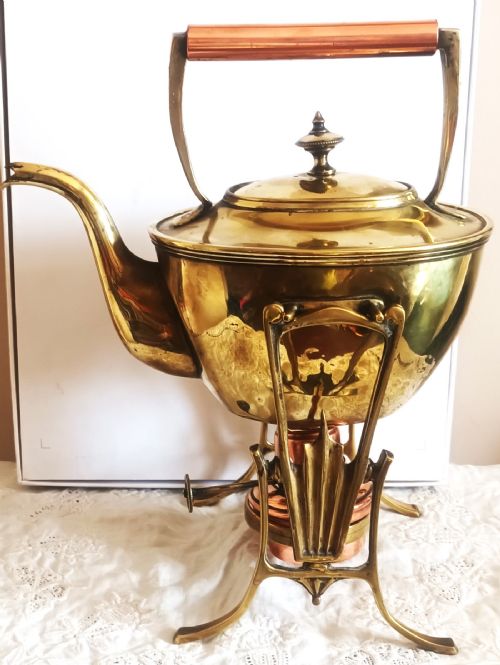
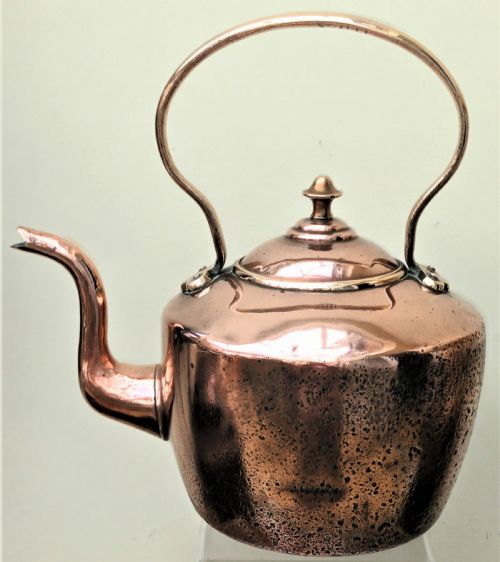
Metal vessels rely heavily on heavy-gauge copper and brass, often joined with riveted seams, hammered finishes, and turned wooden handles.
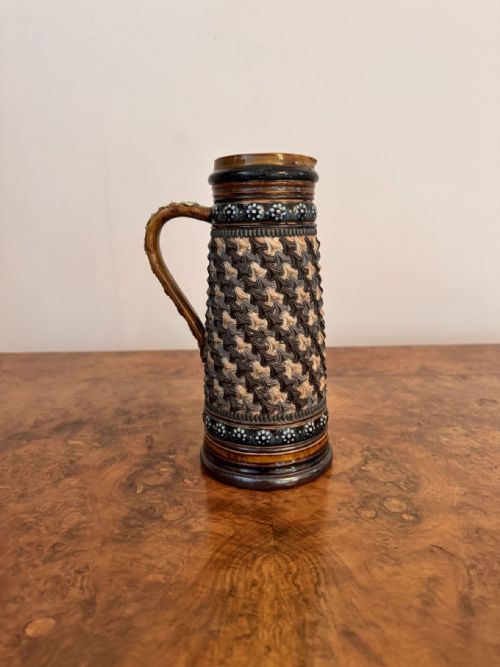
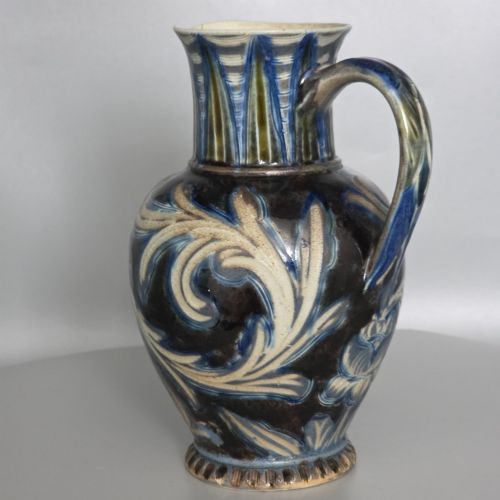
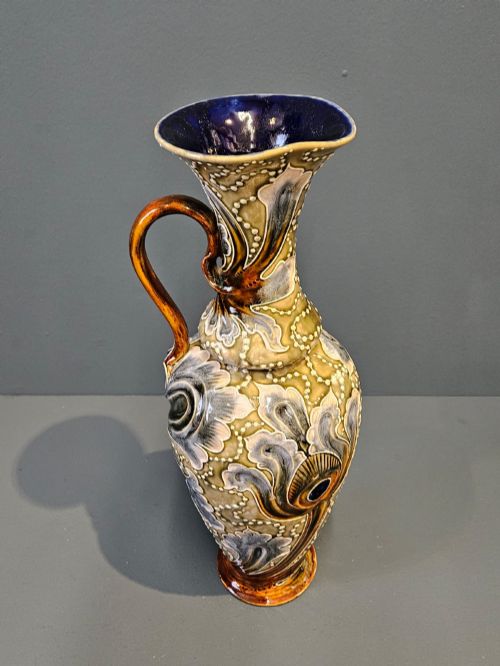
Ceramic pieces utilise salt glaze, stoneware, and porcelain, featuring incised decoration, relief-moulded motifs, or hand-painted enamel details.
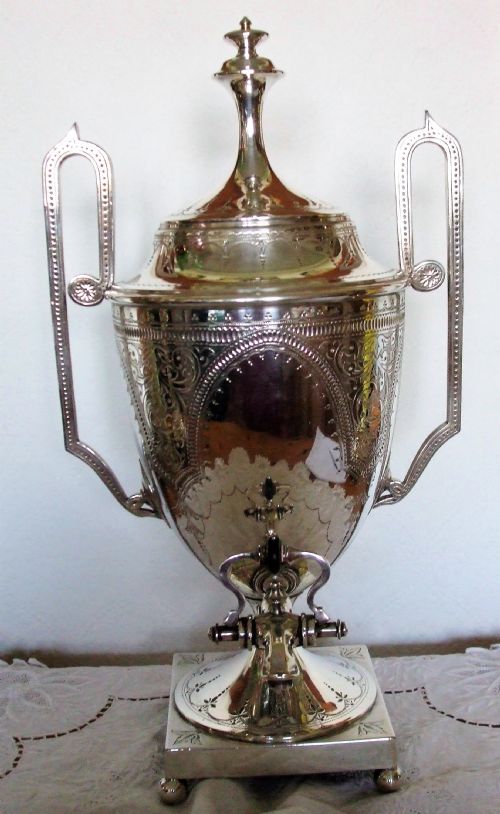
Makers integrated brass taps, spouts, and cast mounts onto copper bodies to create durable tea urns, samovars, and spirit kettles.
The selection includes Arts and Crafts flagons alongside Doulton Lambeth art pottery jugs dated from the eighteen-fifties through the early nineteen-hundreds.
Standards of Execution
Superior examples display crisp relief moulding, precise incising, and substantial metal weight rather than thin, pressed sheet construction.
Makers' stamps, factory marks, and patented designs distinguish standard domestic items from exhibition pieces or named studio works.
William Soutter & Sons·Walker & Hall·Benetfink & Co·Charles Meigh·Royal Dux
The Victorian Water Vessel Glossary
- Samovar
- A heated metal container traditionally used to boil and heat water for tea. These large vessels often feature internal chimneys and brass spigots.
- Salt Glaze
- A vitreous coating formed by throwing common salt into the kiln during high-temperature firing. This process produces a characteristic textured surface resembling orange peel.
- Jersey Can
- A traditional heavy copper container featuring a distinctive long spout and lid. These were originally utilised on farms for dairy or water transport.
- Ewer
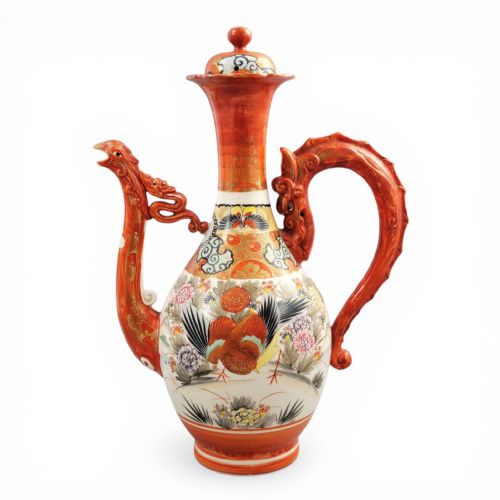
- A large jug with a wide spout and curved handle designed for pouring water. Historically paired with a basin for washing.
- Pontypool Ware
- A type of tin-plate metal finished with japanned varnished layers. It frequently displays painted decoration or metallic sheen.
Victorian Water Vessel: Frequently Asked Questions
What is a Victorian water vessel used for?
These items served practical roles in nineteenth-century households for heating water, filtering drinking supplies, pouring beverages, or tending gardens.
Today, collectors use them as decorative focal points, interior planters, or fireside accessories that showcase period metalwork and ceramics.
How do I identify a Doulton Lambeth piece?
Doulton Lambeth items typically feature distinctive stoneware bodies adorned with incised botanical patterns, sprigged details, or specialised salt glazes.
Look for impressed factory stamps and artist initials on the base to confirm the specific studio origin and period.
Are brass and copper kettles safe to use?
Most antique metal kettles and samovars were manufactured with internal linings or solder that may contain lead or degrade over time.
It is generally recommended to treat these historic items as decorative display pieces rather than functional kitchen appliances.
How do I care for antique copper and brass?
Regular dusting with a soft cloth helps maintain the metal surface without disturbing the natural oxidation or patina accumulated over decades.
Avoid harsh chemical cleaning agents that strip away the aged finish and diminish the historical character of the piece.