


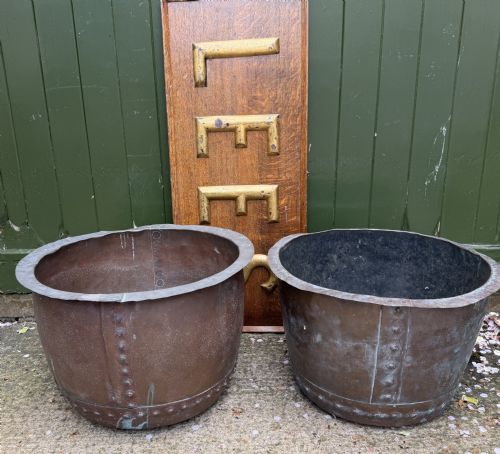


Victorian Wash Copper
These heavy metal vessels built for nineteenth-century laundering now serve as practical garden planters and fireside log bins.
Victorian Wash Copper
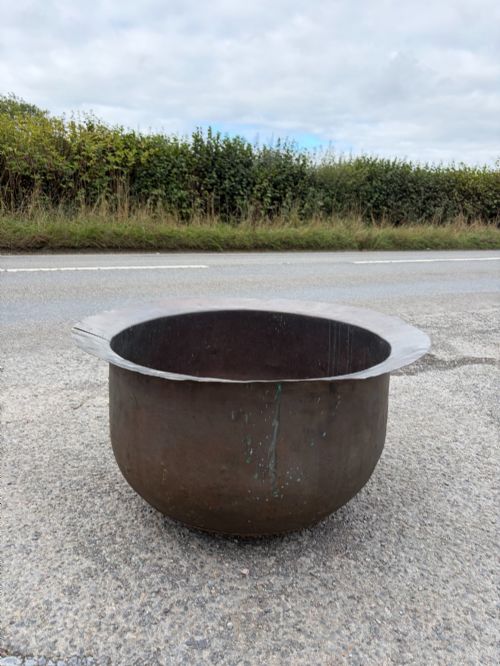
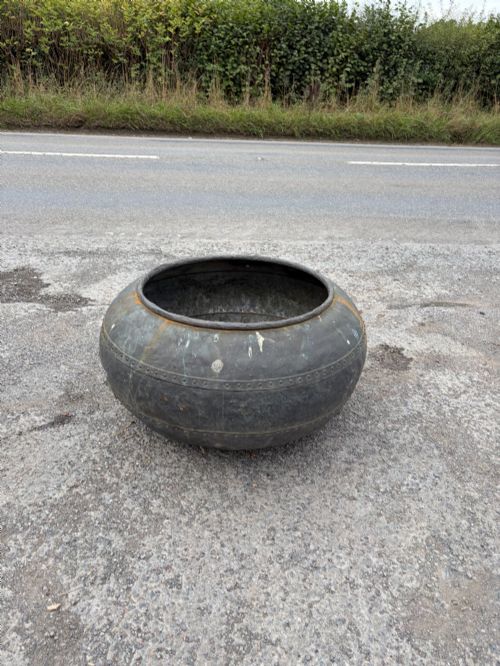
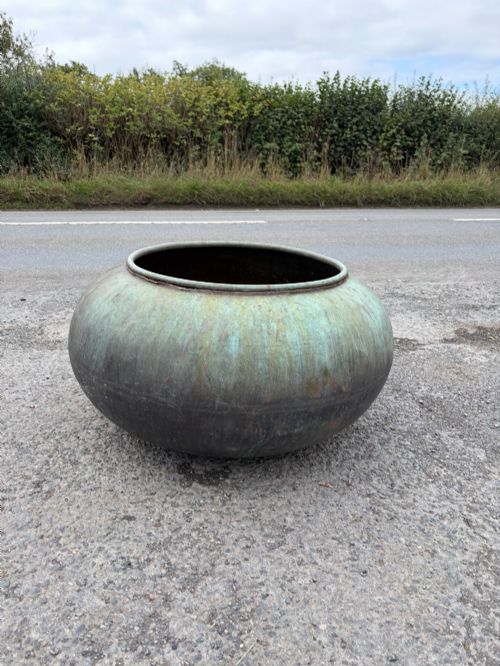
A victorian wash copper is a large metal vessel originally designed for heating water and laundering textiles during the nineteenth century. These robust items span the nineteenth century and the early twentieth century, taking forms such as wash tubs, boilers, and heavy cooking vessels. You will frequently encounter large copper pots, cauldrons, and coppers adapted for contemporary domestic use.
Most examples found here double as log bins or garden planters due to their deep proportions and durable construction. Alongside metal vessels, the selection occasionally includes earthenware basins and cream setting pans from the same era. These pieces bring industrial utility and rustic farmhouse character to modern interiors and gardens.
Materials and construction
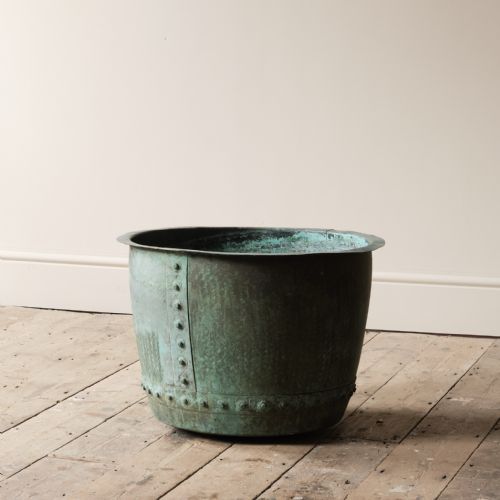
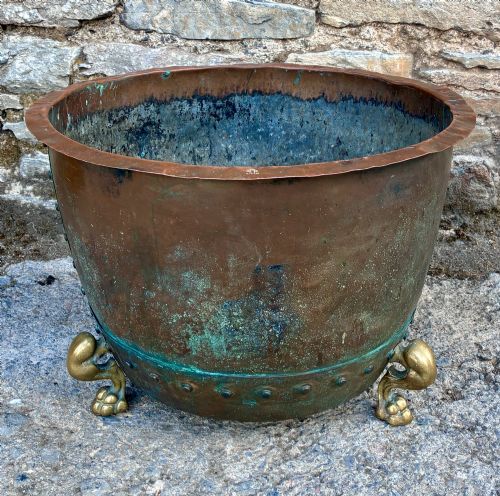
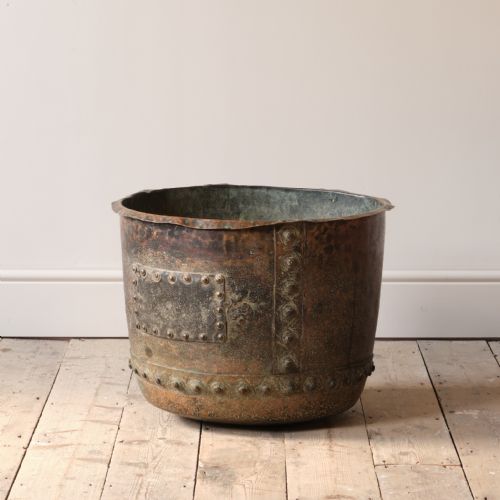
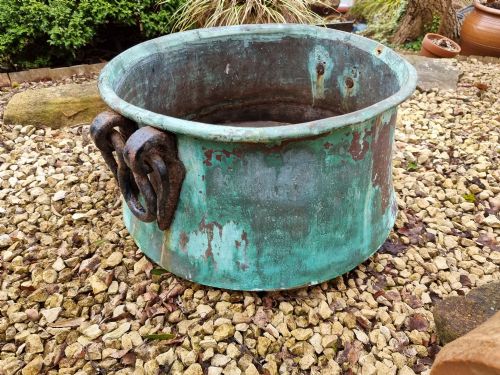
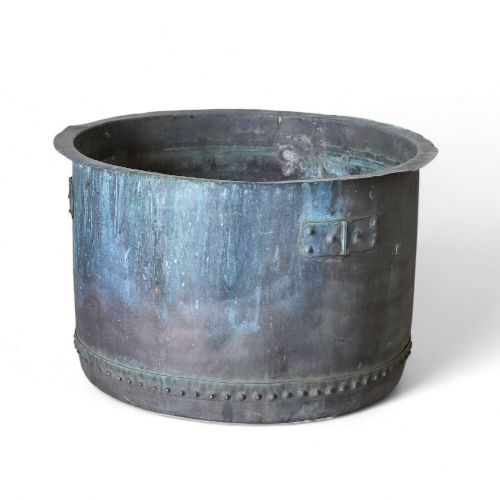
These items rely heavily on sheet copper shaped into deep cylindrical or rounded bodies, often joined with hand-riveted seams. Iron and wrought iron appear frequently in handles, swings, and structural bands that reinforce the heavy metal walls. Brass attachments and cast iron components also feature on specific cooking vessels and boilers.
Surface finishes range from polished metal to rich natural patinas and verdigris effects developed through age and exposure. Earthenware and glaze appear on related ceramic basins, whilst steel occasionally forms alternative planters from the period.
Victorian Wash Copper Retail Price Guide 2026
Typical asking prices for victorian wash copper among the pieces listed under this phrase on Sellingantiques today, from the lower quarter to the upper quarter. They describe what is for sale here now, not the wider market.
Materials across these listings span copper, iron, brass, wrought iron, earthenware, glaze, enamel, and copper lustre.
Judging quality in these vessels
Quality rests upon the weight of the metal gauge and the integrity of the original construction. Heavy-gauge copper with hand-riveted seams and intact wrought iron handles represents superior manufacturing standards compared to lighter utility items.
The character of the surface finish significantly influences desirability. Vessels retaining an honest, undisturbed patina, natural verdigris, and solid structural bases command greater appreciation than those with excessive modern intervention.
The Victorian Wash Copper Glossary
- Wash copper
- A large metal vessel used historically for heating water in domestic laundering. These heavy containers formed the centrepiece of nineteenth-century washhouses.
- Patina
- The surface appearance developed through age, use, and oxidation. Good examples show rich colour variations and authentic signs of historic wear.
- Verdigris
- A green layer or crust formed on copper through natural weathering and oxidation over decades. This chemical change provides a distinctive decorative surface.
- Hand-riveted
- A method of joining sheet metal using manual pins hammered in place. This technique indicates traditional craftsmanship prior to mass industrial standardisation.
- Cream setting pan
- A wide, shallow vessel used in dairies to let cream rise to the top of milk. These earthenware or metal pans form part of the broader utilitarian domestic range.
Victorian Wash Copper: Frequently Asked Questions
What is a wash copper?
A wash copper is a large industrial pot used in nineteenth-century homes for heating water to wash clothes. They were typically set over brick fireplaces or built-in hearths.
Today, these robust vessels are repurposed as decorative log buckets and large garden planters.
How do I use a copper pot at home?
These large vessels function well beside a fireplace as sturdy log bins or coal buckets. In the garden, their deep capacities make them ideal planters for small trees and shrubs.
Ensure proper drainage if planting directly inside, or use them as cachepots to protect the historic metal.
How do I date a copper vessel?
Dating relies on construction methods such as hand-riveting, material thickness, and associated hardware like wrought iron swing handles. Most genuine examples date from the Victorian era and the nineteenth century.
Makers rarely signed utility items, so dating is determined by manufacturing techniques and stylistic forms.
What causes verdigris on copper?
Verdigris is the green patina that forms when copper reacts naturally over time with moisture, oxygen, and atmospheric elements. This chemical process creates a protective layer on the metal.
Collectors often value this weathered surface for its authentic historic appearance.