
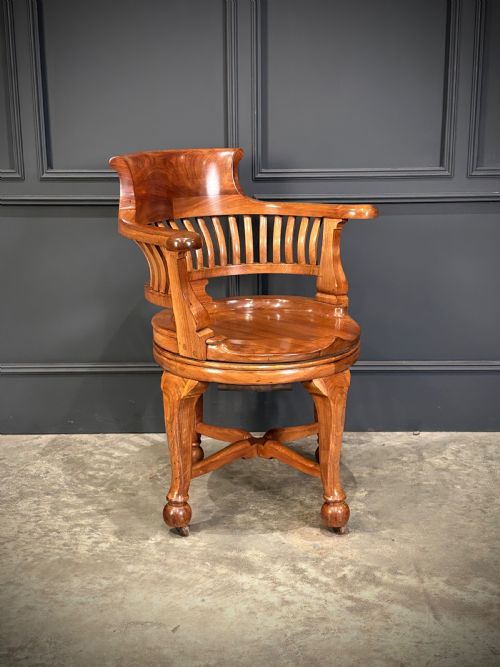
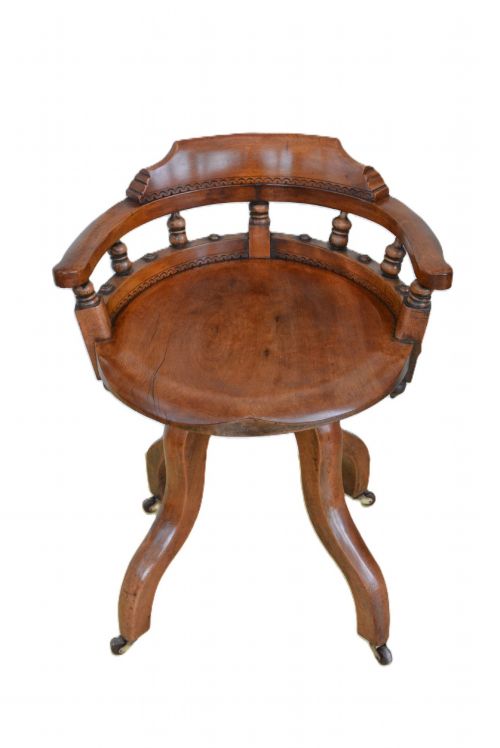


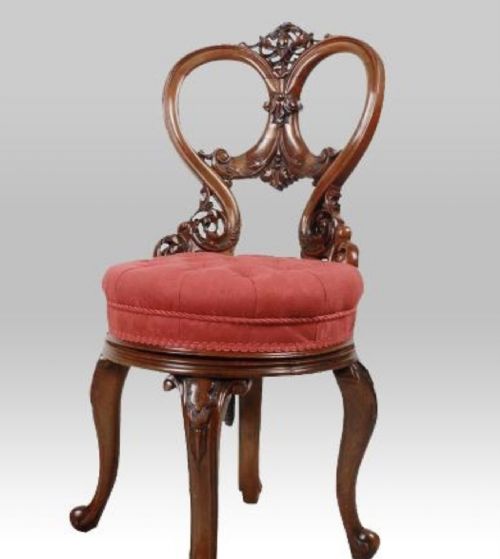


Victorian Walnut Swivel Chair
A victorian walnut swivel chair brings rich timber tones and practical rotation to a desk or music room.
Victorian Walnut Swivel Chair
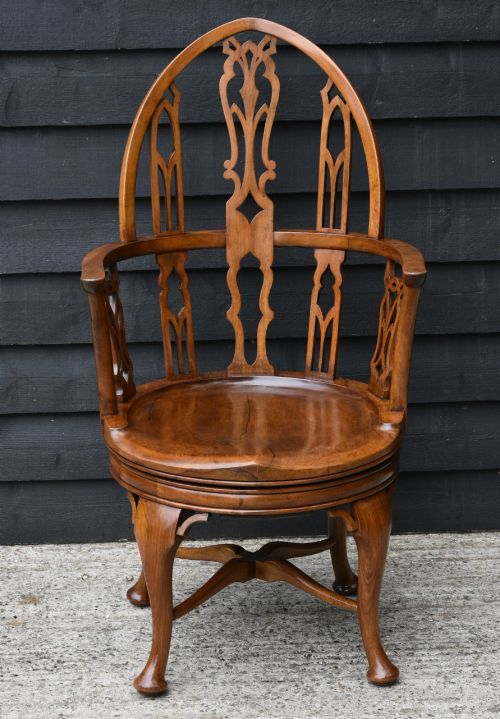
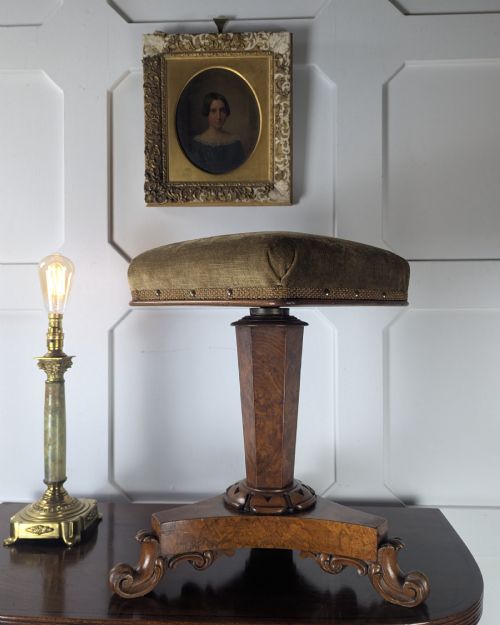
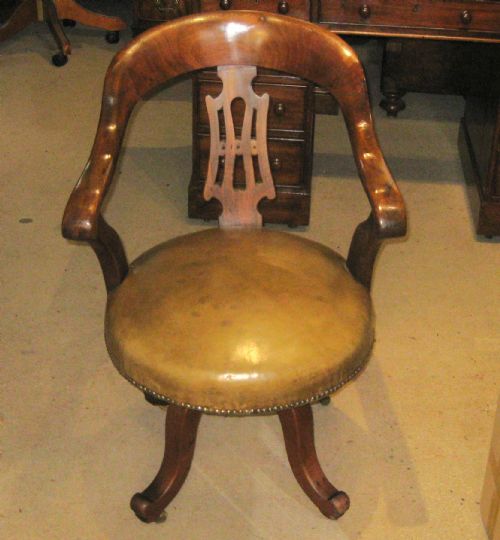
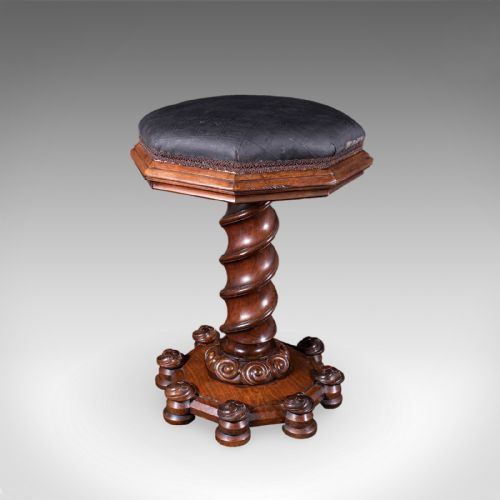
A victorian walnut swivel chair combines a rotating seat mechanism with rich timber frames, serving multiple domestic and professional roles. When you search for a victorian walnut swivel chair, you encounter a distinct group of seating that includes revolving desk chairs, office chairs, and adjustable piano or music stools. These pieces range from compact music risers and harpist seats to substantial pedestal and tripod stools designed for heavy daily use.
The forms span several distinct periods and aesthetic influences, reflecting the evolving tastes of the nineteenth century. Listings reveal examples carrying the heavy proportions of the William IV era, the vertical emphasis of Gothic Revival, and the refined lines of the Aesthetic Movement. While many items date firmly to the Victorian period and the surrounding decades of the late nineteenth century, occasional Georgian and Regency influences appear in the broader design vocabulary.
What Varies in Quality
The sophistication of the carving and the selection of figured walnut timber distinguish finer examples from standard production pieces. Master craftsmen applied detailed hand-carved ornamentation to pedestal bases and legs, elevating simple utilitarian seating into decorative furniture.
The engineering and robustness of the internal swivel and rise-and-fall mechanisms determine the longevity and smooth operation of the seat. Superior mechanisms allow fluid rotation and height adjustment without excessive play in the central column.
Organists and harpists required specialised revolving seats to maintain perfect posture while reaching complex pedal boards and strings.
The Victorian Walnut Swivel Chair Glossary
- Figured walnut
- Timber exhibiting highly decorative grain patterns, such as swirl or feather, prized for high-end cabinet work. Craftsmen selected these distinct veneers for the most prominent surfaces of chairs and stools.
- Revolving mechanism
- The internal iron or brass hardware enabling the seat to turn through a full circle. This engineering forms the defining functional attribute of any swivel chair.
- Rise and fall
- An adjustable height mechanism typically operated by rotating the seat on a central wooden or metal screw thread. This function allowed musicians and clerks to set their precise working level.
- Pedestal base
- A central column support resting upon three or four carved legs rather than four separate straight legs. This form provides stable weight distribution beneath a rotating seat.
- Aesthetic Movement
- A late nineteenth-century design style emphasising visual beauty and reform over historical revivalism. Pieces from this movement often feature simpler, more refined structural lines.
Victorian Walnut Swivel Chair: Frequently Asked Questions
How do I adjust the height?
Many of these chairs and stools feature a threaded central screw mechanism that raises or lowers the seat when turned. You simply rotate the upper seat portion clockwise or counter-clockwise to achieve the desired working height.
Other examples rely on fixed-height swivel pivots designed for standard desk use without vertical adjustment.
Were they made for offices?
Makers produced revolving chairs for multiple settings, including professional offices, libraries, and home studies. The addition of a swivel mechanism suited clerks and professionals who needed to access multiple surfaces around a desk.
Simultaneously, many revolving designs served musicians at pianos, organs, or harp benches where slight mobility aided performance.
How do I care for walnut?
Protect the timber surfaces by keeping the chair away from direct heat sources and strong sunlight, which can dry and fade the wood. Regular dusting with a soft, dry cloth helps maintain the finish without requiring heavy chemical polishes.
Condition leather or fabric upholstery gently according to its specific textile type, avoiding excess moisture near wooden joints and metal mechanisms.
How can I tell the period?
Dating relies on observing structural characteristics, joinery methods, and stylistic cues such as Gothic Revival motifs or Aesthetic Movement lines. Pieces marked by William IV proportions or heavy turned pedestals often point toward earlier nineteenth-century production.
Later Victorian examples from the end of the century frequently incorporate simpler commercial office forms alongside traditional carved walnut frames.