





Victorian Walnut Server Table
A victorian walnut server table brings rich timber figure and practical dining room surface space into a traditional interior.
Victorian Walnut Server Table
A victorian walnut server table spans several related dining room forms, including serving tables, sideboards, buffets, and dumbwaiters. These pieces emerge across the nineteenth century and into the early twentieth century, showing periods from the 1800s through to the 1920s.
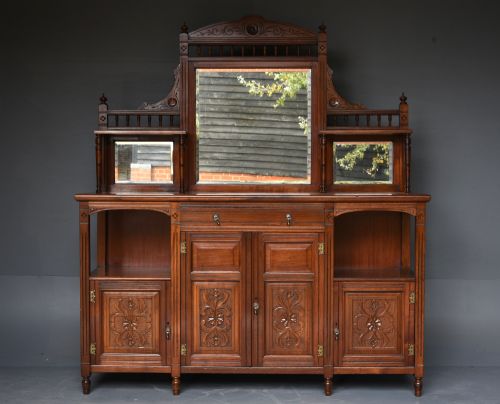
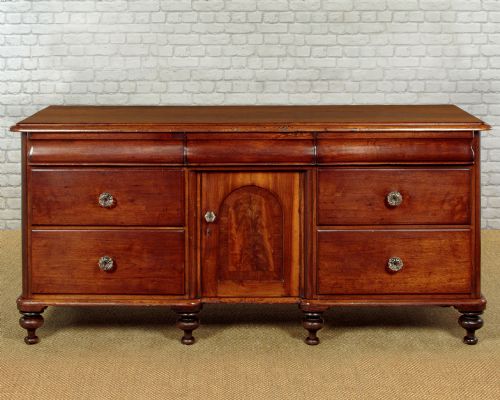
The version most commonly met on this page is the walnut buffet or dumbwaiter, often featuring tiers or adjustable elements. Alongside these, buyers find serving tables and sideboards in walnut, burr walnut, and ebonised wood.
The styles range from standard Victorian and late Regency through to Aesthetic Movement, Gothic Revival, and Queen Anne style. Pieces incorporate details such as marble tops, brass fittings, and glass.
How they were made
Makers utilised solid walnut and decorative burr walnut veneers applied to carcases, highlighting the natural grain and rich colour of the timber. Surfaces often receive a polished finish to protect the wood and accentuate the figuring.
Construction incorporates functional elements such as brass handles, hinges, and castor wheels, particularly on adjustable dumbwaiters and tiered serving pieces. Heavier designs integrate marble inset tops into the walnut framework for durability.
Victorian Walnut Server Table Retail Price Guide 2026
Typical asking prices for victorian walnut server table among the pieces listed under this phrase on Sellingantiques today, from the lower quarter to the upper quarter. They describe what is for sale here now, not the wider market.
Object forms span standard sideboards and serving tables alongside specialised dining pieces like dumbwaiters, buffets, and butlers trays on stands.
What varies in quality
The fineness of the burr walnut figuring and the crispness of carved details set individual pieces apart. Elaborate Gothic Revival carving or Aesthetic Movement design elevates a piece above simpler utilitarian forms.
The sophistication of mechanical elements, such as fully adjustable tiers on dumbwaiters or telescopic movement, distinguishes higher grade examples. Original brass hardware and intact marble tops also contribute to the integrity of the piece.
The Victorian Walnut Server Table Glossary
- Burr walnut
- A veneer taken from the growth wart of a walnut tree, prized for its swirling, highly figured grain patterns. It appears frequently on high-status nineteenth century furniture fronts.
- Dumbwaiter
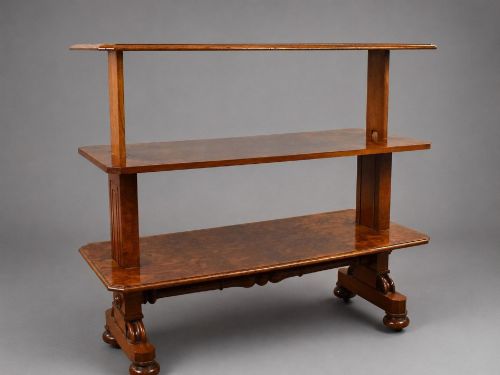
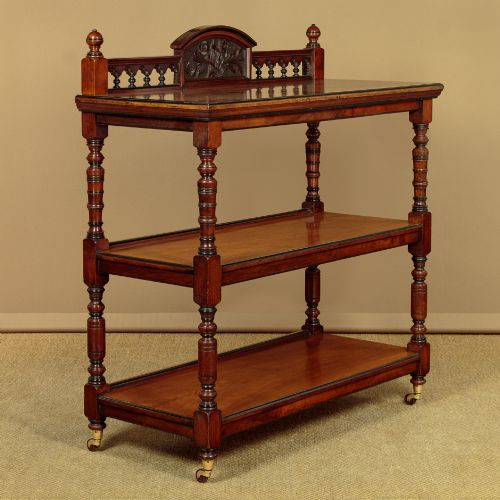
- A multi-tiered piece of dining room furniture used for holding food, dishes, or drinks without requiring servant presence. Versions on this page include telescopic and three-tier formats.
- Aesthetic Movement
- A late nineteenth century design style that rejected heavy Victorian ornamentation in favour of simplicity, natural motifs, and artistic refinement. Pieces in this style often use walnut with clean lines.
- Metamorphic
- Describing a piece of furniture designed to transform or adjust its shape and function. On this page, this refers to serving tables and dumbwaiters with movable tiers.
Victorian Walnut Server Table: Frequently Asked Questions
What is a dumbwaiter?
A dumbwaiter is a tiered piece of freestanding furniture used in dining rooms for holding plates, glassware, or dishes. These pieces often feature multiple shelves or rotating sections to assist with serving.
Versions span from fixed three-tier designs to adjustable and telescopic formats that alter in height. They provide practical surface space while displaying the grain of the walnut timber.
How do I date a walnut server?
Dating relies on stylistic clues, construction methods, and materials recorded in the listings. Pieces range from late Regency and early Victorian periods up to Edwardian and later reproductions from the 1920s.
Specific movements like Gothic Revival or the Aesthetic Movement point to the later decades of the nineteenth century. Variations in hardware, timber selection, and movement mechanisms help narrow down the decade of manufacture.
Are marble top servers practical?
Marble top serving tables provide a cool, hard-wearing surface originally intended for resting hot dishes or carving meats. The stone is heavy and sits within the walnut framework of the table.
This material combination adds significant weight to the furniture while offering a durable workspace. The contrast between the dark walnut timber and the marble top defines the visual character of these pieces.
What is an Aesthetic Movement server?
An Aesthetic Movement server is a piece influenced by the late nineteenth-century design philosophy prioritising visual beauty over strict historical revival. These items focus on balanced proportions and refined use of walnut timber.
They sit alongside more traditional Victorian and Gothic Revival forms on the page. The style often strips away excessive ornamentation to let the grain and form speak for themselves.