
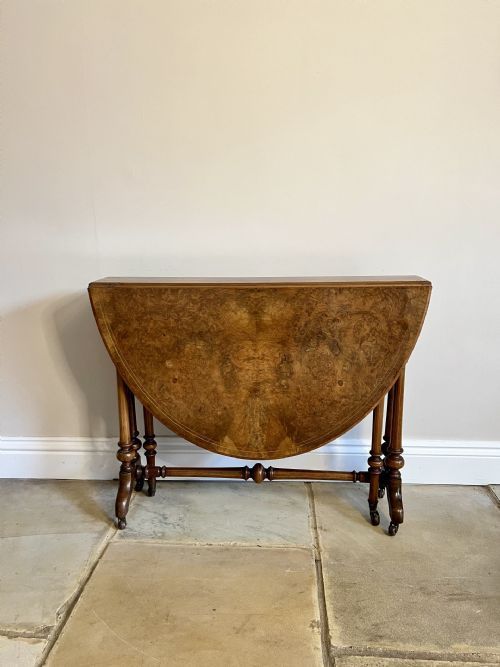


Victorian Walnut Gateleg Table
These walnut gateleg table examples deliver folding convenience and rich timber figure, offering a compact surface that expands instantly for tea or occasional use.
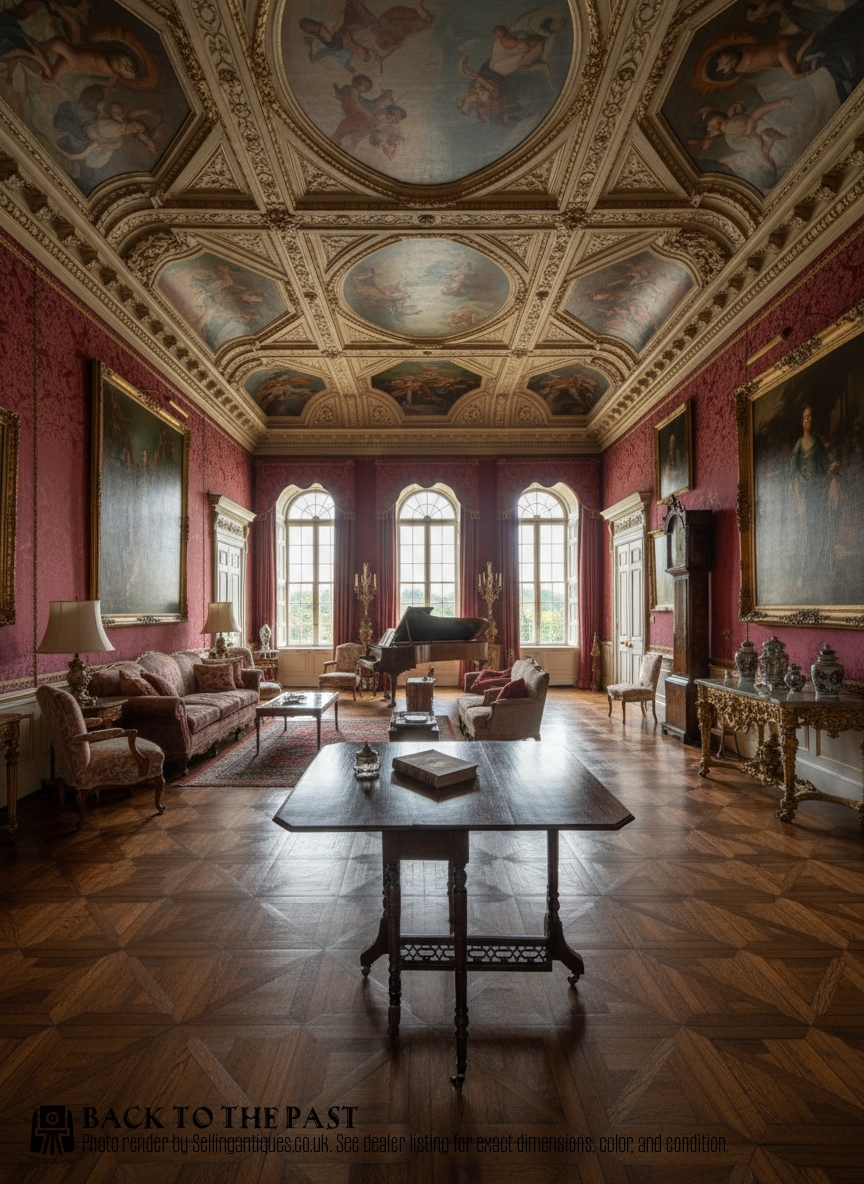
Victorian Walnut Gateleg Table
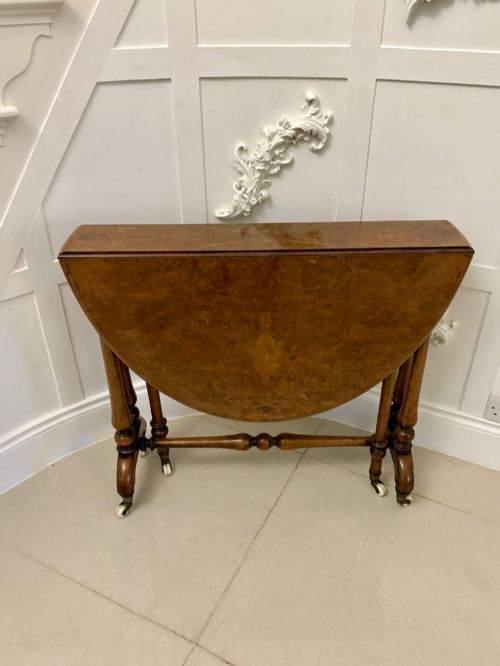
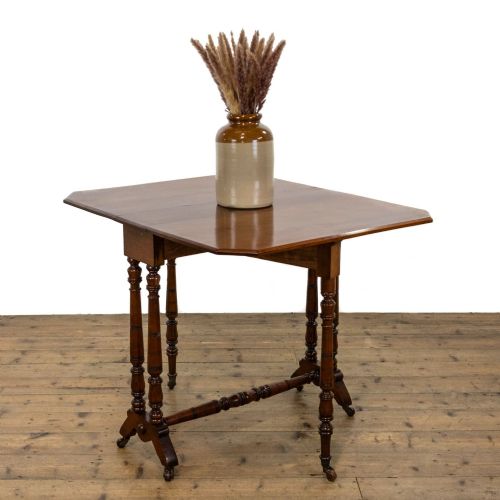
When you search for a walnut gateleg table on this page, you encounter pieces predominantly described as Sutherland tables, drop-leaf tables, and occasional tables dating from the Victorian era. These compact folding tables emerge primarily from the nineteenth century, spanning decades such as eighteen fifty, eighteen sixty, eighteen seventy, eighteen eighty, and eighteen ninety.
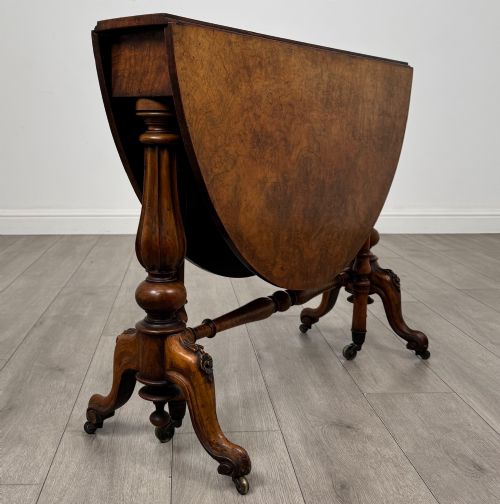
The dominant form is the Sutherland table, a slender drop-leaf design featuring narrow gate legs that support folding flaps on either side. You also find side tables, tea tables, and small coffee tables utilising this folding mechanism to save floor space when not in use.
Makers of the period constructed these items in solid walnut or with figured burr walnut veneers, frequently incorporating marquetry inlay, ceramic castors, and brass fittings. The resulting tables serve as versatile accent pieces suited for smaller rooms or afternoon tea settings.
How They Were Made
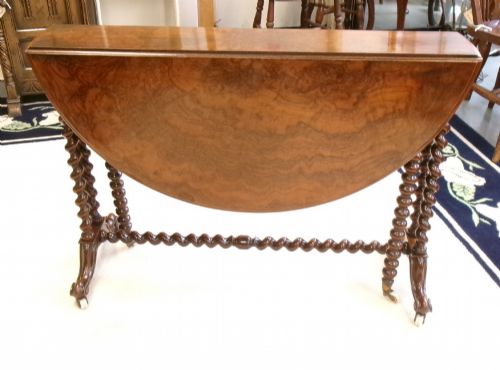
Cabinet makers utilised walnut timber, specifically selecting figured burr walnut for its complex, swirling grain patterns across the table tops and leaves. They applied these decorative veneers over solid secondary woods, securing stability while presenting a rich exterior surface.
The construction relies upon hinged drop leaves supported by pivoting gate legs that swing outward from a narrow central frame. Metal hinges, brass elements, and occasionally ceramic components facilitate the folding action and mobility of these compact items.
Materials recorded on this page include walnut, burr walnut, ceramic, brass, metal, wood inlay, and inlaid wood.
What Varies in Quality
The choice of timber creates a primary distinction, as heavily figured burr walnut veneers command greater visual presence than plain walnut surfaces. Finer examples display meticulous wood inlay and marquetry work integrated directly into the top panels.
Structural refinement marks the upper tier, where the gate leg mechanism operates smoothly and the frame remains rigid when fully extended. Superior proportions, such as baby or three-quarter sizes, reflect careful scaling by period makers.
The Victorian Walnut Gateleg Table Glossary
- Sutherland table
- A narrow drop-leaf table with hinged flaps supported by gate legs that swing out from a central underframe. This specific form became immensely popular during the Victorian period for tea and occasional use.
- Burr walnut
- A highly decorative wood veneer harvested from the growths or burrs on walnut trees. It yields intricate, swirling grain patterns highly prized by nineteenth-century cabinet makers.
- Gateleg table
- A table featuring hinged leaves supported by one or more legs that swing outward like a gate. This design allows the surface area to reduce significantly when the leaves drop.
- Marquetry
- The art of applying pieces of veneer to a structure to form decorative patterns and pictures. Makers utilised contrasting woods to create detailed ornamentation on table surfaces.
Victorian Walnut Gateleg Table: Frequently Asked Questions
What is a Sutherland table?
A Sutherland table is a narrow drop-leaf table with folding flaps supported by swinging gate legs. It stands on slender legs, often fitted with castors for easy movement around a room.
Victorian makers designed these tables to fold completely flat for storage against a wall when not in use. They served primarily as afternoon tea tables or occasional surfaces in nineteenth-century parlours.
How do you date a Victorian walnut table?
Dating relies on stylistic clues, construction methods, and recorded dates within the nineteenth century, ranging from eighteen fifty to eighteen ninety. Victorian pieces frequently incorporate specific wood inlays, brass fittings, and ceramic elements typical of the era.
Examining the underside, timber thickness, and hinge types helps distinguish mid-Victorian production from late-nineteenth-century examples. Walnut and burr walnut remained fashionable choices throughout this entire span.
Are these tables sturdy enough for daily use?
These tables are built with pivoting gate legs designed to support the drop leaves during normal activities like writing or serving tea. The hinged mechanism requires gentle handling rather than heavy weight.
Placing them on level floors ensures the folding legs take the load evenly. Regular use as coffee tables or side tables suits their original domestic purpose.