



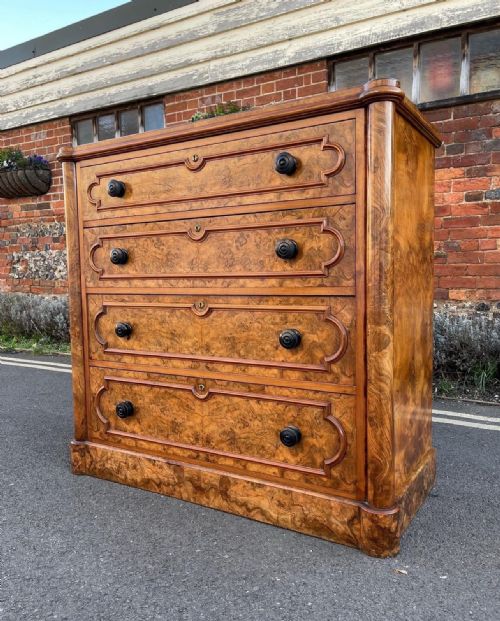
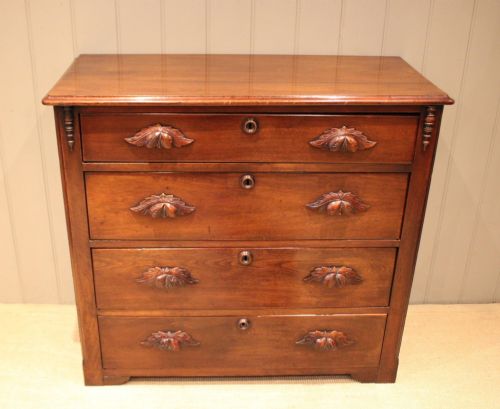


Victorian Walnut Commode Chest
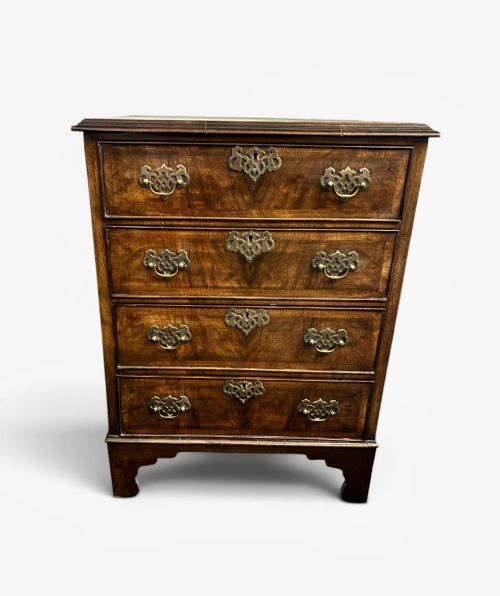
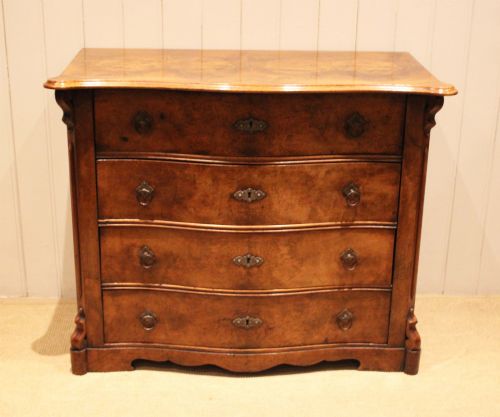
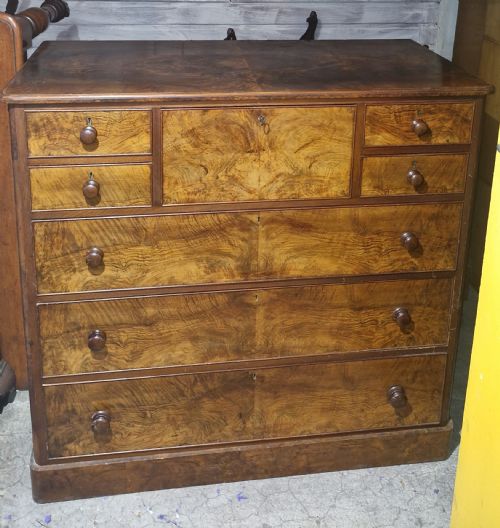
These walnut pieces are substantial bedroom storage units from the nineteenth century, selected for rich grain and solid proportions.
Victorian Walnut Commode Chest
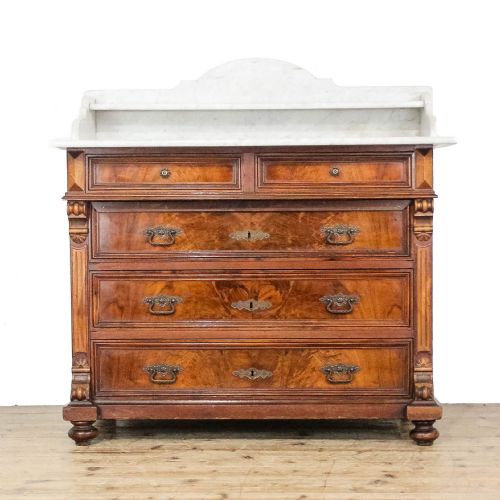
A victorian walnut commode chest is a sturdy nineteenth century storage piece, most frequently encountered as a chest of drawers or washstand in these selections.
The assortment spans straightforward English examples alongside continental marble top commodes influenced by French rococo revival and chateau styles.
Dimensions range from miniature apprentice pieces to large gentleman tallboys and country house cabinets housing multiple drawers.
How they were made
Cabinet makers utilised dense timbers like walnut and burr walnut for exterior surfaces, often backed by secondary woods such as pine and mahogany.
Decorative schemes incorporate cast brass handles, ormolu mounts on continental commodes, and fitted marble tops on specific washstand forms.
Apprentice chests let young trainees prove their skills by building tiny drawers that actually pull out.
What varies in quality
Selection of timber grain defines the visual impact, with burr walnut veneers offering intricate figuring compared to plain solid walnut.
Joinery execution and the integration of decorative elements like marble slabs and metal mounts separate standard utility pieces from exhibition examples.
The Victorian Walnut Commode Chest Glossary
- Burr walnut
- A prized timber veneer showing swirling, knotty grain patterns harvested from tree growths. It provides a highly decorative surface on nineteenth century drawer fronts.
- Commode
- A low chest of drawers or cabinet originating from French furniture forms. In later periods, the term describes marble topped storage units.
- Ormolu
- Gilded bronze mounts applied to furniture corners and handles. This technique appears primarily on continental revival pieces.
- Tallboy
- A tall chest of drawers stacked vertically to maximise storage space. These configurations often combine wardrobe and drawer sections.
Victorian Walnut Commode Chest: Frequently Asked Questions
How do I date a walnut chest?
Dating relies on construction methods, timber choice, and hardware styles recorded across the nineteenth century. Makers often incorporated specific regional traits.
Changes in drawer linings and handle fixings help narrow down the decade of production.
Are marble tops original to these chests?
Marble slabs appear frequently on continental and washstand variants from this period. They provided a durable, water-resistant surface for washing.
Inspect the seating of the stone to ensure it matches the proportions of the wooden base.
How should I care for burr walnut?
Keep wooden surfaces away from direct sunlight and sudden temperature changes to prevent veneer cracking. Regular dusting maintains the polished finish.
Avoid chemical polishes and use a soft cloth for routine maintenance.