


Victorian Wally Dogs
Victorian wally dogs are quintessential mantelpiece ornaments that bring traditional English character and charm to any room.
Victorian Wally Dogs
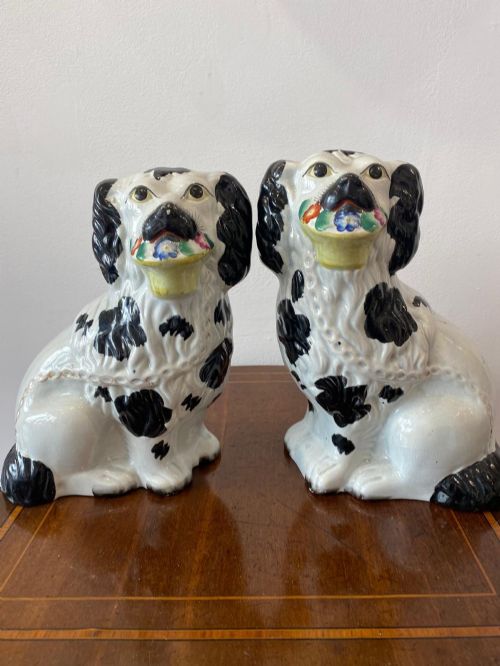
Victorian wally dogs are ceramic figurines modelled as seated spaniels, traditionally displayed as facing pairs on either side of a fireplace. When you search for victorian wally dogs, you encounter nineteenth century pottery figures that originated in Staffordshire potteries.
The most common versions met on this page are pairs of spaniels, modelled in various sizes from tabletop ornaments to large mantelpiece figures. These decorative objects date across the nineteenth century, with specific examples appearing from decades such as eighteen-sixties and eighteen-eighties.
How they were made
Certain pieces incorporate gilt, gold leaf or copper lustre finishes to highlight collars and chains. Selected figures feature applied elements like glass eyes rather than painted ones, adding depth to the pottery spaniels.
Some spaniels stare out with actual glass eyes, blinking down from the mantelpiece just as they have done since eighteen-ninety.
What varies in quality
Scale and presence also distinguish the range, with larger grand pairs and unusual colour variations such as copper lustre or separate leg formations representing distinct tiers of craftsmanship within the Staffordshire tradition.
Beswick
The Victorian Wally Dogs Glossary
- Earthenware
- Porous pottery fired at lower temperatures, commonly used for nineteenth century figures before being glazed. It forms the structural ceramic body of the spaniel figures.
- Comforter spaniel
- Alternative term for these pottery dogs, historically placed on hearths as decorative chimney ornaments. They earned this name because they were thought to comfort homeowners like real pets.
- Copper lustre
- A metallic glaze finish that imparts a reflective, coppery sheen to the pottery surface. This technique creates a distinct burnished appearance on specific pairs.
- Gilt
- Application of gold leaf or metallic paint to accent collars, chains and lockets. It adds decorative contrast against white or coloured earthenware bodies.
- Staffordshire
- The English region where the majority of these nineteenth century ceramic figures were produced. Potteries across the area specialised in modelled pottery dogs and decorative figurines.
Victorian Wally Dogs: Frequently Asked Questions
What are victorian wally dogs?
Victorian wally dogs are ceramic spaniel figurines produced in nineteenth century England, primarily designed as decorative mantelpiece ornaments.
Collectors and buyers encounter them as facing pairs intended to sit on either side of a fireplace hearth.
Why are they called wally dogs?
The term wally dog is a traditional regional name used in Scotland and northern England for these ceramic spaniel figures.
Wally refers to earthenware or pottery, distinguishing these decorative ornaments from other types of household figures.
How were victorian wally dogs displayed?
These spaniel figures were traditionally displayed in matching pairs facing each other upon a mantelpiece or shelf.
They served as domestic hearth ornaments in nineteenth century homes, mirroring the presence of real household pets.
What colours do they come in?
The listings show a variety of colour schemes including plain white, black and white, red and white, and metallic copper lustre.
Many examples feature additional hand painted details, gilt accents and gold leaf highlighting collars and chains.
How can you tell the period?
Dating relies on stylistic characteristics, ceramic materials, and recorded production periods spanning the nineteenth century.
Specific examples in the records date from the eighteen-sixties through to nineteen hundred, showing variations in size and painting style.