


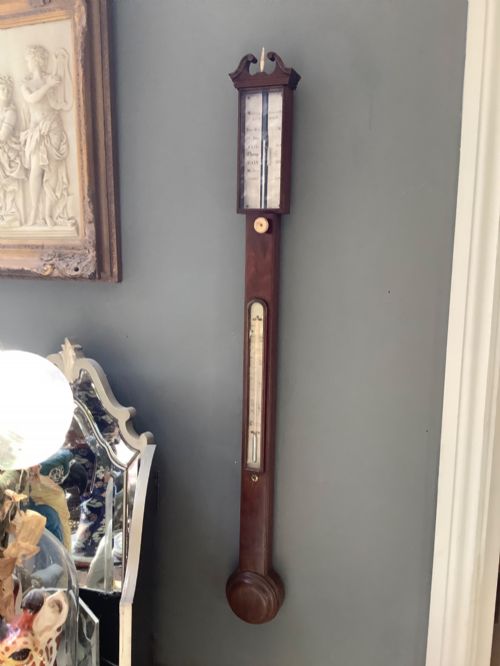

Victorian Wall Instrument
These Victorian wall instrument examples range from carved barometer dials to scientific hygrometers, bringing practical nineteenth-century recording tools onto domestic walls.
Victorian Wall Instrument
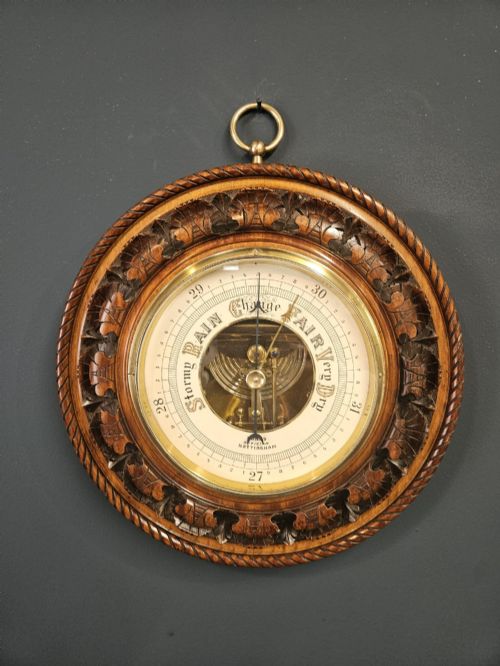
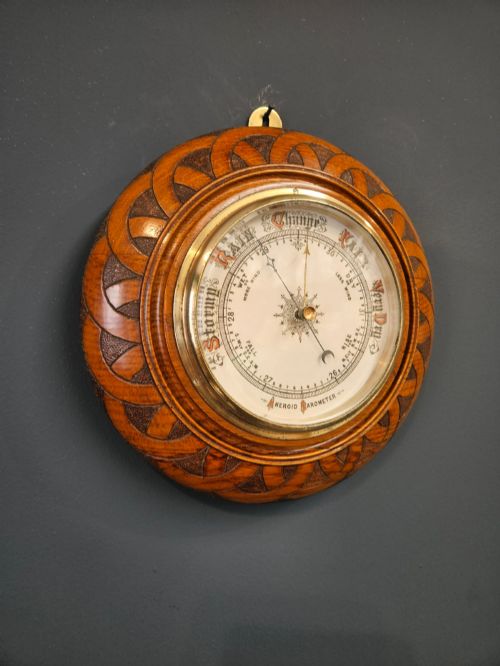
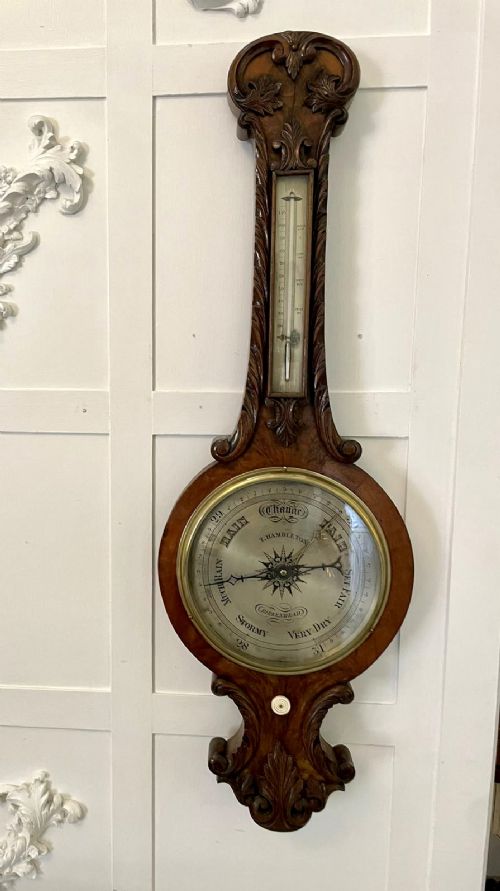
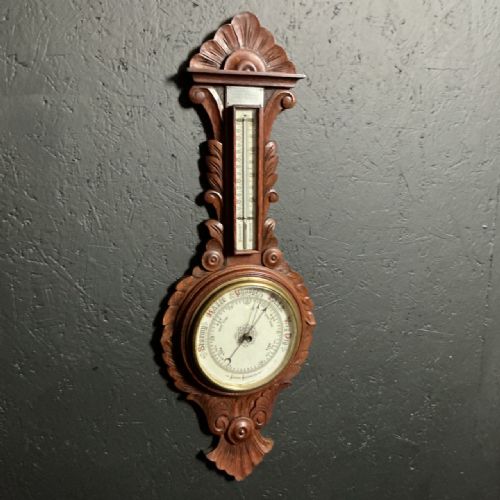
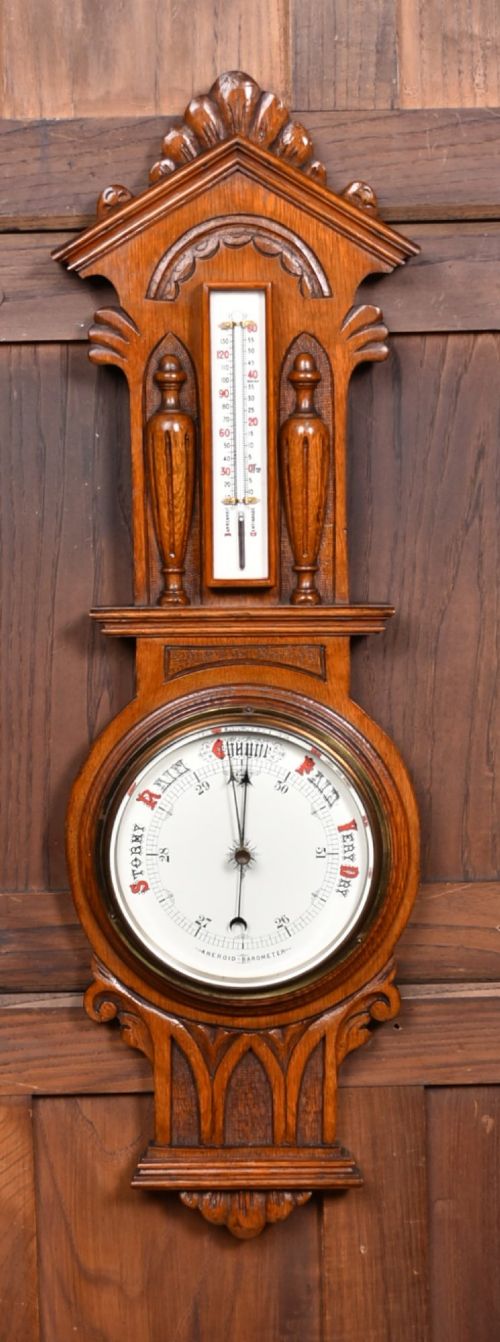
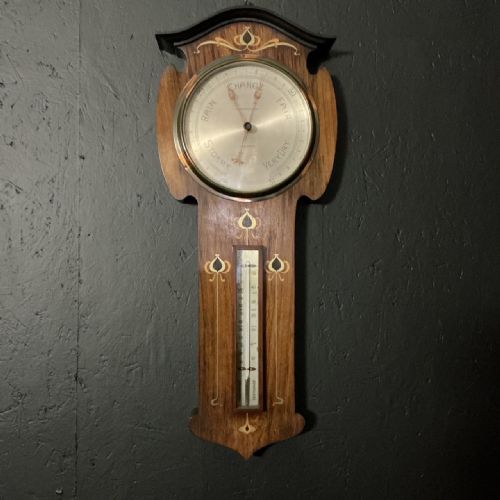
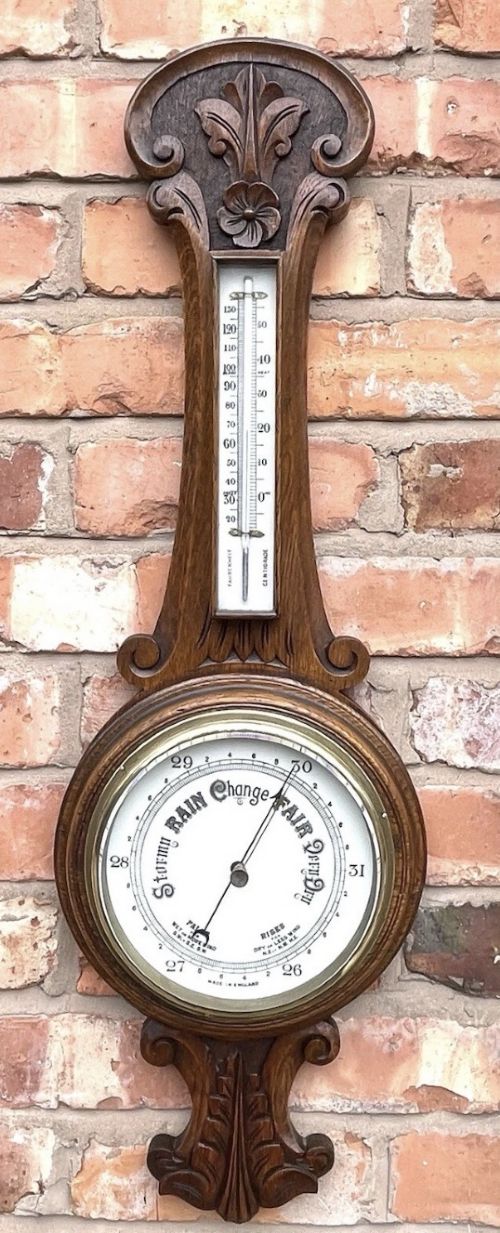
A victorian wall instrument is primarily a barometer, thermometer, or weather station designed to hang in a domestic interior to track atmospheric pressure and conditions. The most common form you will meet on this page is the banjo or wheel barometer, typically housed in a carved wooden case.
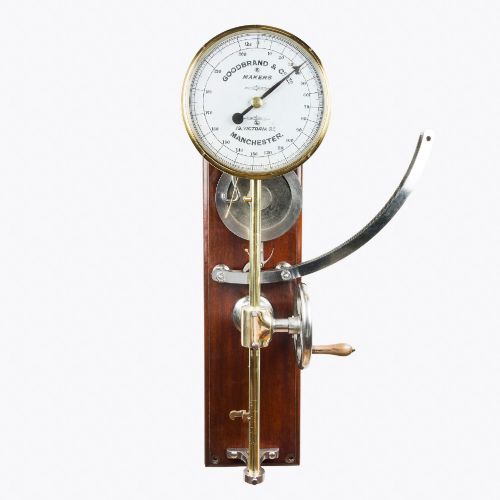
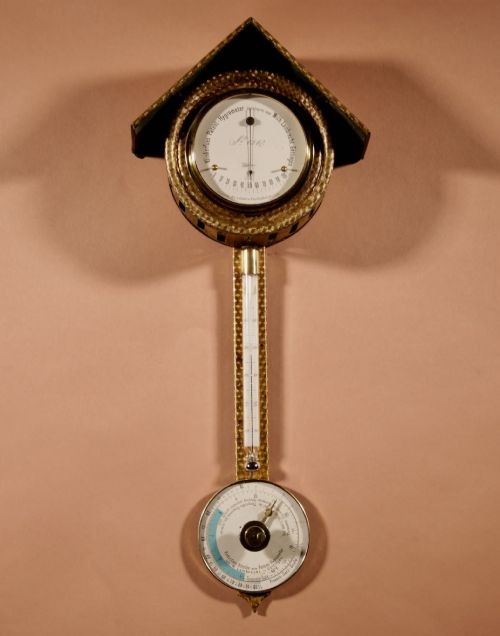
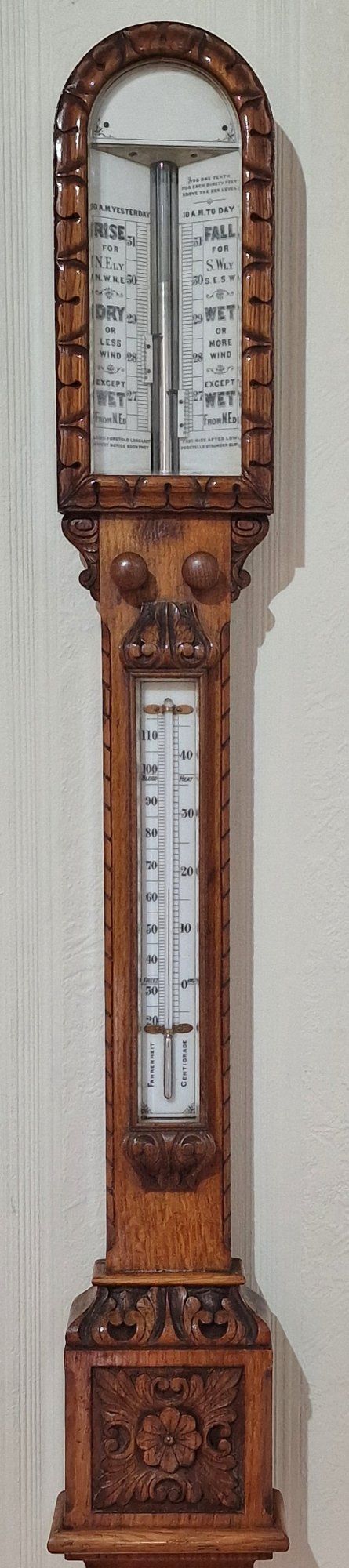
Beyond standard weather glasses, these listings include specialised scientific pieces such as yarn testers, hair hygrometers, and marine stick barometers. Origins span English workshops in London and provincial towns alongside continental Black Forest carvers.
Materials and construction methods
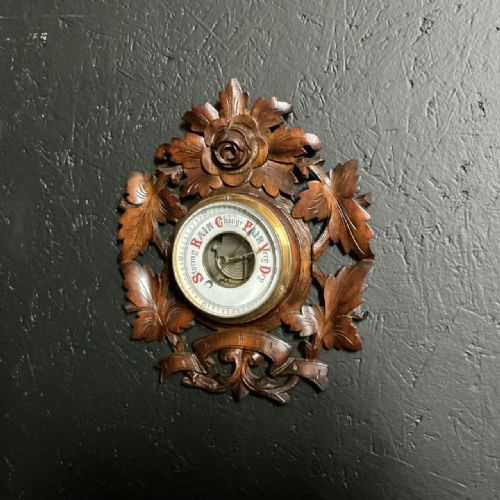
Cases rely heavily on dense hardwoods such as oak, walnut, mahogany, and rosewood, frequently shaped by turning or deep carving. Black Forest examples display elaborate hand-carved foliage and animal motifs executed in soft woods.
Internal mechanisms combine brass, steel, and glass, whilst dials are rendered in silvered metal, ceramic, or feature mother-of-pearl inlay. Mercury columns and aneroid metal capsules drive the mechanical readings behind glazed bezels.
Some nineteenth-century makers expanded beyond weather by mounting yarn testers and coaching horns alongside standard domestic barometers.
Judging the standard of execution
Quality rests upon the crispness of the wood carving and the grade of timber selected for the case, with burr walnut and figured rosewood standing above plain deal. Finer pieces demonstrate precision engraving on silvered dials and retain original mercury tubes or signed aneroid movements.
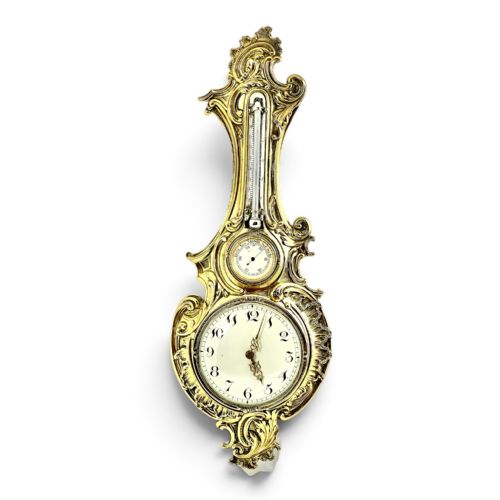
Maker attribution elevates a piece significantly, particularly when signed by known London instrument makers or scientific firms. The complexity of combined stations - incorporating thermometers, hygrometers, and clocks - separates standard wall barometers from exhibition-grade pieces.
Wilh. Lambrecht·Poulenc Freres·Elliott Brothers·Short & Mason·Negretti & Zambra
The Victorian Wall Instrument Glossary
- Aneroid barometer
- A barometer that measures atmospheric pressure through the expansion and contraction of a flexible metal capsule, eliminating the need for liquid mercury. This design allowed for more compact and varied casing shapes.
- Stick barometer
- A vertical instrument containing a long glass tube filled with mercury, mounted on a wooden board to show barometric fluctuations directly. They represent the more traditional and sensitive method of pressure reading.
- Banjo barometer
- A domestic barometer housed in a symmetrical, rounded-top wooden case that tapers toward a bulbous base, resembling the shape of a stringed banjo. These frequently incorporate a spirit thermometer above the main dial.
- Hygrometer
- An instrument used for measuring the humidity or moisture content of the air. Examples utilising human hair mechanisms appear in late nineteenth-century scientific stations.
- Silvered dial
- A brass or metal dial face treated with a silver solution and engraved with pressure scales and weather inscriptions. The finish catches light while maintaining legibility.
Victorian Wall Instrument: Frequently Asked Questions
How do I read an aneroid barometer?
Aneroid barometers use a pointer moving across a graduated dial to indicate atmospheric pressure shifts. Higher numbers generally point toward settled weather, while falling measurements indicate coming rain or storms.
Many instruments include a manual setting hand that you align over the main needle to track whether pressure rises or drops throughout the day.
Where should I hang a wall barometer?
Hang your barometer on an interior wall away from direct sunlight, heating vents, and draughts to ensure accurate temperature and pressure responses. Solid partitioning works best to prevent vibrations from disturbing the mechanical linkage inside.
Keep the instrument at eye level so the dial or mercury column can be read clearly without straining.
What is a Black Forest barometer?
Black Forest barometers originate from the wooded mountain region of Germany and are distinguished by deeply carved wooden cases featuring foliage, game, and naturalistic motifs. These pieces often house aneroid movements behind ceramic or silvered metal dials.
The carving style is distinctly sculptural, turning a practical meteorological tool into a decorative focal point.