


Victorian Vitrine Table
A victorian vitrine table brings together fine cabinet-making and protected display, offering a glass-topped surface to show small collections while keeping them safe.
Victorian Vitrine Table
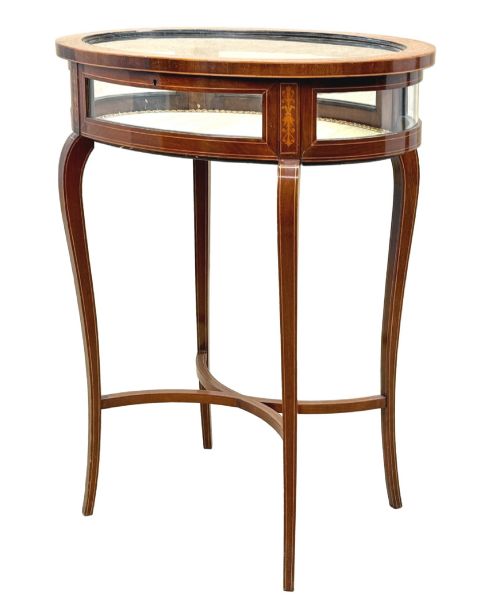
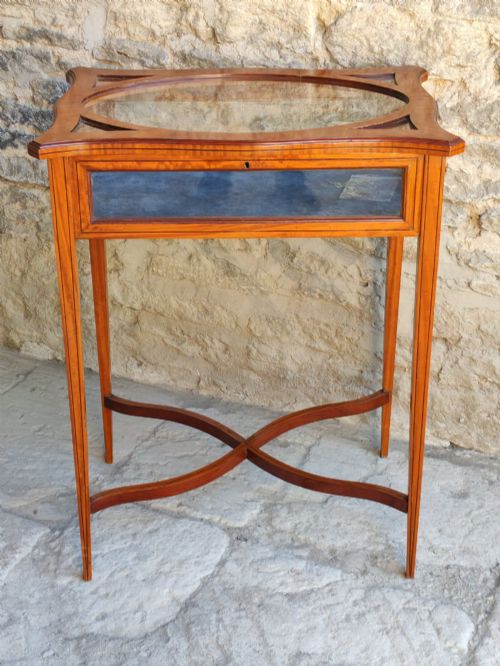
When you search for a victorian vitrine table, you are looking at glazed display furniture designed to hold curiosities, jewellery, and small valuables under glass. The pieces on this page span the Victorian and Edwardian periods, with styles ranging from plain English mahogany to French-influenced revivals.
You will most commonly encounter oval and rectangular bijouterie tables, alongside occasional octagonal forms and display cabinets. These items combine the functions of a traditional side table with a secure, glass-enclosed compartment for personal collections.
Origins vary between English workshops and continental French influences, particularly through Louis XVI and Rococo revival pieces. Materials such as mahogany, rosewood, and satinwood dominate the selection, often paired with textile linings for the display well.
What varies in quality
The distinction between standard and top-tier pieces rests on the choice of timbers and the crispness of the cabinet-making. Finer examples display carefully selected veneers, precise marquetry work, and substantial timber frames rather than simple construction.
Metalwork and glazing standards also divide the range. Heavy ormolu mounts, well-fitted bevelled glass, and smooth hinges separate exceptional pieces from simpler utilitarian variants.
Listings feature mahogany, rosewood, satinwood, and kingwood timbers, spanning the Victorian and Edwardian periods with frequent French revival influences.
The Victorian Vitrine Table Glossary
- Bijouterie table
- A display table with a glazed compartment specifically designed for holding small trinkets, jewellery, and curiosities. These pieces often feature a hinged lid for access.
- Ormolu
- Gilded bronze mounts applied to furniture for decorative effect. This technique was frequently used on finer Victorian and French revival pieces.
- Marquetry
- Decorative veneer work arranged in pictorial or geometric patterns using various coloured woods. It appears on the tabletops and friezes of finer examples.
- Satinwood
- A pale, hard timber prized for its smooth grain and glossy appearance. It was often utilised in late nineteenth-century cabinet-making.
- Vitrine
- A glass-fronted or glass-topped cabinet used for displaying objects of art or collections. The term encompasses both table forms and upright display pieces.
Victorian Vitrine Table: Frequently Asked Questions
What fits inside a bijouterie table?
These glass-topped compartments were traditionally used for storing pocket watches, coins, medals, rings, and small porcelain objects. The shallow velvet-lined depth keeps delicate items from shifting during use.
Today, they serve the exact same purpose, allowing collectors to display small items while protecting them from dust and handling.
How do I clean the interior fabric?
The velvet or fabric lining inside the display well requires gentle maintenance, usually limited to careful surface dusting with a soft brush. Moisture should be avoided entirely to protect the surrounding wood and adhesive.
Many period pieces retain their original linings, which add to their authenticity despite signs of age.
Are these tables sturdy enough for daily use?
While built as functional furniture, the glazed top and hinged mechanisms require a lighter touch than a standard wooden writing table. They function best as accent pieces in rooms with controlled foot traffic.
The slender cabriole or tapered legs support the display compartment safely under normal domestic conditions.
How do I date a glass display table?
Dating relies on timber choices, leg styles, and construction techniques, moving from earlier rosewood and mahogany forms to later satinwood and inlaid Edwardian variations. Ormolu mounts and revival styles also offer clues to the specific decade of manufacture.
Comparing the joinery methods inside the glazed compartment often reveals the period workshop practices.