
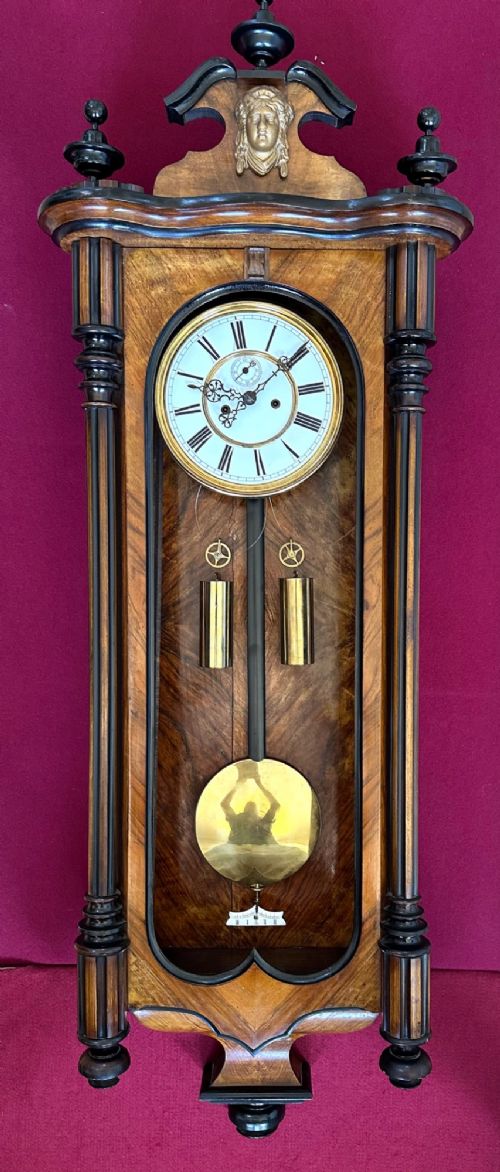
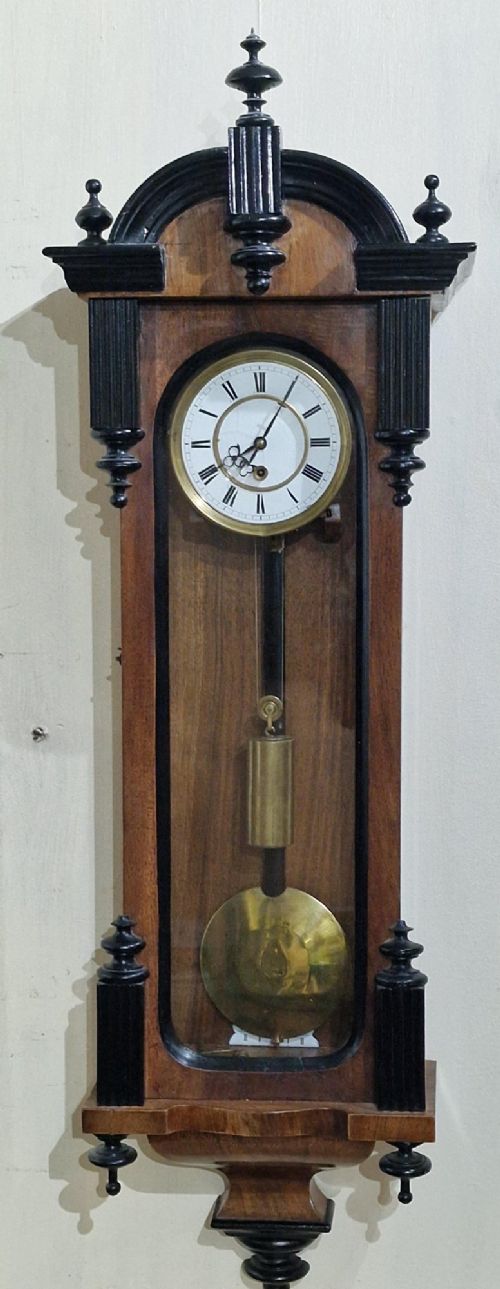
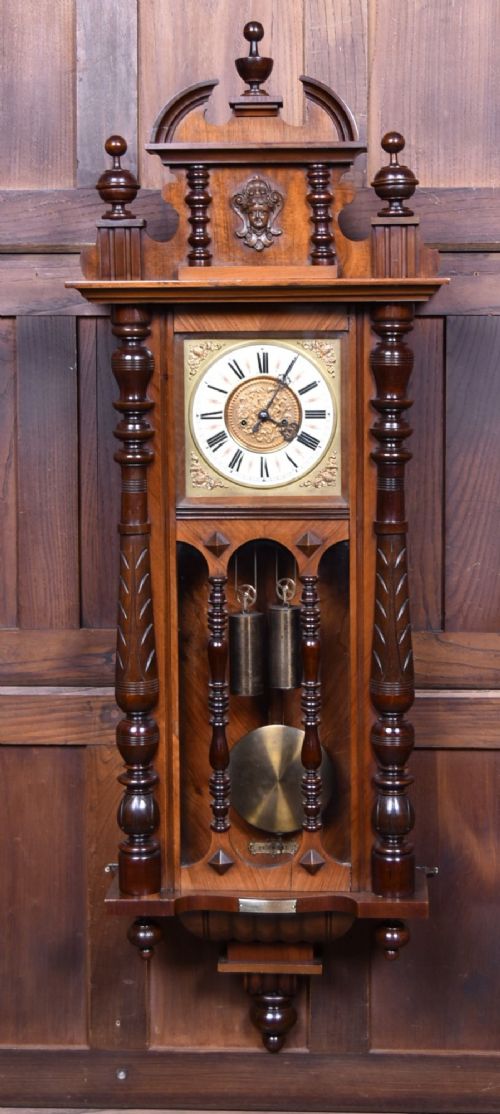
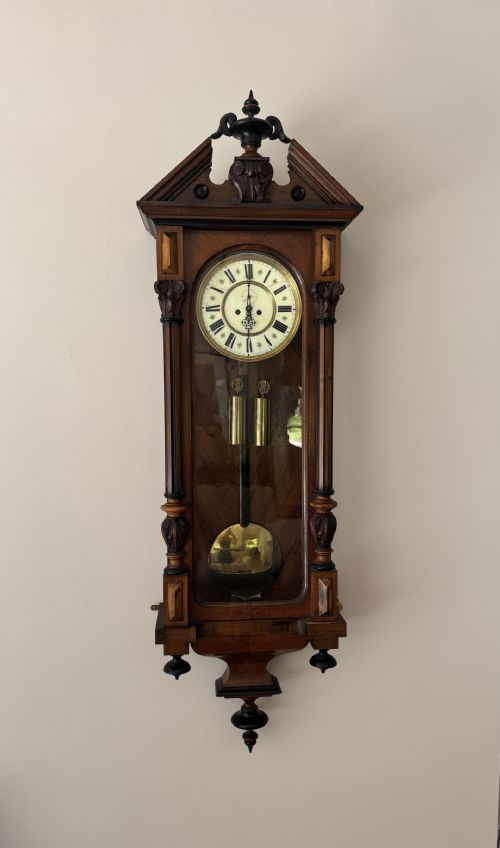






Victorian Vienna Wall Clock
These Victorian Vienna wall clocks are precise timekeepers housed in timber cases that bring reliable nineteenth-century engineering into domestic rooms.
Victorian Vienna Wall Clock
A victorian vienna wall clock stands as a formal timekeeper designed for domestic display during the nineteenth century. Buyers searching for this phrase encounter tall timber enclosures that house complex pendulum movements.
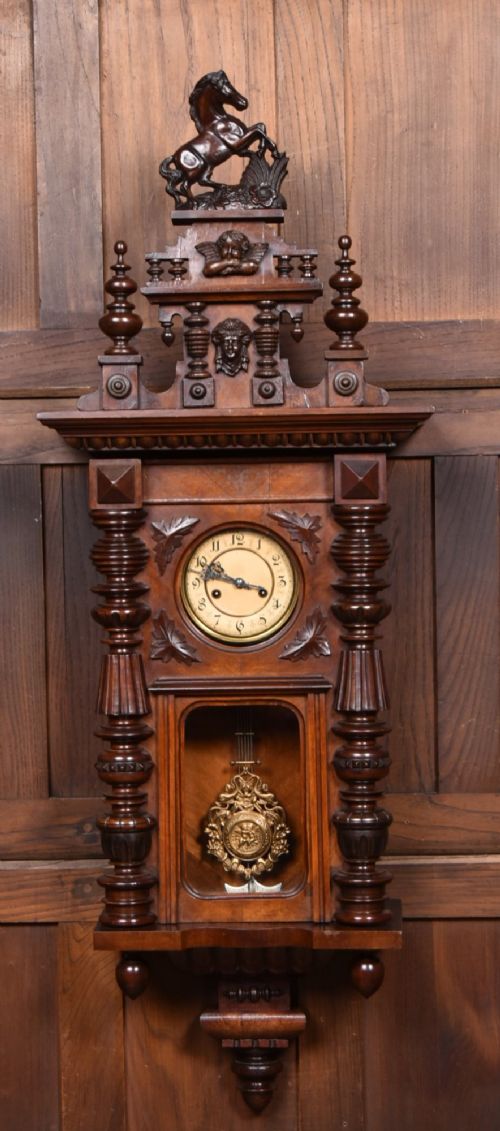
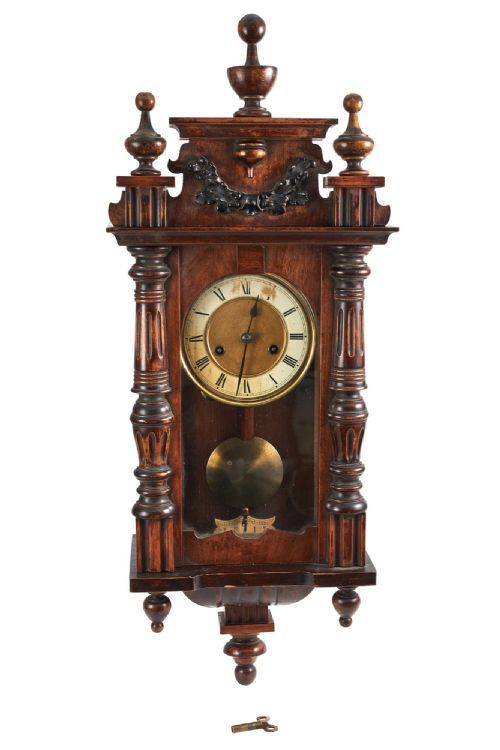
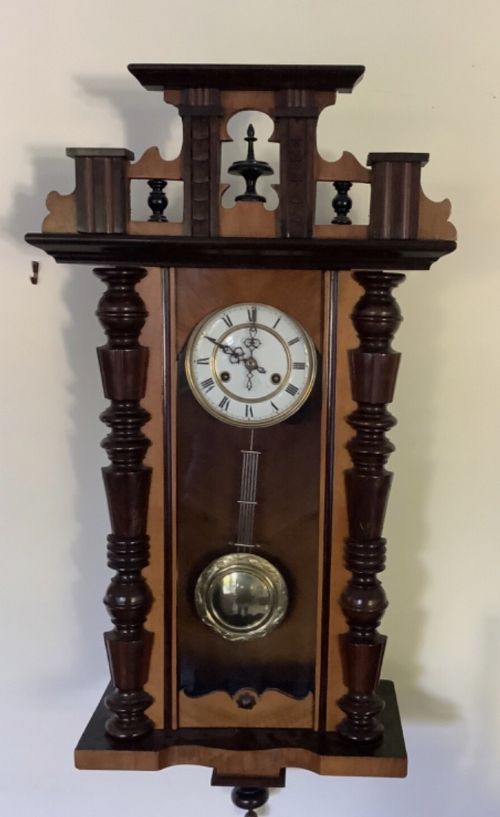
The version met most often on this page is the walnut-cased wall clock dating from the eighteen-eighties or earlier. These pieces combine glazed front doors with brass weights and porcelain dials intended for prominent placement in a reception room or hallway.
Makers working within the style adopted architectural influences, producing cases decorated with carved pediments, turned columns and ebonised details. The format spans simple one-weight timepieces up to heavy double and triple weight striking regulators.
How They Were Made
Cases combine solid timbers like walnut, burr walnut and oak with ebonised wood mouldings and applied carved ornaments. Glazed doors protect the pendulum and allow the motion to remain visible from the room.
Movements utilise brass gear trains and steel pinions, driven by suspended weights or spring barrels. Dials incorporate white enamel chapter rings with painted numerals, often paired with delicate pierced hands.
Early clockmakers occasionally added miniature wooden balconies beneath the dial so small ornaments could survey the room.
What Varies in Quality
The distinction between tiers rests upon the crispness of the timber carving and the architectural proportion of the case. Superior examples display selected burr veneers and well-balanced crestings rather than plain or later replacements.
Movement finishing separates standard production from high workshops, visible in the refinement of the brass plates and the precision of the escapement. Makers signed the backplates of finer pieces, indicating superior clockmaking standards.
Gustav Becker·AG Lenzkirch·Johann Baptist Beha
The Victorian Vienna Wall Clock Glossary
- Vienna Regulator
- A precision wall clock developed in Austria, noted for its accurate movement and long pendulum. These timepieces display the swinging bob behind a full-length glass door.
- Double Weight
- A movement driven by two separate suspended weights, typically powering both the going train and the striking train. This configuration requires eight-day winding intervals.
- Ebonised
- Timber stained or painted black to imitate ebony wood. Makers utilised this finish on mouldings and capitals to create sharp contrast against walnut panels.
- Chapter Ring
- The circular band on the dial bearing the hour numerals. These rings are frequently constructed from white enamel with black painted markers.
- Pendulum
- The suspended weight that swings to regulate the clock mechanism. In these pieces, the brass or mercurial-look bob hangs on a metal rod visible through the glazed case.
Victorian Vienna Wall Clock: Frequently Asked Questions
How often do they need winding?
Most eight-day models require the weights to be pulled up once a week to maintain accurate timekeeping.
Spring-driven variants follow a similar weekly schedule, while month-duration examples need attention far less frequently.
Where should a wall clock hang?
Mount the clock on a solid interior wall where it remains free from heavy vibrations and drafts.
Position it at a height that allows easy access to the winding holes and the pendulum.
How do I start the pendulum?
Hang the pendulum carefully on its suspension spring and give the bob a gentle push to one side.
Listen for an even tick-tock rhythm; if the beat sounds uneven, adjust the case plumb until the motion balances.
What does a striking mechanism do?
The striking train sounds the hours and sometimes the halves on a gong or a coil of wire.
This acoustic feature uses a separate weight or spring power source independent of the timekeeping train.