



Victorian Venetian Seascape
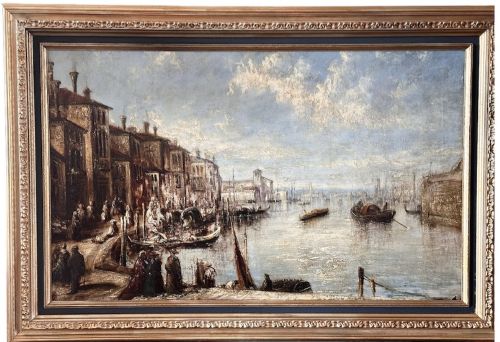
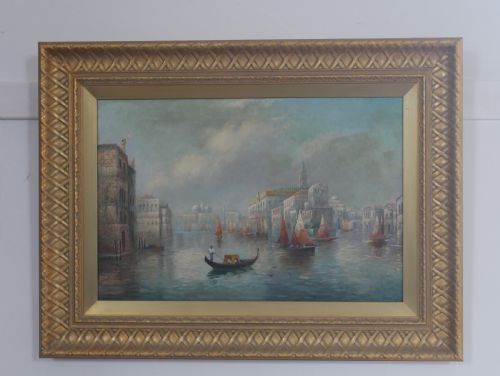
A Victorian Venetian seascape captures the light and water of the lagoon through nineteenth-century brushwork.
Victorian Venetian Seascape
A victorian venetian seascape portrays the iconic waterways, canals, and historic architecture of Venice during the nineteenth century. These works capture famous locations such as the Grand Canal, the Doge's Palace, the Lagoon, and the Giudecca Canal. Buyers seeking these watercolours and oil paintings find evocative views created across the decades of the Victorian era.
The pieces appearing on this page span several decades of the nineteenth and early twentieth centuries, employing both oil and watercolour mediums. They range from detailed townscapes of the Ducal Palace to atmospheric depictions of Santa Maria della Salute. Each artwork reflects the enduring British fascination with Italian travel and light during this period.
Materials and Methods
Artists executed these works primarily in oil on canvas or watercolour on paper, framed by traditional wooden or giltwood surrounds. Oil paintings allowed for rich textures and deep tones on canvas, whilst watercolours captured the luminous, translucent qualities of the Venetian atmosphere on paper.
Makers utilised established nineteenth-century techniques in marine and romantic painting to render the distinctive architecture and water reflections. The combination of pigment, canvas, and paper formed durable compositions that survive within nineteenth-century frameworks.
Victorian Venetian Seascape Retail Price Guide 2026
Typical asking prices for victorian venetian seascape among the pieces listed under this phrase on Sellingantiques today, from the lower quarter to the upper quarter. They describe what is for sale here now, not the wider market.
Listings feature works spanning the nineteenth and early twentieth centuries, executed in oil on canvas and watercolour on paper.
Distinctions in Quality
Quality rests upon the artist's ability to handle the characteristic light and water reflections of the Venetian lagoon. Works by established painters demonstrate a superior command of perspective when rendering complex architectural subjects like St Mark's Square or the Grand Canal.
The finesse of the brushwork and the preservation of the original canvas or paper support distinguish finer examples. Furthermore, the presence of period-appropriate giltwood framing contributes to the overall integrity and visual impact of the piece.
Francis Moltino·Jane Vivian·Alfred Pollentine·William Raymond Dommersen·Frank Wasley·George Stanfield Walters·Henry Wimbush·Arthur Severn
The Victorian Venetian Seascape Glossary
- Oil on Canvas
- Pigment mixed with drying oil applied to a stretched fabric support. This medium permits thick impasto application and deep colour saturation.
- Watercolour
- Paint consisting of transparent pigment suspended in a water-based solution applied to paper. It relies on the white of the paper to create luminous effects.
- Giltwood
- Wood carved and covered with thin gold leaf or gilt powder. It provides a decorative and reflective border popular in nineteenth-century framing.
- Townscape
- A painting representing a city or urban locality. In this context, it focuses on the distinctive canals and palazzos of Venice.
- Romanticism
- An artistic movement emphasising inspiration, subjectivity, and the primacy of individual emotion. It heavily influenced nineteenth-century depictions of atmospheric light.
Victorian Venetian Seascape: Frequently Asked Questions
How do I date a Victorian Venetian seascape?
Examine the materials, stretcher frames, and paper watermarks alongside any artist signatures or inscribed dates. Stylistic clues within nineteenth-century romanticism and impressionism also help narrow the decade of creation.
Compare the subject matter against known periods of the artist's working life. Many works bear inscriptions on the reverse that record the exact canal or monument depicted.
What is the difference between oil and watercolour versions?
Oil paintings on canvas offer heavier texture and deeper pigment saturation suited to grand architectural townscapes. Watercolours on paper tend to deliver lighter, more translucent effects ideal for capturing the misty lagoon atmosphere.
Both mediums were widely practiced during the Victorian era but require different framing and conservation approaches today.
Where should I hang a Venetian seascape?
Display these works away from direct sunlight and damp environments to protect nineteenth-century canvas, paper, and giltwood frames. A neutral wall with controlled ambient lighting allows the colours of the lagoon to stand out properly.
Ensure the hanging height places the centre of the painting at eye level for comfortable viewing.
Are these paintings genuine nineteenth century works?
The pieces reflect the materials, pigments, and stylistic conventions associated with nineteenth-century British and European art production. Signatures, period framing materials, and canvas ageing characteristics provide supporting evidence of their age.
Consulting the specific details provided for each individual listing confirms the recorded period and medium.