



Victorian Velvet Nursing Chair
A victorian velvet nursing chair brings low-slung, buttoned comfort to a bedroom with the rich texture of nineteenth-century fabric.
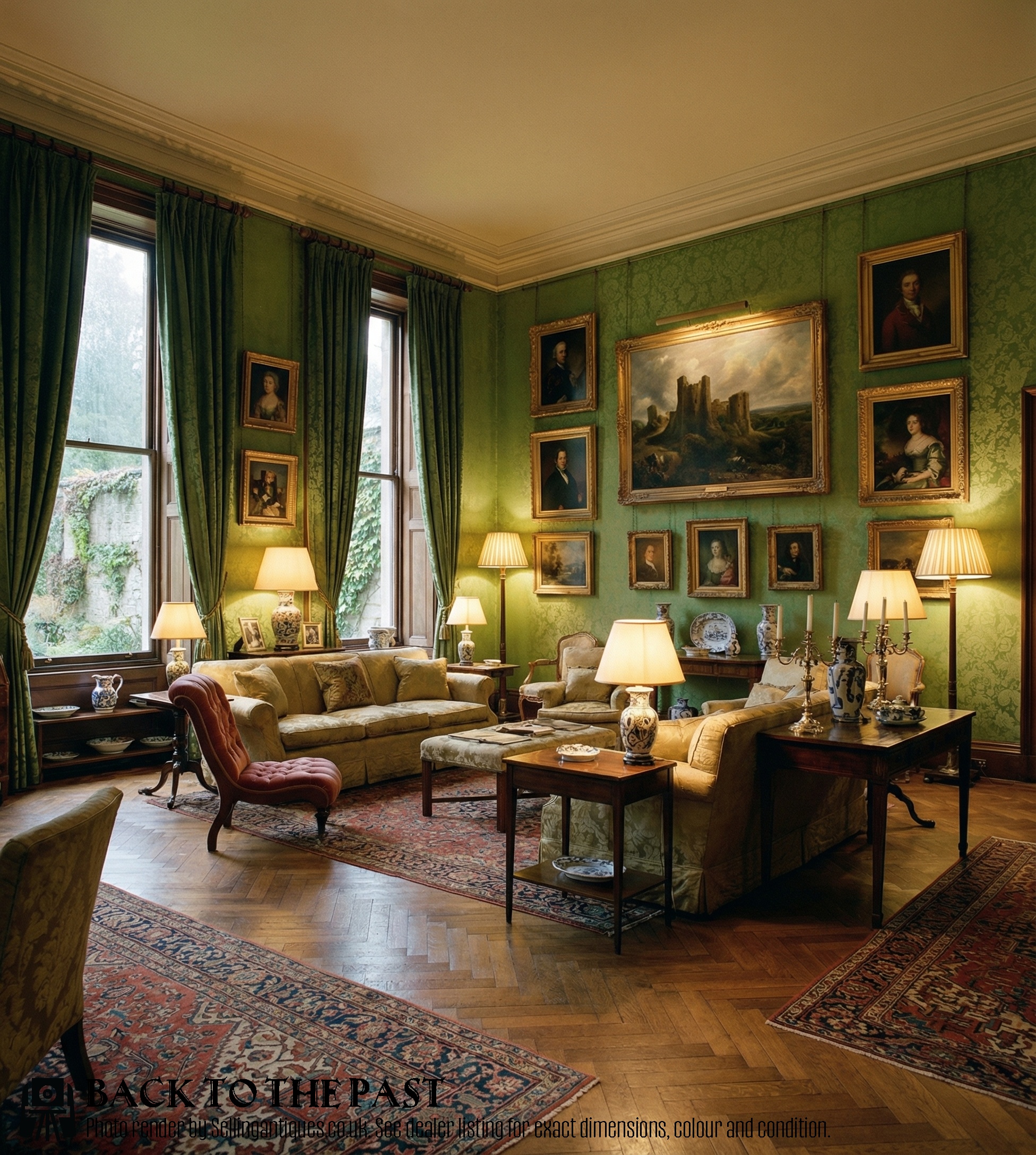
Victorian Velvet Nursing Chair
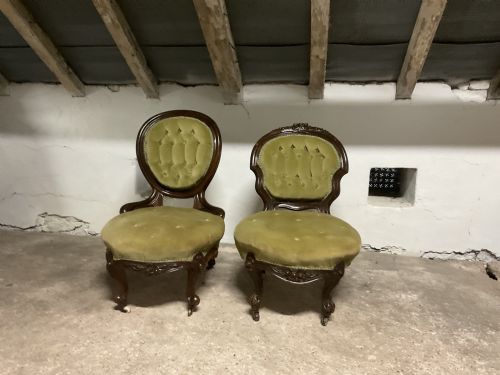
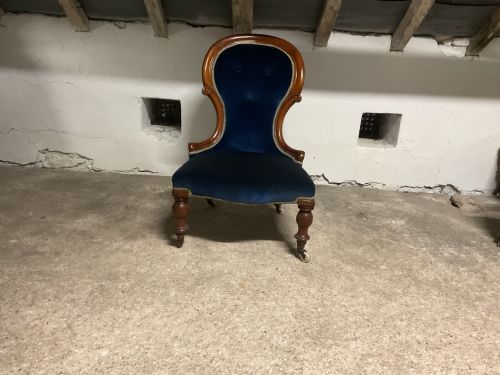
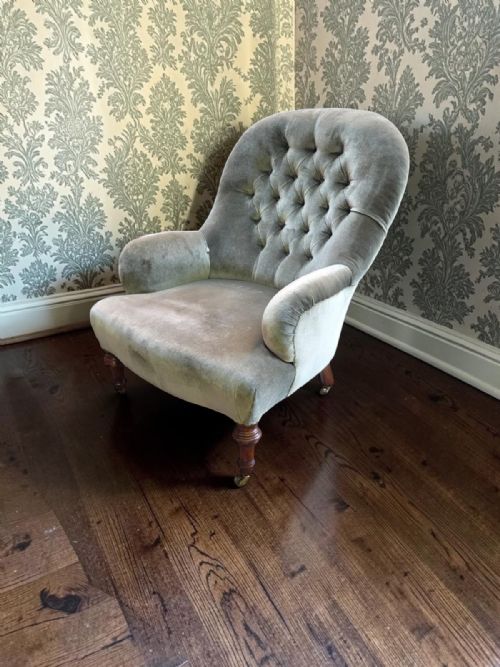
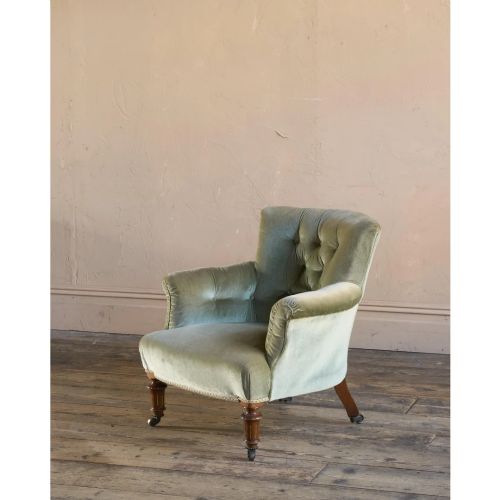
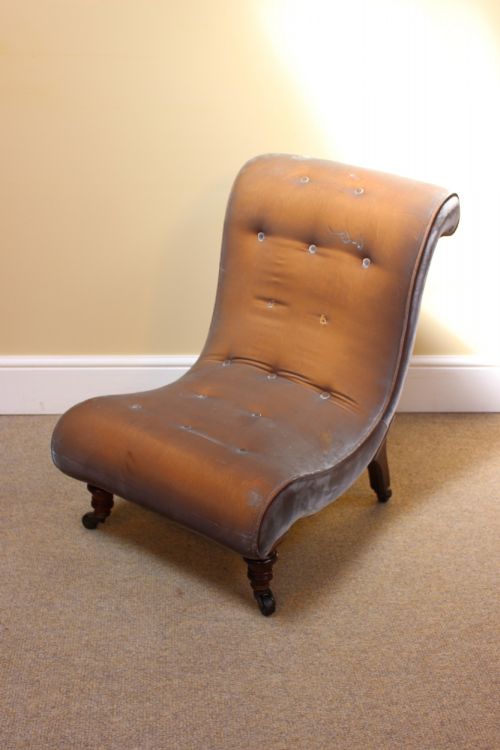
When you search for a victorian velvet nursing chair, you encounter low-seated bedroom chairs designed during the nineteenth century, including pieces from the Victorian and Edwardian periods as well as earlier Regency influences. These seats appear under various descriptions such as slipper chairs, occasional chairs, and boudoir chairs, yet they share a compact footprint intended for domestic chambers and dressing rooms.
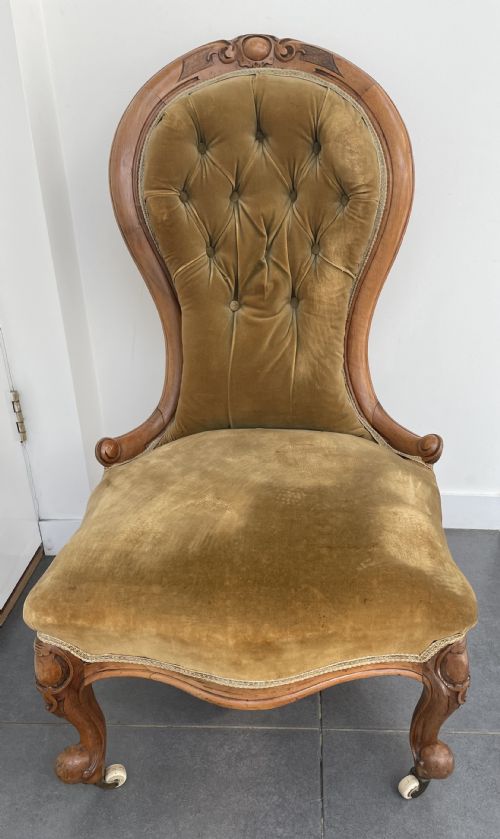
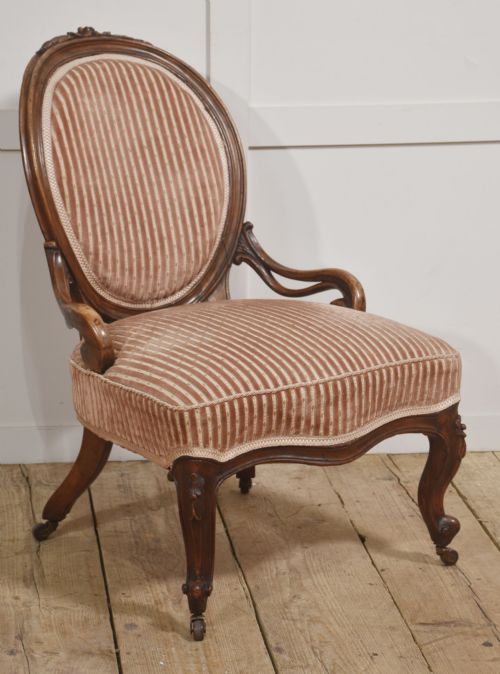
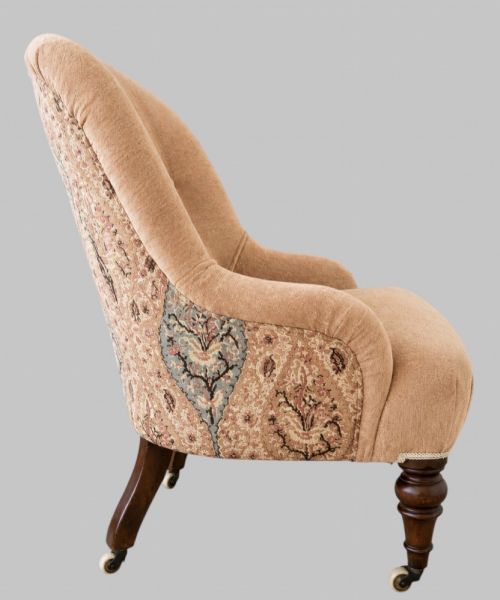
The selections on this page span walnut and mahogany frames alongside occasional giltwood or iron supports, upholstered in velvet ranging from modern specialist fabric to traditional buttoned finishes. You will find balloon backs, spoon backs, and scroll backs among the forms, often fitted with turned front legs and castors for ease of movement across carpets.
How they were made
Cabinetmakers shaped the frames of these chairs from dense timbers like walnut and mahogany, employing carved details, barley twist supports, or giltwood finishes depending on the prevailing style. Frames frequently feature curved balloon backs or open arm configurations constructed with traditional joinery.
Upholstery relied on supportive stuffing beneath plush velvet, often finished with deep buttoning that required precise tension to shape the fabric. Brass castors were commonly fitted to the feet to aid mobility in period bedrooms and dressing spaces.
Victorian ladies required low chairs so their heavy crinolines would not catch on high wooden arms.
What varies in quality
The standard of carving and the selection of timber dictate the distinction between standard bedroom seating and exceptional examples. Walnut frames with crisply carved details or giltwood enrichments reflect superior workshop execution.
Proportion and frame integrity define the upper tier of these pieces, where balanced dimensions and robust internal joinery ensure longevity. The subtlety of the turned legs and the quality of the timber grain separate workshop-made seating from simpler vernacular items.
Gillows·Holland and Sons·Lamb of Manchester
The Victorian Velvet Nursing Chair Glossary
- Balloon back
- An oval or rounded wooden chair back popular during the Victorian era. It curves outward to support the sitter's spine.
- Slipper chair
- A low-seated upholstered chair originally designed for bedrooms and dressing rooms. Its low profile made putting on footwear easier.
- Button back
- An upholstery technique where buttons are pulled deep into the padding to create a diamond pattern. This method keeps the velvet taut and secure.
- Castor
- A small wheel attached to the legs of furniture to allow easy movement. They are frequently made of brass and mounted on ceramic collars.
- Barley twist
- A spiral turning technique applied to wooden chair legs and supports. It mimics the twisted shape of a barley sugar stick.
Victorian Velvet Nursing Chair: Frequently Asked Questions
What is a nursing chair?
A nursing chair is a low-seated Victorian armchair designed without arms or with low arms to accommodate the voluminous skirts of the nineteenth century.
They were typically placed in bedrooms and nurseries, allowing mothers to tend to infants in comfort.
How do I date a Victorian velvet chair?
Dating relies on timber choices, leg turning styles, and back shapes, such as the rounded balloon backs of the mid-nineteenth century.
Mahogany frames often point closer to the earlier decades, while walnut and later Edwardian variations emerge toward the end of the century.
Where should I place a low chair?
These compact seats suit bedrooms, dressing rooms, and firesides where standard armchairs might overwhelm the floor space.
Their low profile also makes them useful as accent seating in living areas without blocking sightlines.
Are these chairs comfortable for daily use?
Their sprung or padded low seats offer a relaxed, slightly reclined posture suited to reading or resting.
Because many feature deep buttoning and padded velvet backs, they provide firm yet supportive seating.