


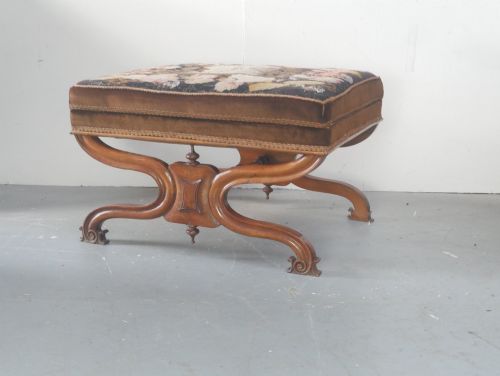
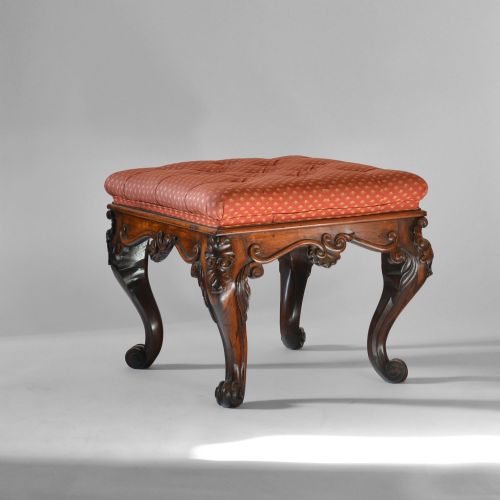
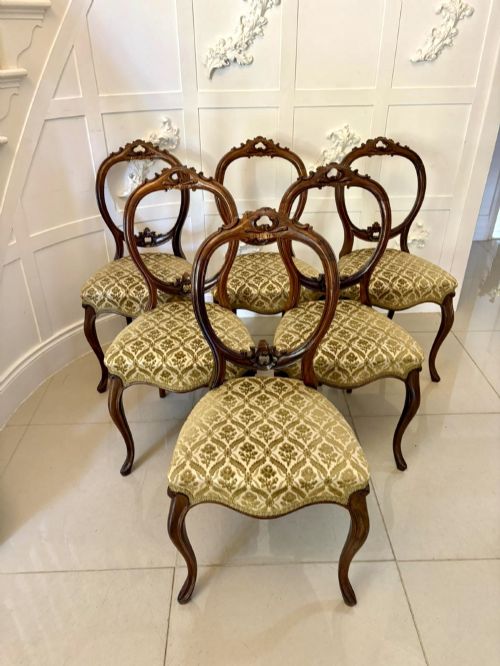
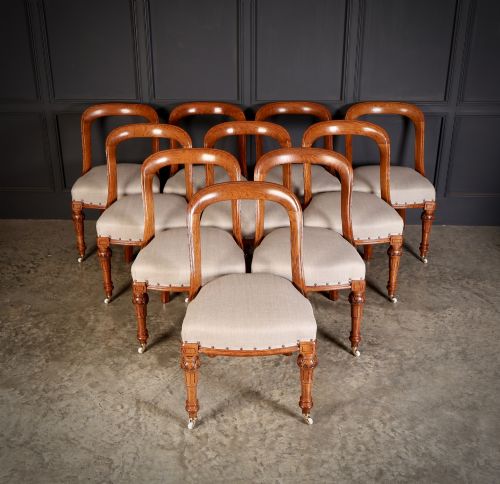
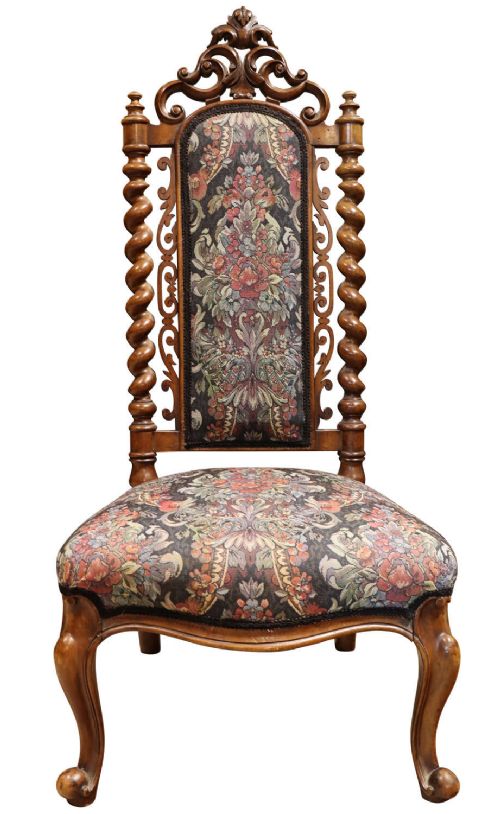
Victorian Upholstered Seat
A victorian upholstered seat brings nineteenth-century comfort and craft into a room, spanning everything from walnut armchairs to long window benches.
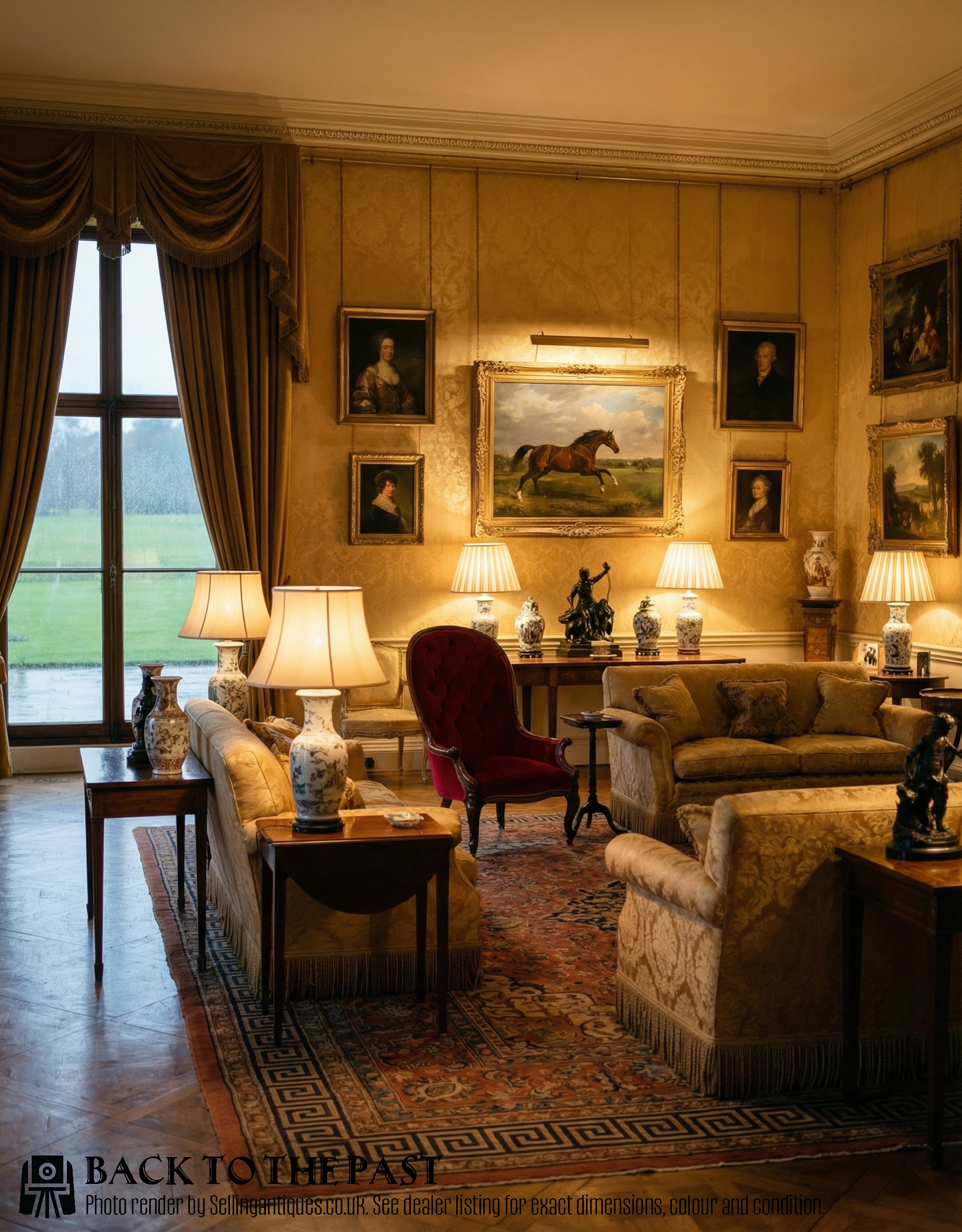
Victorian Upholstered Seat
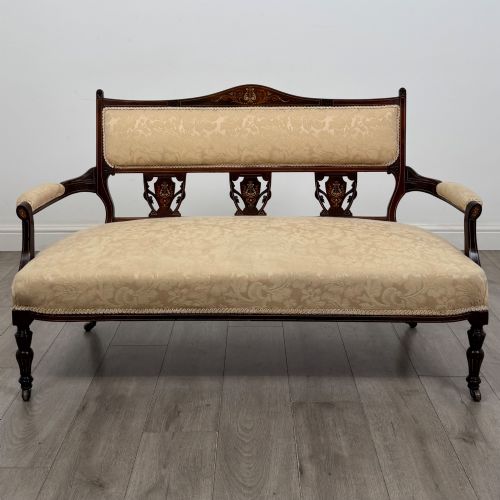
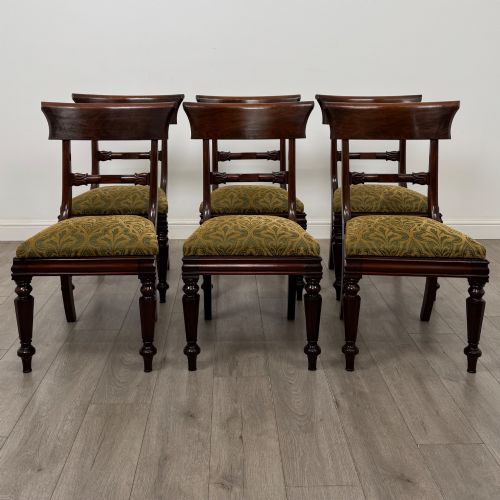
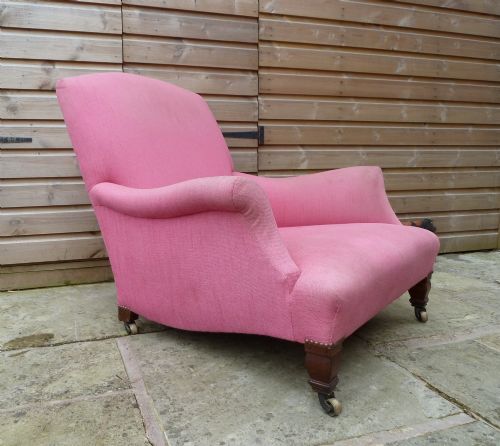
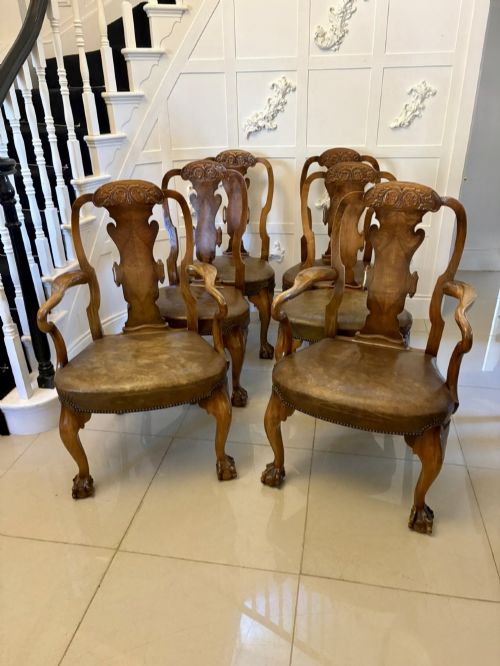
When searching for a victorian upholstered seat, buyers encounter a broad array of nineteenth-century forms designed for sitting, lounging, and parlour use. Dining chairs, large settees, low bedroom chairs, and long window benches form the core of what is available.
Mahogany and walnut frames dominate the selection, often carved in revival styles that reflect the varied tastes of the nineteenth century. Stools, ottomans, and conversation seats appear frequently alongside standard armchairs and multi-seat sofas.
Originating predominantly from English country houses and town residences, these pieces range from utilitarian hall seating to highly decorative drawing room furniture. The surviving examples show the breadth of domestic seating arrangements common in the period.
How They Were Made
Cabinetmakers constructed the supportive frames using dense timbers like mahogany, walnut, rosewood, and oak, often shaping the wood through steam or turning.
Upholstered surfaces relied on traditional stuffing materials, internal webbing, and springs, secured beneath top coverings of velvet, damask, tapestry, or calico linen.
Decorative elements such as buttoning, brass accents, carved woodwork, and needlepoint details were applied by hand to finish each piece.
Victorian Upholstered Seat Retail Price Guide 2026
Typical asking prices for victorian upholstered seat among the pieces listed under this phrase on Sellingantiques today, from the lower quarter to the upper quarter. They describe what is for sale here now, not the wider market.
Listings feature 19th-century periods alongside revival styles including Gothic, Regency, and Queen Anne.
What Varies In Quality
The architectural integrity of the wooden frame sets the foundation, where deeply carved walnut or robust mahogany structures demonstrate superior cabinetmaking over simpler softwood or plain oak builds.
The precision of the upholstery technique, from tight buttoning to the selection of durable covering fabrics, determines the refinement and finish of the piece.
Howard and Sons·Hampton and Sons·Shoolbred and Co
The Victorian Upholstered Seat Glossary
- Button back
- A style of upholstery where depressions are formed in the padding by stitches pulled tight and secured with covered buttons. This technique creates a distinctive geometric pattern across the cushioned surface.
- Conversation seat
- A curved or serpentine multi-seat furniture piece designed so occupants can face different directions while talking. These are often upholstered in velvet or tapestry.
- Ottoman
- A low upholstered seat or box without arms or a back, frequently used as a footstool or window bench. Many Victorian examples feature hinged lids for interior storage.
- Prie Dieu
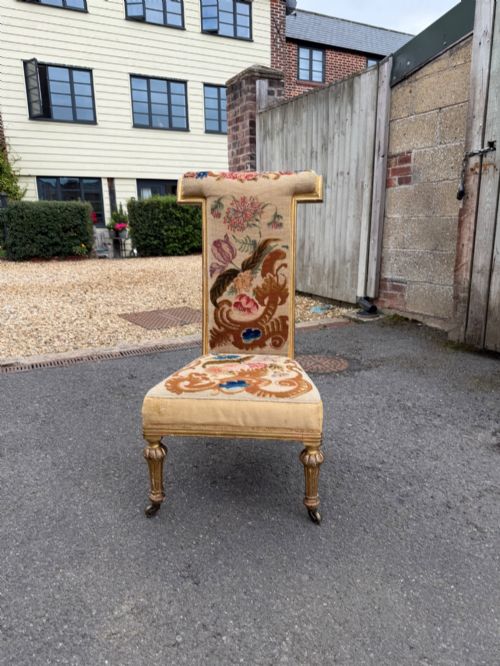
- A devotional chair featuring a low seat and an elevated, padded top rail designed for kneeling and prayer. These nineteenth-century pieces are commonly rendered in carved walnut or oak.
Victorian Upholstered Seat: Frequently Asked Questions
How do I identify a Victorian armchair?
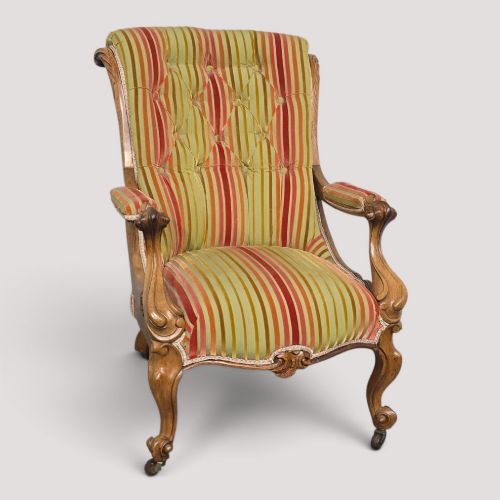
Victorian armchairs typically feature distinct nineteenth-century wood frames made from mahogany or walnut, paired with sprung upholstery. Look for stylistic cues such as button backs or carved woodwork that match the period.
Makers from this era often utilised traditional joinery techniques hidden beneath the fabric layers. Examining the underside and the timber grain helps confirm the nineteenth-century origin.
Where should I place a window bench?
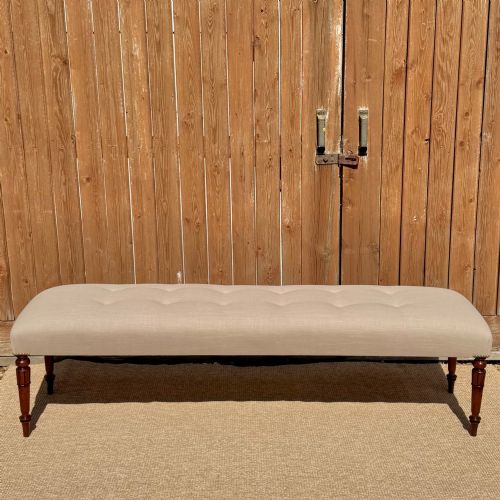
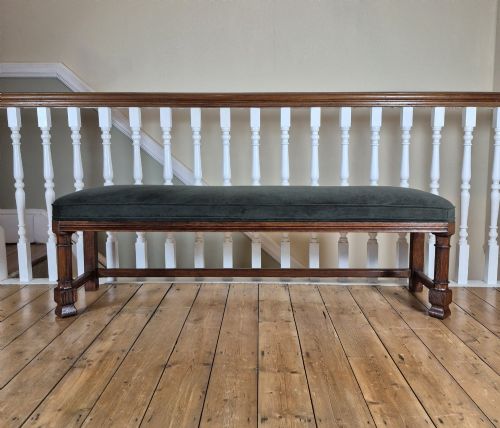
Window benches fit naturally beneath low sills, along hallways, or at the foot of a bedroom bed. Their long proportions provide functional seating without blocking natural light.
These pieces also work well in bay windows or spacious landings where extra surface seating is useful. The low profile keeps sightlines open across the room.
What is a conversation seat used for?
Conversation seats are designed for social interaction, allowing two or more people to sit facing different directions while maintaining proximity. They served as central parlour furniture in nineteenth-century homes.
The curved configuration encourages dialogue during gatherings. Their ornate upholstery made them prominent decorative centrepieces.
How do I care for antique upholstery?
Protect antique fabric surfaces from direct sunlight to prevent fading and keep delicate velvet or tapestry clean with gentle vacuuming. Avoid harsh chemical cleaners on fragile nineteenth-century textiles.
Maintaining stable indoor humidity levels prevents the internal wooden frames and glue joints from drying out. Professional conservation is recommended for deep restoration work.