
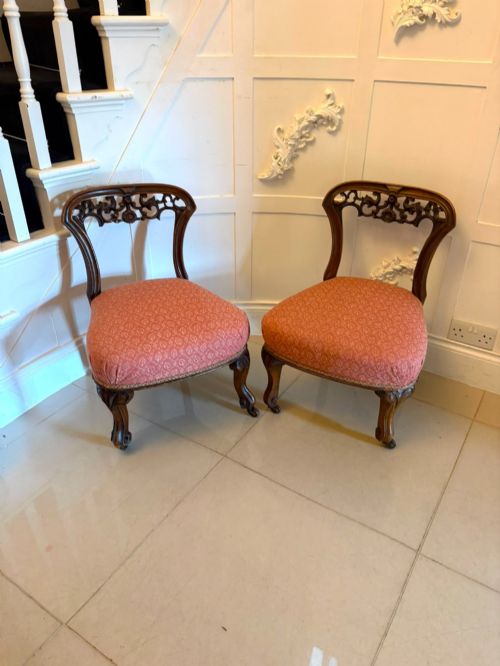


Rosewood Slipper Chair
A rosewood slipper chair is a low, unencumbered seat designed for comfort and ease, embodying the elegant proportions of the nineteenth century.
Rosewood Slipper Chair
A rosewood slipper chair typically takes the form of a low-slung, upholstered seat designed for bedroom use or informal sitting, emerging frequently in Victorian and Regency variants. These pieces stand closer to the ground than standard dining or parlour seating, allowing for comfortable dressing or relaxing.
The archive shows these chairs appearing across several decades, with Victorian and Regency examples dominating the selection alongside occasional Edwardian pieces. Buyers encounter various designations in the evidence, including nursing chairs, ladies chairs, and bedroom chairs.
The physical form relies on dense tropical hardwood framing, often paired with low seats and padded backs. Makers shaped these timbers into cabriole legs, barley twists, or scroll backs to suit the evolving tastes of the nineteenth century.
Materials and construction methods
Makers utilised solid rosewood and walnut for the structural frames, often selecting the dense grain for its rich colour and capacity for sharp carved detail. Brass castors and fittings appear on legs to aid movement across heavy carpets.
Upholstery forms a primary component of each piece, utilising materials such as velvet, damask, leather, and traditional fabric over sprung or stuffed interiors. The frames combine turned elements like barley twists with hand-carved cabriole legs.
The site's listings demonstrate that rosewood slipper chairs frequently overlap with nursing and bedroom chair categories across the Victorian period.
Assessing quality in rosewood seating
Quality rests in the crispness of the timber carving and the integrity of the underlying frame construction. Superior examples exhibit tightly joined joints and substantial rosewood stock rather than thin veneers.
The refinement of the silhouette distinguishes finer pieces, particularly where scroll backs, cabriole legs, or barley twist turnings display balanced proportions. Original show-wood surfaces with deep, rich patination command greater appreciation than heavily altered or stripped frames.
Miles and Edwards·Bruce Talbert·Gillows
The Rosewood Slipper Chair Glossary
- Rosewood
- A dense, heavy timber prized for its dark, richly figured grain and warm reddish-brown colour. It takes a high polish and forms the primary structural material for these chairs.
- Cabriole leg
- A furniture leg featuring a double curve, bulging outward at the top and tapering inward toward the foot. This form derives from animal limbs and appears frequently on Victorian seating.
- Barley twist
- A spiral turning resembling a twisted rope, carved into wooden uprights or legs. This technique gained popularity during the Victorian period.
- Prie Dieu
- A devotional chair featuring a high back topped with a narrow shelf for kneeling or resting arms during prayer. These items often share the low profile of slipper chairs.
- Simulated rosewood
- Common painted or stained finish applied to alternative timbers to mimic the appearance of genuine rosewood. This technique appears on certain Regency examples in the archive.
Rosewood Slipper Chair: Frequently Asked Questions
What is a rosewood slipper chair used for?
These low seats served primarily in bedrooms and dressing rooms during the nineteenth century. Their reduced height allowed individuals to sit comfortably while putting on footwear or garments.
Today, buyers place them in living rooms, hallways, and bedrooms as accent pieces. Their compact scale makes them useful for smaller spaces where standard armchairs prove too bulky.
How do I tell a Regency from a Victorian chair?
Regency pieces generally display cleaner, classical lines influenced by neoclassical design, occasionally featuring simulated rosewood finishes. Their proportions remain restrained and geometric.
Victorian examples tend toward heavier carving, scroll backs, and ornamental details like cabriole legs or barley twists. The evidence shows these chairs spanning from the 1830s through to the late nineteenth century.
Are these chairs comfortable for modern sitting?
Many retain deep padding and supportive sprung interiors designed for relaxed lounging. Because they sit lower than standard modern chairs, they offer a distinct, relaxed posture.
Comfort ultimately depends on the condition of the internal webbing and padding. Many pieces have undergone professional reupholstery to suit contemporary use.
How should I care for rosewood furniture?
Keep wooden frames away from direct sunlight and radiators to prevent the rosewood from drying out or splitting. Regular dusting with a soft cloth maintains the natural lustre of the polished surface.
Protect upholstered areas according to the specific fabric type, whether leather, velvet, or damask. Avoid using harsh chemical cleaners on either the timber or the textile components.