
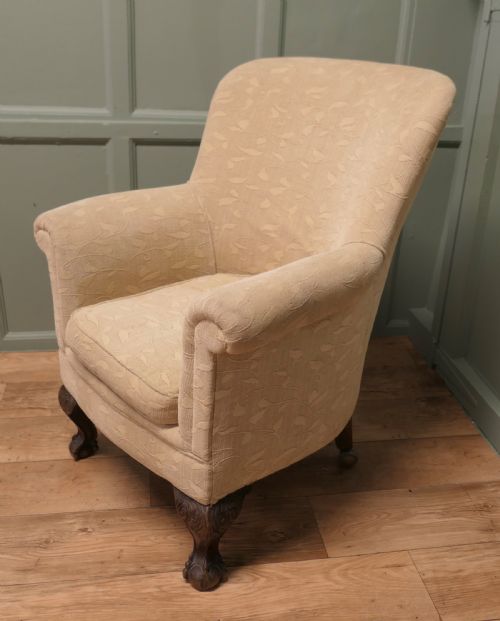
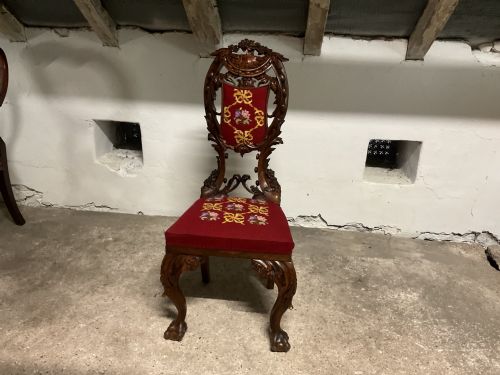
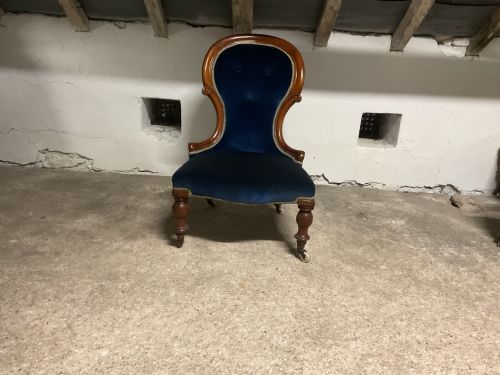
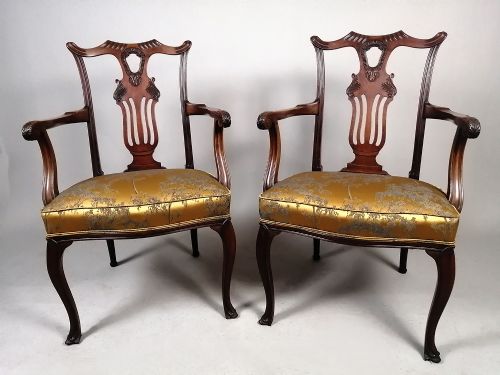
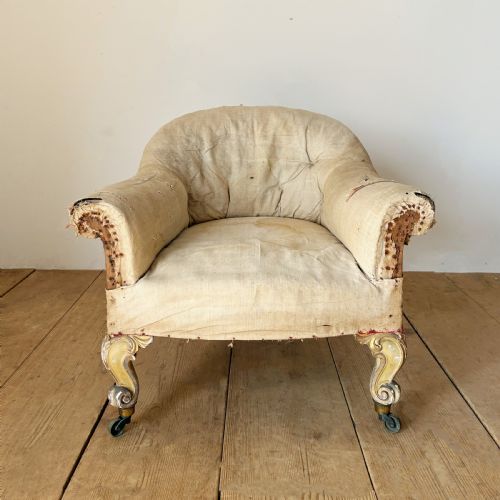


Victorian Upholstered Occasional Chair
A victorian upholstered occasional chair brings compact comfort and period character to a corner, combining carved wooden frames with rich textiles.
Victorian Upholstered Occasional Chair
A victorian upholstered occasional chair encompasses a diverse group of compact seating forms designed for bedrooms, parlours and drawing rooms during the nineteenth century. These pieces appear in numerous variations, including nursing chairs, slipper chairs, tub chairs and salon chairs.
The materials and styles span the Victorian period alongside adjacent nineteenth-century eras like William IV and Edwardian. Mahogany, walnut and oak frame constructions meet upholstery in velvet, fabric, tapestry and textile.
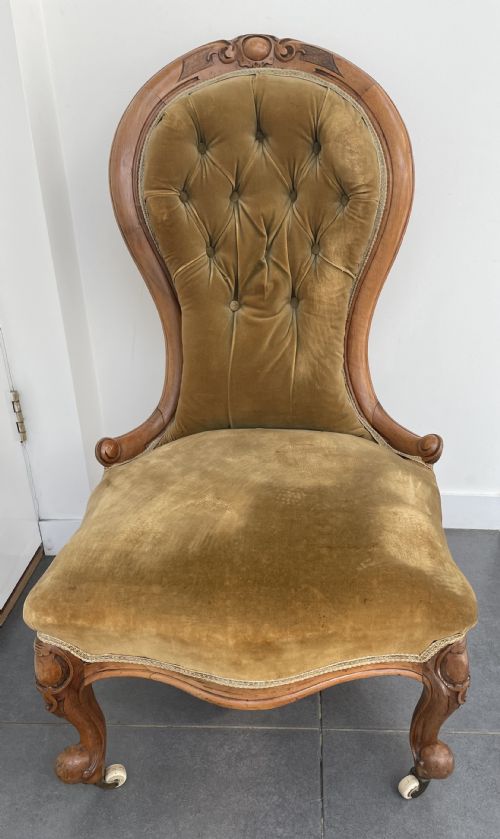
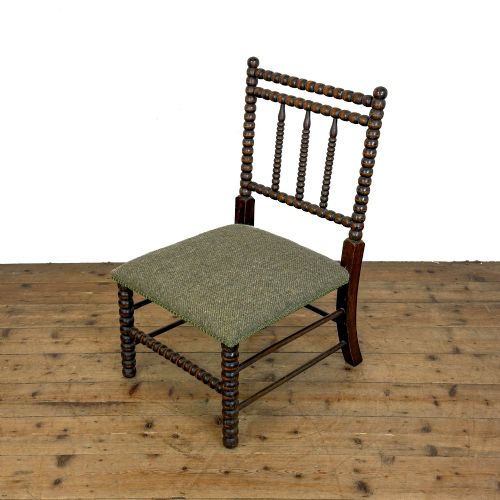
Buyers most frequently encounter mahogany and walnut frames featuring characteristic nineteenth-century details such as cabriole legs, button backs and turned supports with castors. These smaller-scale seats served specific domestic functions while offering decorative presence.
Materials and Construction
Cabinetmakers utilised dense hardwoods like mahogany and walnut to construct sturdy frames that could support intricate carving and turned components. Brass castors often fitted to front legs provided mobility for heavier parlour chairs.
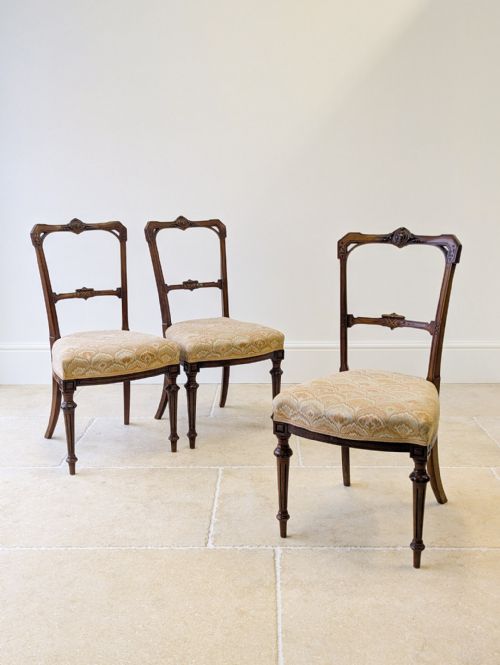
Upholstery techniques involved textiles such as velvet, tapestry and various woven fabrics secured over padded seats and buttoned backs. Hand-carved wooden details on splats, frames and rails demonstrated the joinery skills of the period.
The inventory records span the nineteenth century, encompassing Victorian, William IV and Edwardian periods alongside Sheraton Revival styles.
Assessing Craftsmanship
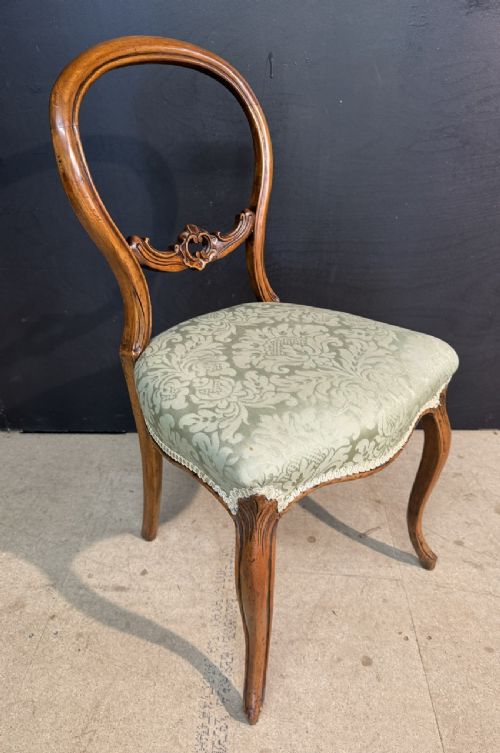
The distinction between standard and superior pieces rests upon the crispness of hand-carved woodwork and the integrity of the timber frame. Walnut and mahogany examples with detailed pierced splats or sophisticated balloon-back curves represent more ambitious cabinetmaking.
Proportion and execution of form dictate the overall character, where restrained elegance in turned legs and balanced frames separates fine examples from simpler production.
Jenks & Wood
The Victorian Upholstered Occasional Chair Glossary
- Occasional chair
- A light, movable seat designed for use in various rooms rather than a fixed place at a dining table. These smaller chairs suited parlours, bedrooms and drawing rooms.
- Balloon-back
- A chair back shaped in a continuous oval curve resembling a blown balloon. This contour appeared frequently in mid-nineteenth-century seating.
- Cabriole leg
- A furniture leg that curves outward in a convex arc before tapering inward in a concave sweep terminating in a foot. The design draws inspiration from animal limbs.
- Nursing chair
- A low-seated upholstered chair designed originally for comfort while nursing infants. These pieces often feature low profiles and padded button backs.
- Slipper chair
- An upholstered bedroom chair characterised by a very low seat and no arms. The compact height originated to assist women dressing and putting on slippers.
Victorian Upholstered Occasional Chair: Frequently Asked Questions
Where did these chairs go in a Victorian home?
Victorian households placed these compact seats in bedrooms, parlours, dressing rooms and drawing rooms where extra seating was required without crowding the floor plan.
Their lightweight frames allowed easy relocation between rooms depending on daily social or domestic needs.
How do I distinguish a nursing chair from a slipper chair?
Nursing chairs typically feature low seats paired with supportive upholstered backs designed for extended periods of sitting. Slipper chairs generally offer an even lower profile without arms to facilitate changing shoes or clothing.
Both types reflect the specialised domestic functions of nineteenth-century bedroom furniture.
What wood types are most common on these chairs?
Mahogany and walnut form the primary timber framework for the vast majority of nineteenth-century examples. Oak appears less frequently, alongside occasional ebonised finishes.
Cabinetmakers selected these hardwoods for their strength and suitability for intricate turning and carving.
How can I date a Victorian occasional chair?
Dating relies on observing stylistic markers such as Rococo Revival curves, Neoclassical symmetry or aesthetic movement ebonising combined with wood choice. Mid-century pieces often display rich walnut and balloon-back forms, while later examples show Edwardian influences.
Construction details like turned front legs with castors also provide clues to the decade of manufacture.