




Vintage Velvet Low Chair
A vintage velvet low chair brings low seating and soft pile texture into a room, offering compact comfort across Victorian and Edwardian forms.
Vintage Velvet Low Chair
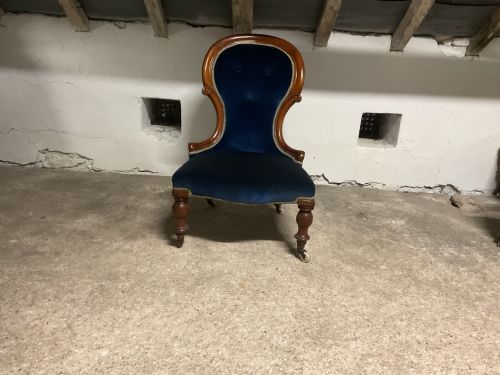
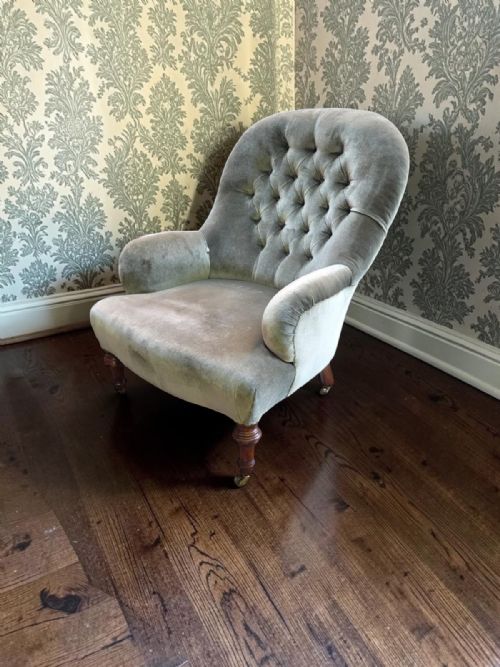
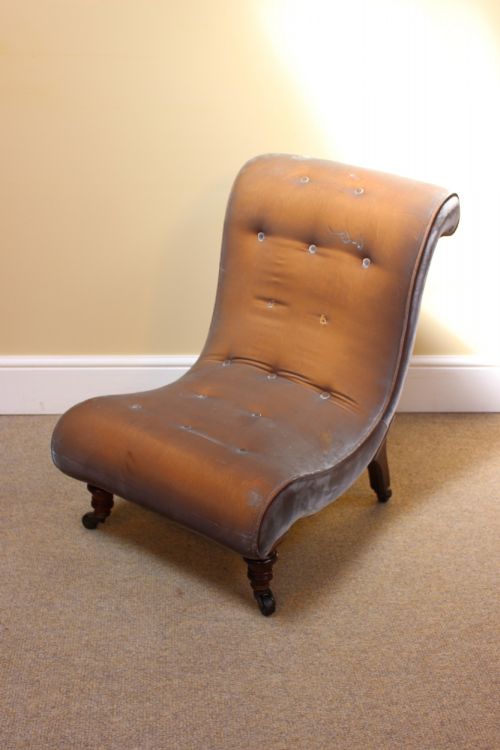
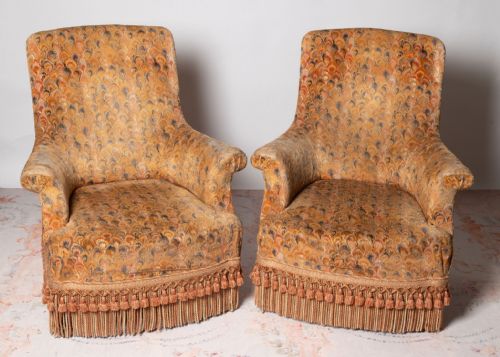
A vintage velvet low chair encompasses compact seating designed for bedrooms, parlours, and drawing rooms from the nineteenth and early twentieth centuries. These pieces appear in forms such as nursing chairs, slipper chairs, prayer chairs, and boudoir chairs.
The version most commonly encountered on this page is the Victorian or Edwardian upholstered bedroom chair, frequently featuring button backing and a low seat set on turned wooden legs.
Makers designed these low seats for specific domestic tasks near the hearth or dressing table, resulting in proportions that sit closer to the floor than standard armchairs.
Materials and construction
Construction relies on timber frames shaped from mahogany, walnut, oak, and ebonised wood, which provide the structural rigidity beneath the upholstery. Joinery methods of the period ensure stability across low-slung frames like the gossip chair and the slipper chair.
Textiles focus on velvet applied over padded seat backs and sprung bases, often accented with brass elements, buttoning, and piping. Frames occasionally incorporate turned members such as barley twist supports alongside lacquered finishes.
Vintage Velvet Low Chair Retail Price Guide 2026
Typical asking prices for vintage velvet low chair among the pieces listed under this phrase on Sellingantiques today, from the lower quarter to the upper quarter. They describe what is for sale here now, not the wider market.
The listings span the nineteenth and early twentieth centuries, featuring materials such as mahogany, walnut, brass, and velvet across forms like slipper and nursing chairs.
Determining quality in low seating
Quality rests upon the integrity of the underlying wooden frame and the precision of the joinery supporting the low seat. Heavier hardwoods like mahogany and walnut indicate a sturdier build than lighter alternative timbers.
The definition of the upholstery work, the tautness of the buttoning, and the harmony between the velvet textile and the frame dictate the overall standard of the piece.
Howard and Sons
The Vintage Velvet Low Chair Glossary
- Nursing chair
- A low-seated Victorian armchair designed originally for nursing infants, possessing a compact footprint and shortened legs. This form appears frequently with button-backed upholstery.
- Slipper chair
- An upholstered chair with very low legs, historically used in bedrooms for sitting while putting on shoes. The low profile defines its primary utility.
- Prie Dieu
- A low prayer chair featuring an upright back often topped with a padded rail for resting arms during devotions. These pieces typically combine ebonised wood with velvet textiles.
- Ebonised wood
- Timber treated with a dark finish to imitate ebony, commonly utilised on nineteenth-century seating frames. This technique creates a stark contrast against bright velvet.
- Button back
- An upholstery style where depressions are formed in the padding by stitching buttons deep into the fabric in a geometric diamond pattern. This method secures the internal stuffing and adds texture.
Vintage Velvet Low Chair: Frequently Asked Questions
How do I identify a Victorian low chair?
Victorian examples display dense timbers like walnut or mahogany, often accompanied by turned wooden legs and traditional sprung upholstery. Details such as deep buttoning and shaped wooden frames point to this era.
Looking beneath the seat reveals period construction methods and materials that separate nineteenth-century pieces from later reproductions.
Where should I place a low velvet chair in a modern home?
These compact seats fit easily into bedrooms, dressing rooms, or corners of a living room where standard armchairs overwhelm the floor space. Their low height makes them useful as accent seating.
They pair well with low tables or act as standalone decorative items that introduce texture through their velvet pile.
Are these chairs comfortable for daily use?
Their original domestic purpose involved resting by the hearth or dressing, which led to supportive sprung seats and padded backs. Many provide a comfortable sit despite their compact dimensions.
Comfort ultimately depends on the condition of the internal padding and springs within each individual frame.