


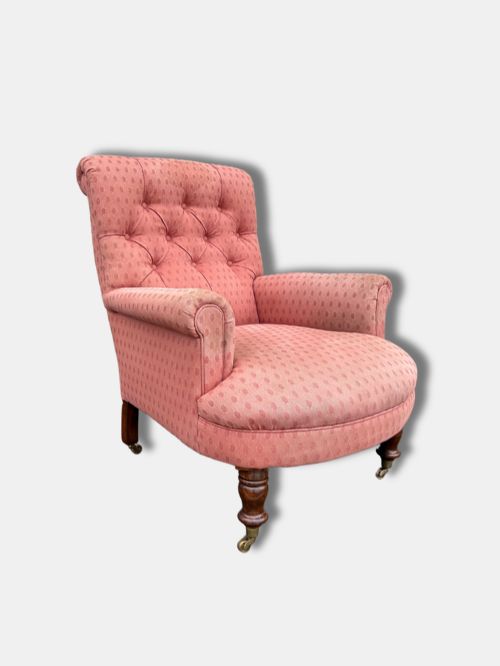
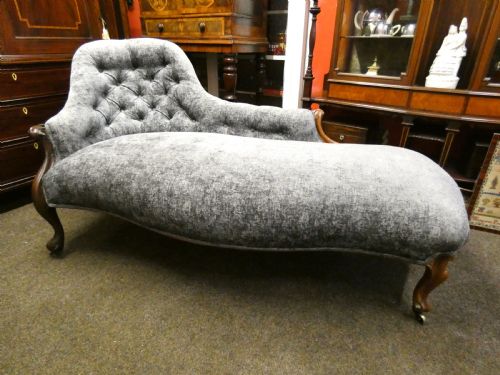
Victorian Upholstered Lounge Chair
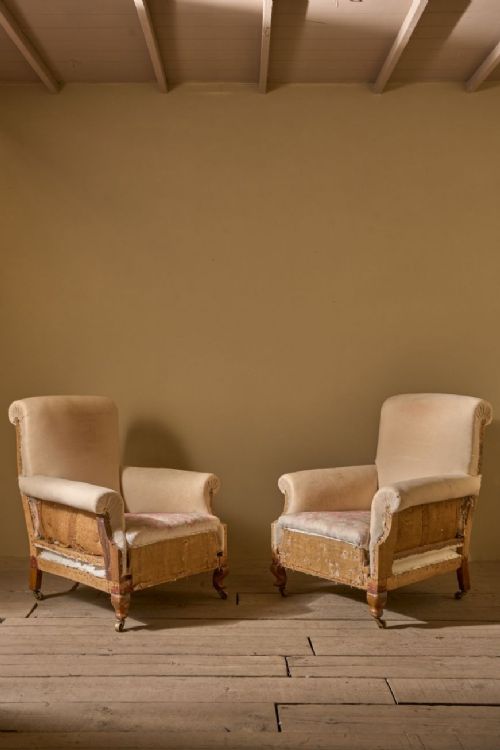
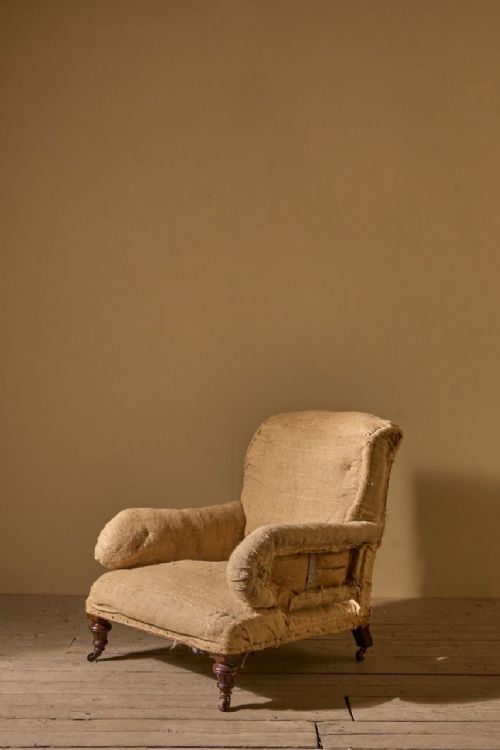
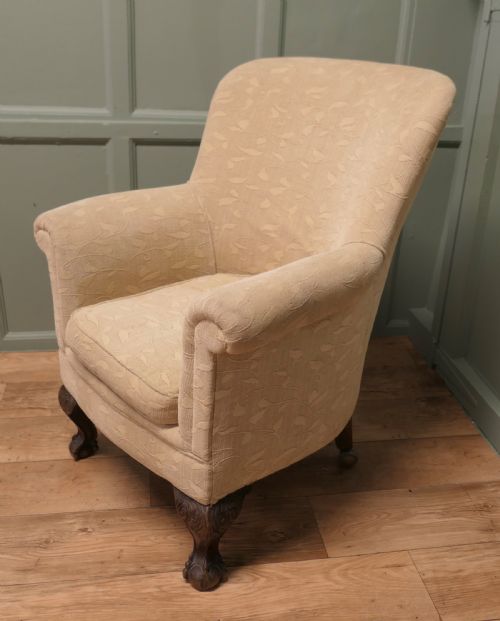
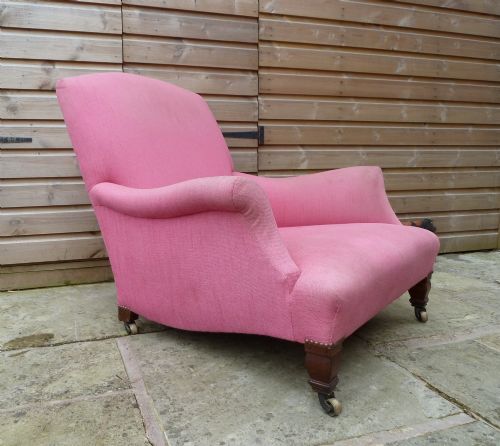
A victorian upholstered lounge chair brings deep nineteenth-century comfort to a room, offering generous padding and polished timber frames.
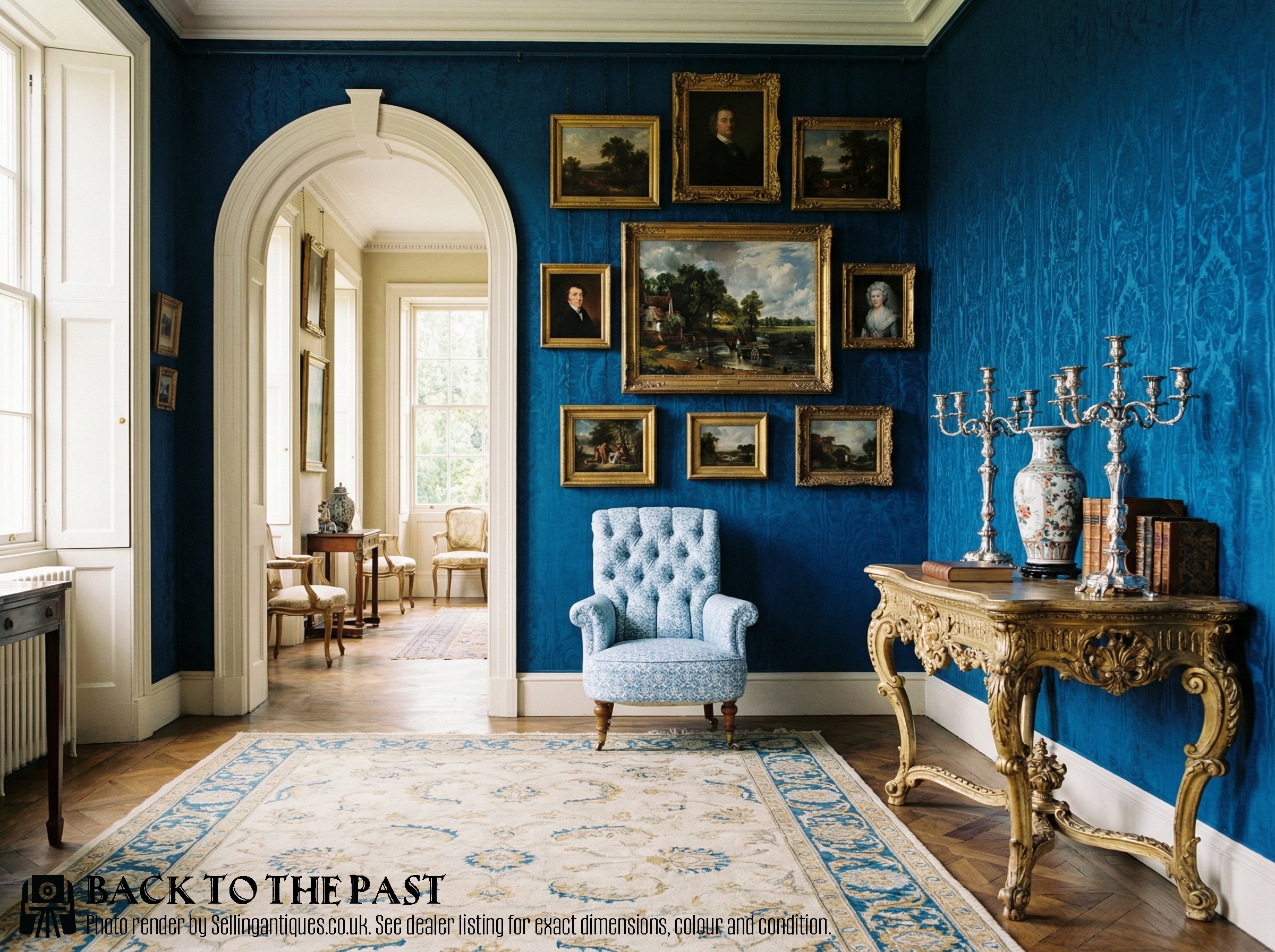
Victorian Upholstered Lounge Chair
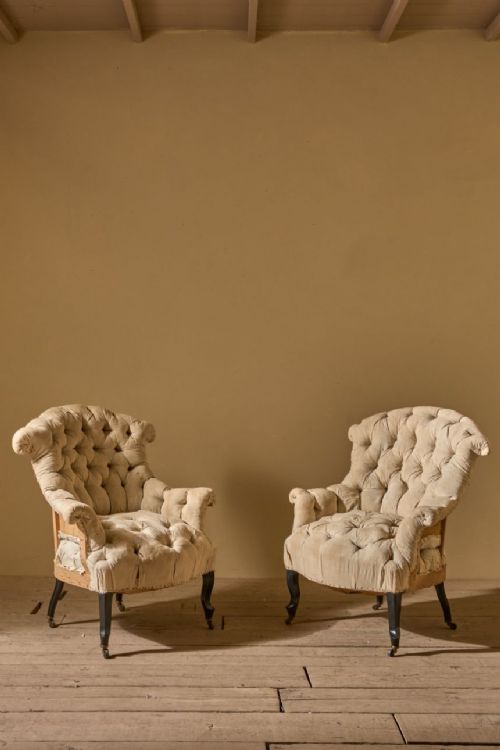
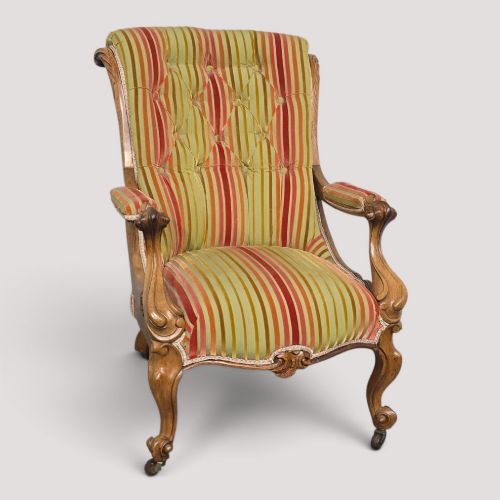
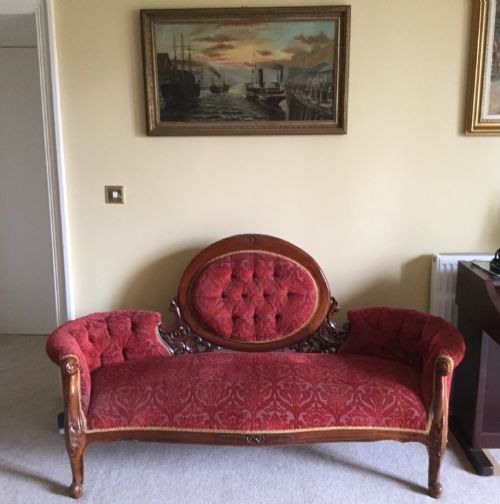
When searching for a victorian upholstered lounge chair, buyers encounter a diverse selection of nineteenth-century seating designed for comfort and reception rooms. The inventory ranges from button-backed armchairs and wing chairs to low nursing chairs, daybeds, and chaise longues.
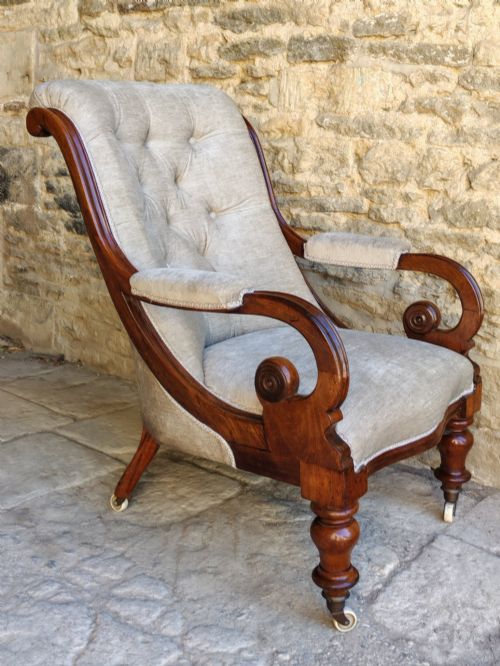
Most pieces date from the Victorian era and the broader nineteenth century, featuring regional British variations like country house models alongside French Napoleon III designs. Mahogany and walnut timber frames support deep upholstery finished in fabric, velvet, calico, hessian, and brocade.
How they were made
Maker workshops constructed frames primarily from solid mahogany, walnut, rosewood, and oak, often incorporating carved details and exposed polished wood on arms and legs. Brass castors frequently facilitated movement beneath heavy timber structures.
Internal support relied on traditional sprung seats paired with layers of hessian and calico before final covering in wool, velvet, or brocade. Button-backed upholstery required precise tension to secure the deep tufting characteristic of the period.
The listings on this site span the nineteenth century, including Regency, Victorian, and Arts and Crafts examples executed in walnut, mahogany, and rosewood.
What varies in quality
Quality rests heavily on the integrity of the timber frame, the distinction of the carving, and whether the maker was a notable firm. Pieces produced by recognised workshops exhibit superior proportions and refined joinery compared to anonymous regional output.
The standard of the upholstery materials and the fidelity of any restoration work also divide standard examples from exceptional ones. Original or sympathetic re-upholstery utilising period-appropriate textiles preserves the historical character of the seating.
Howard and Sons·George Jack For Morris and Co·Gillows·Holland and Sons·Hindley and Sons
The Victorian Upholstered Lounge Chair Glossary
- Button back
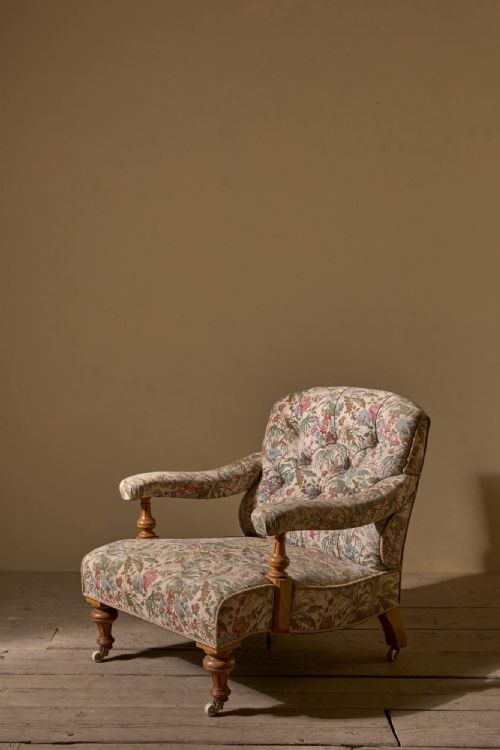
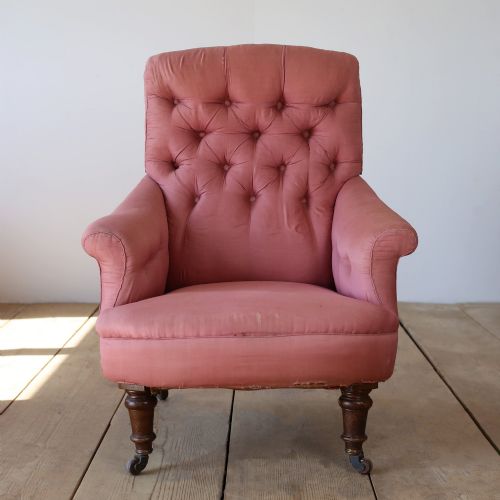
- A traditional upholstery technique where depressions are formed in the padding by stitching through to secure buttons, creating a tufted surface. This method enhances both the resilience and the formal appearance of Victorian seating.
- Chaise longue
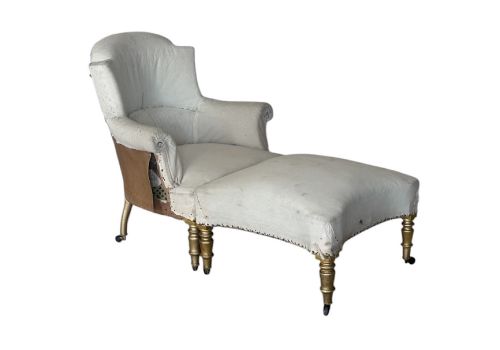
- An elongated upholstered chair designed for reclining, combining elements of a sofa and a single chair. Nineteenth-century versions often feature scrolled ends or carved wooden frames.
- Wing armchair
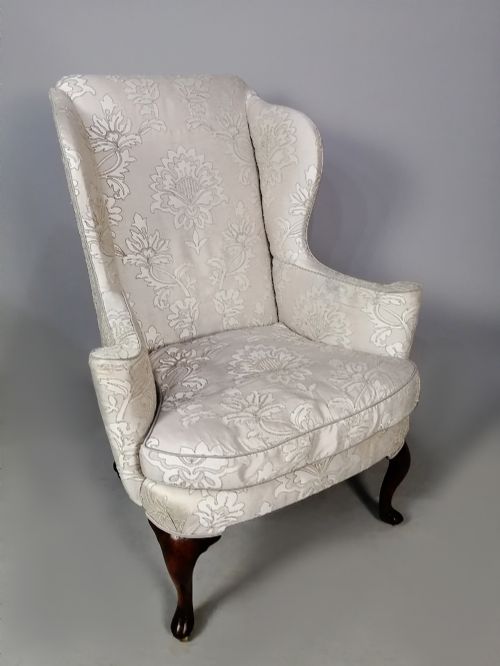
- A high-backed chair with flanking side panels designed to shield the sitter from drafts. Walnut and mahogany frames from the nineteenth century frequently employ this enclosed silhouette.
- Sppon back
- An oval-backed chair frame shaped defensively like the bowl of a spoon, popular in mid-nineteenth-century seating. This profile supports the spine while presenting a slender wooden border around the padded centre.
- Brocade
- A rich shuttle-woven fabric featuring raised decorative patterns, often utilised for upholstery on formal nineteenth-century settees and armchairs. It provides a heavy texture suited to deep pile applications.
Victorian Upholstered Lounge Chair: Frequently Asked Questions
How do I identify a Victorian lounge chair?
Look for dense timber frames in walnut or mahogany, coupled with traditional spring construction and deep button-backed upholstery. The proportions generally favour lower, heavier seating designed for relaxed nineteenth-century drawing rooms.
Check for maker stamps on the wooden frame or castors, and observe the specific stylistic cues like scroll arms or carved cabriole legs that define the period.
Were these chairs used in bedrooms or parlours?
Nineteenth-century seating served various domestic functions depending on the specific form. Lower nursing chairs and bedroom chairs sat in private quarters, while larger armchairs and daybeds furnished libraries and formal reception spaces.
Country house models and library armchairs were built for heavier daily use in communal rooms, whereas chaise longues offered reclining comfort in drawing rooms.
How do I care for antique upholstery?
Protect delicate textiles such as velvet and brocade by avoiding direct sunlight, which fades deep pile fabrics over time. Gentle vacuuming with a soft brush attachment prevents dust accumulation within the weave and tufted buttons.
Maintain the polished wooden components with appropriate furniture wax, ensuring moisture does not contact the exposed mahogany or walnut surfaces during cleaning.