


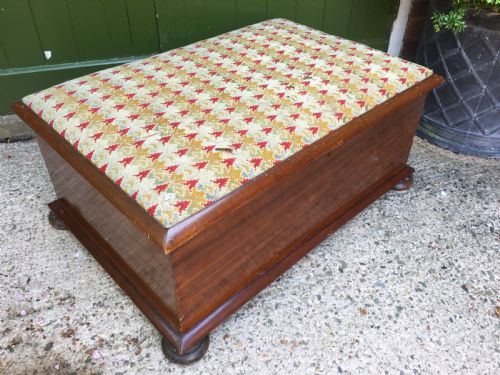
Victorian Upholstered Chest
A victorian upholstered chest combines practical storage with padded seating, offering a dual-purpose solution that sits at the heart of period room schemes.
Victorian Upholstered Chest
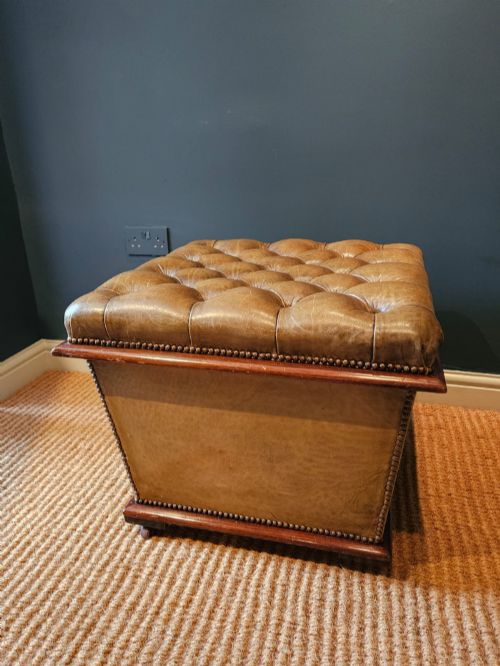
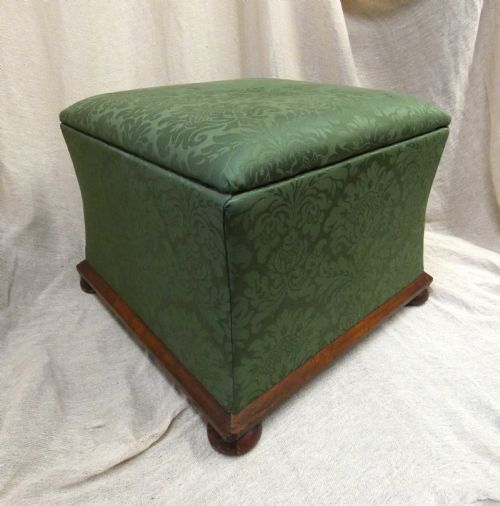
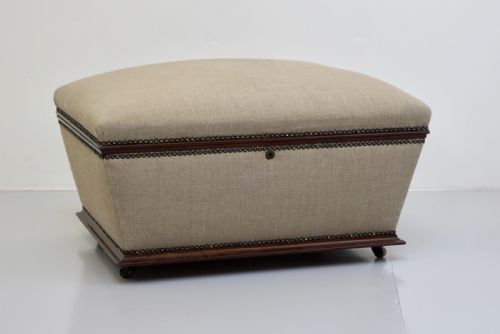
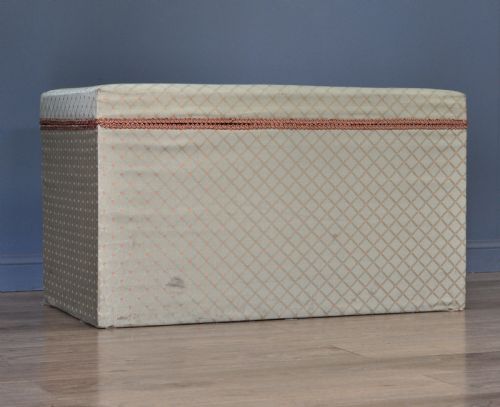
A victorian upholstered chest typically takes the form of an ottoman, blanket box, or storage trunk adapted for seating. These pieces emerge predominantly from the nineteenth century, including specific dates such as 1870 and 1880, alongside related Regency examples.
The selection ranges from pine country house trunks to refined mahogany, rosewood, and walnut ottomans. Buyers frequently encounter variants shaped as concave boxes, footstools, or paired companion seats designed for domestic storage and comfort.
Materials and Construction
Carcase construction relies on solid timbers including mahogany, walnut, rosewood, birch, and pine, often joined to enclose a deep storage compartment beneath the lid. Hardwood frames support internal weight while providing stable foundations for exterior polishing or painted finishes.
Upholstery involves fabric, leather, or specialised needlework such as gros-point secured over padding. Brass elements, iron fixings, and buttoning techniques finish the lids and seating surfaces of these heavy storage vessels.
Listings feature woods including mahogany, rosewood, walnut, birch, and pine, alongside iron and brass hardware.
Distinctions in Standard
The degree of refinement separates basic utility trunks from grand reception room pieces. Timber selection dictates much of this division, moving from utilitarian pine box construction to finely figured mahogany, rosewood, and walnut veneers.
Execution of the upholstered top further defines the tier of the piece. Fine examples incorporate intricate needlework, leather covers, or deep buttoning supported by robust framing, whereas simpler variants use plain fabric over basic pine.
Hallett & Sons·C Hindley and Sons·Lamb's of Manchester
The Victorian Upholstered Chest Glossary
- Ottoman
- A low, upholstered seat or stool without a back or arms, typically featuring a hinged lid that opens to reveal a storage compartment. These vessels served as blanket boxes or footrests in nineteenth-century interiors.
- Gros-point
- A type of needlepoint embroidery worked in wool on canvas, frequently found providing a decorative, durable top surface on nineteenth-century stools and ottomans.
- Kist
- A regional term for a traditional wooden chest or storage trunk. These sturdy pine or hardwood boxes were built for domestic storage.
- Canterbury
- A low, compartmentalised stand or stool used for holding folios, music, or small items. The form incorporates turned wooden supports characteristic of the Victorian era.
Victorian Upholstered Chest: Frequently Asked Questions
How were these chests used originally?
Nineteenth-century households utilised these lidded boxes at the foot of beds or in reception rooms to store blankets, linens, and personal items while providing extra seating.
The dual function made them popular across both modest country houses and urban homes where space efficiency mattered.
What woods should I look for?
Makers employed native and exotic timbers depending on the intended room and budget of the client. Mahogany, rosewood, and walnut appeared in formal spaces.
Simpler storage trunks relied on pine or mixed hardwoods, serving utilitarian functions in less public areas of the house.
Are the upholstery fabrics original?
Many nineteenth-century pieces survive with later textile coverings applied during maintenance or restoration over the decades. Evidence shows leather, velvet, and needlework top layers.
Original textiles remain present on select survivors, while other examples feature replacement fabrics chosen to match period interiors.
How do I distinguish an ottoman from a standard chest?
An ottoman specifically incorporates a padded, upholstered top designed for sitting, combined with a hollow interior accessed via a hinged lid. Standard storage chests usually feature plain wooden lids.
The inclusion of leather or fabric seating surfaces turns the trunk into dual-purpose furniture.