

Victorian Umbrella Drip Stand
When you search for a victorian umbrella drip stand, you are looking for a practical hallway anchor designed to catch rainwater from wet canes and umbrellas.
Victorian Umbrella Drip Stand
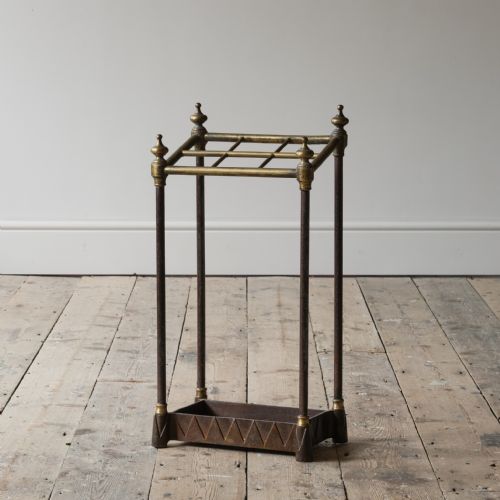
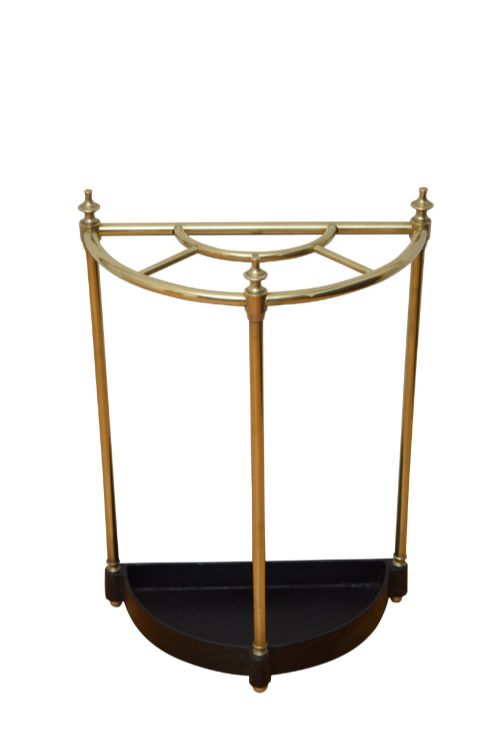
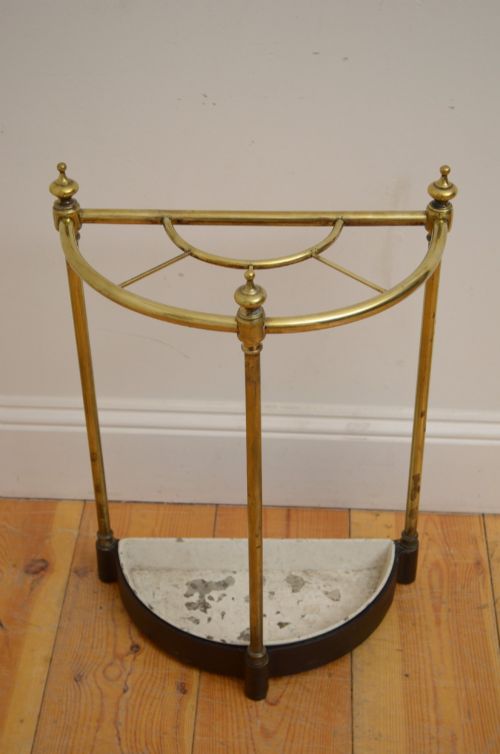
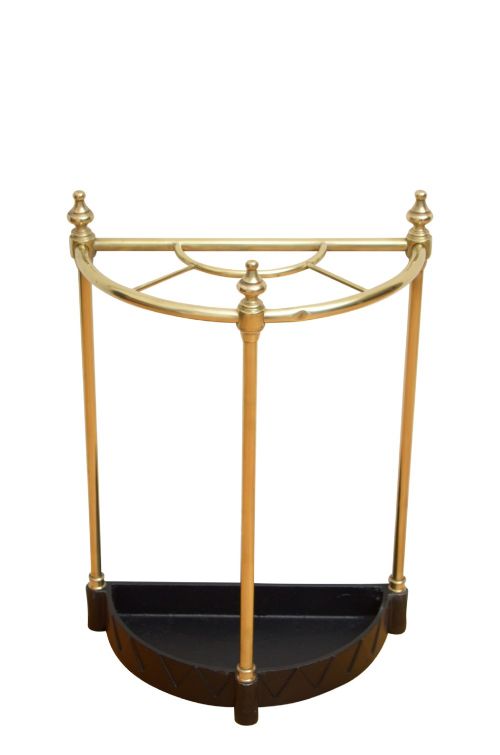
A victorian umbrella drip stand serves as a dedicated entranceway piece for holding walking sticks, canes, and umbrellas while protecting floors from moisture. These practical furnishings appear primarily in utilitarian forms designed to stand flush against hallway walls or fit neatly into corners.
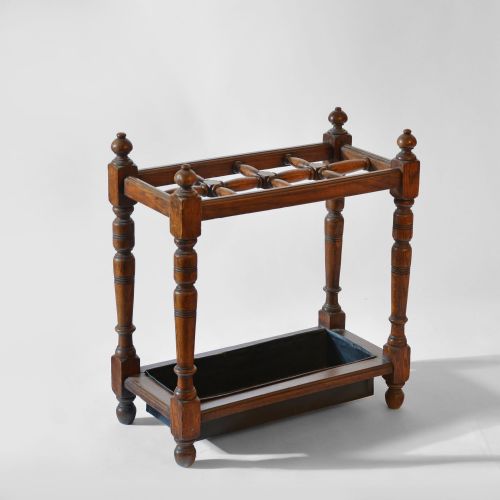
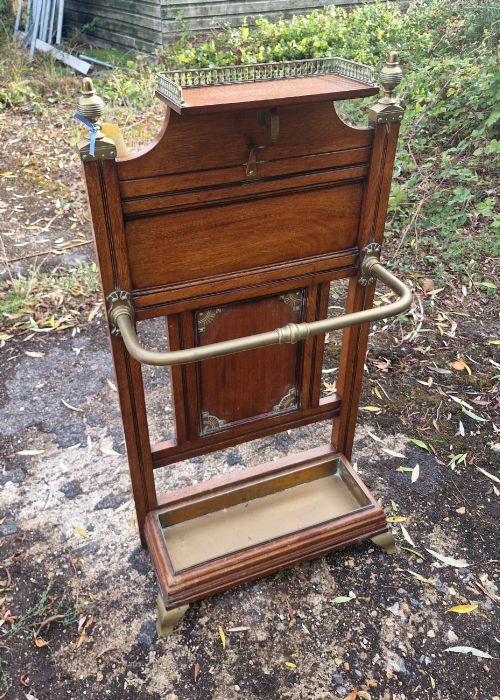
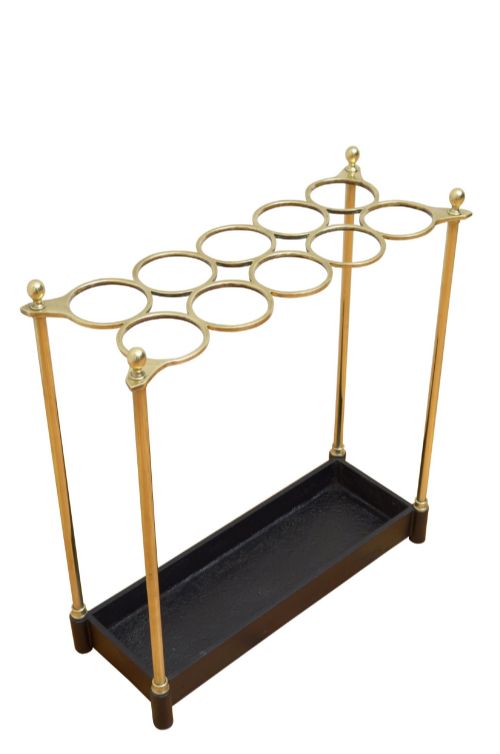
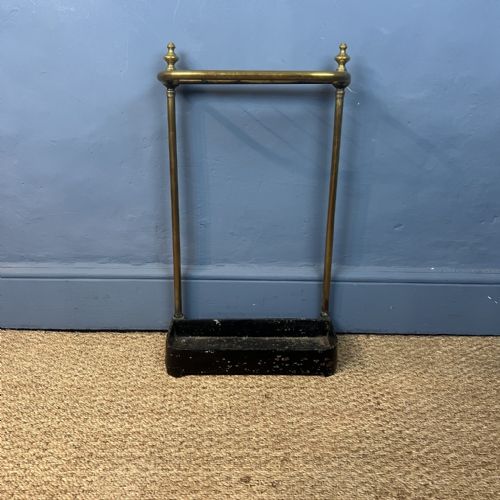
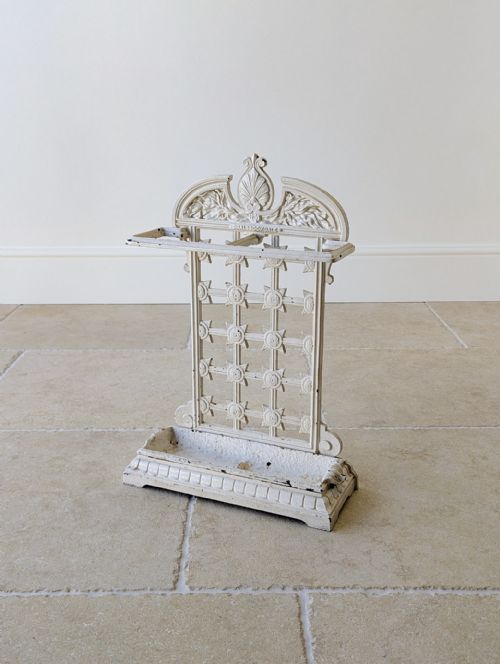
The selections available range from sturdy metal frames to carved wooden hall furniture incorporating integrated compartments. You will frequently encounter demi-lune designs alongside rectangular configurations that accommodate multiple walking implements in separate divisions.
Materials and Construction
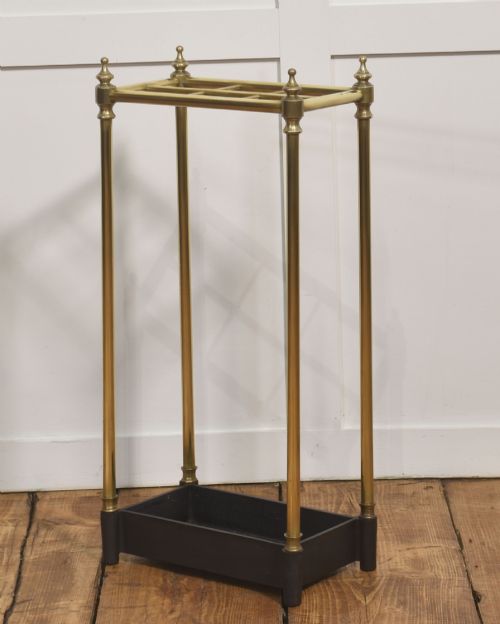
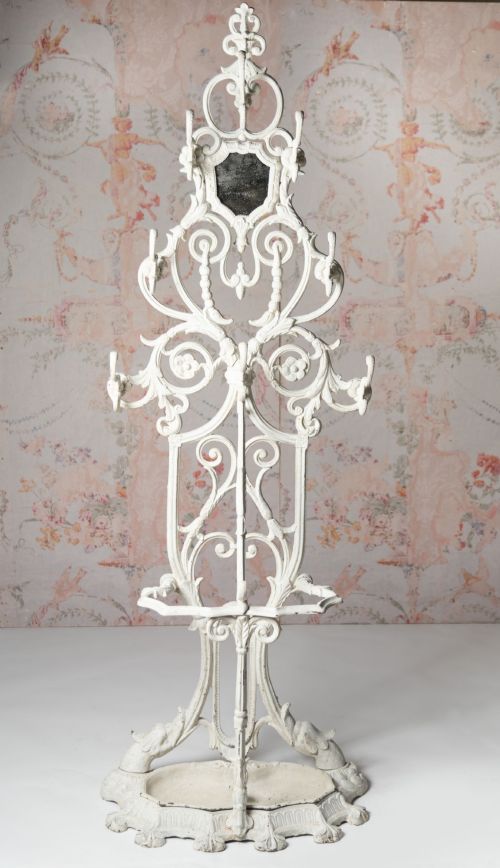
Cast iron and brass provide the structural foundation for many examples, often combined to form open-work frames with decorative finials and sturdy bases. Foundries utilised sand-casting techniques to shape intricate patterns, incorporating removable metal trays at the base to catch water drips.
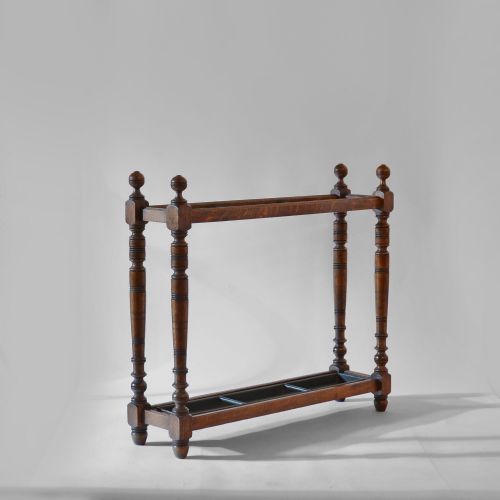
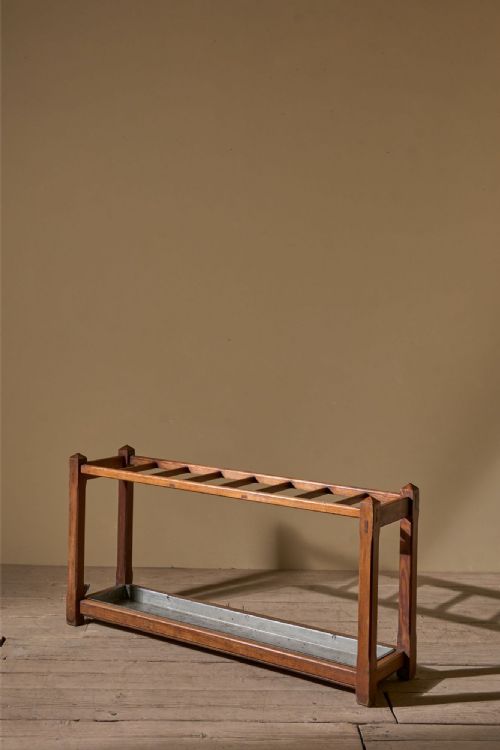
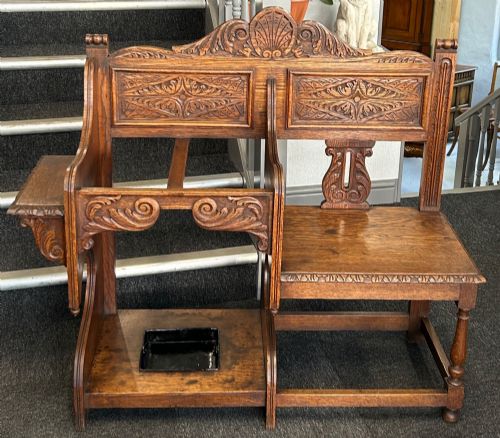
Timber versions rely on durable hardwoods such as oak and mahogany, sometimes paired with bentwood or pine for country house interiors. These wooden variants frequently feature carved details or integrated zinc liners to protect the timber from damp umbrella tips.
Listings feature items spanning the Victorian, Edwardian, and early twentieth-century periods, constructed from cast iron, brass, oak, mahogany, and pine.
Distinguishing Quality
Quality rests upon the crispness of the casting work in metal pieces and the integrity of the joinery in wooden examples. Finer items display sharp surface ornamentation, substantial weight, and well-fitted original drip trays rather than later replacements.
Proportion and utility also separate standard utility pieces from more ambitious hall furniture. Better examples integrate structural support smoothly without wobbling, ensuring the frame bears the weight of heavy walking sticks securely.
Coalbrookdale·A. Kenrick & Sons·Thonet
The Victorian Umbrella Drip Stand Glossary
- Demi-lune
- A half-moon shape allowing stands to sit flat against a hallway wall. This curved profile saves valuable floor space in narrow corridors.
- Drip tray
- A removable metal basin positioned at the base of the stand. It collects water running off wet umbrellas to protect flooring.
- Finial
- A decorative terminal ornament placed on top of vertical posts. These elements frequently feature ball or cast designs on metal frames.
- Bentwood
- Wood softened by steam and bent into curved shapes. This technique creates lightweight yet resilient frames for domestic furniture.
Victorian Umbrella Drip Stand: Frequently Asked Questions
Where should I place a drip stand?
Position your stand near the main entrance or porch where family members and guests naturally deposit wet outdoor gear upon entering the home.
Ensure there is adequate clearance around the piece so that longer walking sticks and umbrellas can be removed easily without disturbing nearby furniture.
How do I clean a cast iron stand?
Dust the metal surfaces regularly with a dry cloth and remove the lower drip tray periodically to empty accumulated water and debris.
Avoid using harsh chemical cleaners that might strip the original painted or patinated finish from the iron or brass components.
Are these stands suitable for modern umbrellas?
Most traditional stands accommodate standard walking sticks and classic umbrellas comfortably within their divided sections or open rings.
Very compact folding umbrellas may slip through wider divider frames, so verify the lower separation dimensions if you use modern collapsible designs.
How do I identify a Victorian piece?
Look for construction methods typical of the nineteenth century, including heavy cast iron frames, traditional joinery in woods like oak, and maker marks.
Design motifs such as Gothic Revival or Aesthetic Movement styling also point toward the Victorian and Edwardian manufacturing periods.