



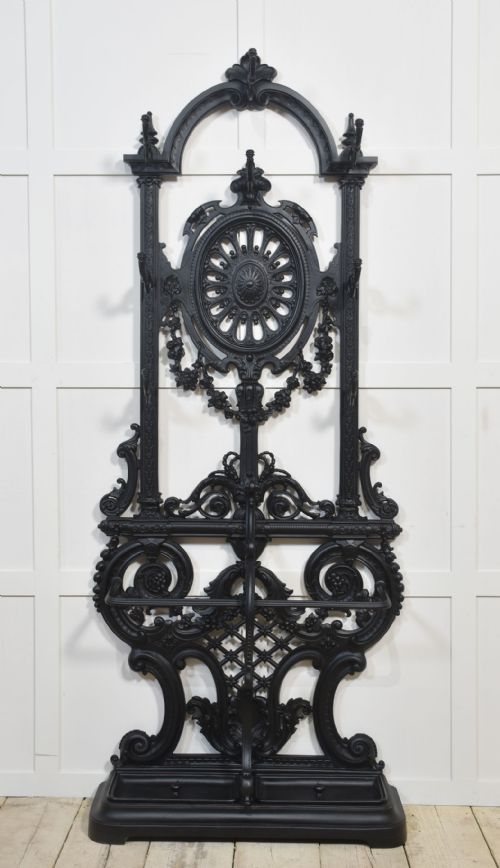


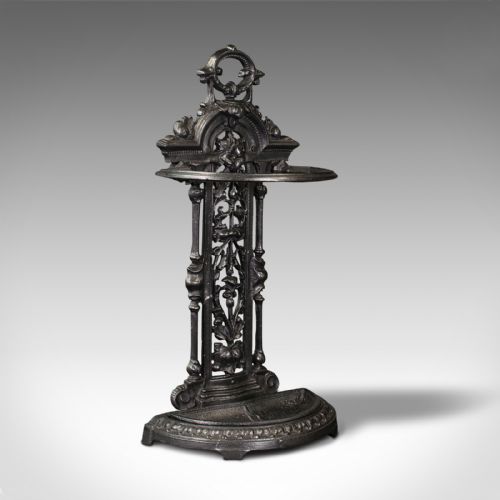
Black Metal Hall Stand
These black metal hall stand pieces are robust practical furniture designed to anchor an entryway with utilitarian style.
Black Metal Hall Stand
A black metal hall stand serves as a sturdy anchor for entranceways, combining storage for coats, hats, and wet umbrellas in a single footprint. When you search for a black metal hall stand, you encounter heavy Victorian castings alongside geometric Art Deco designs from the 1930s.
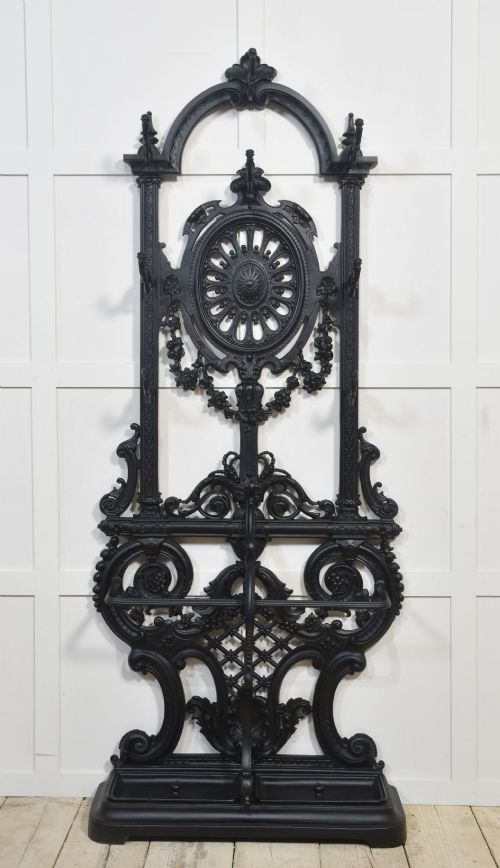
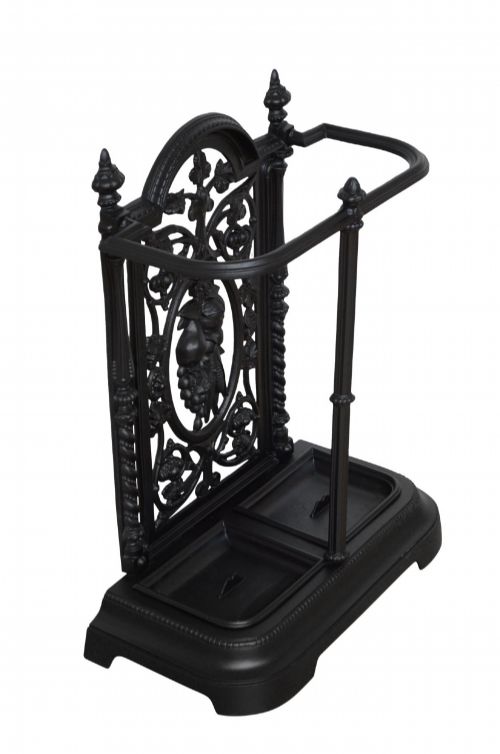
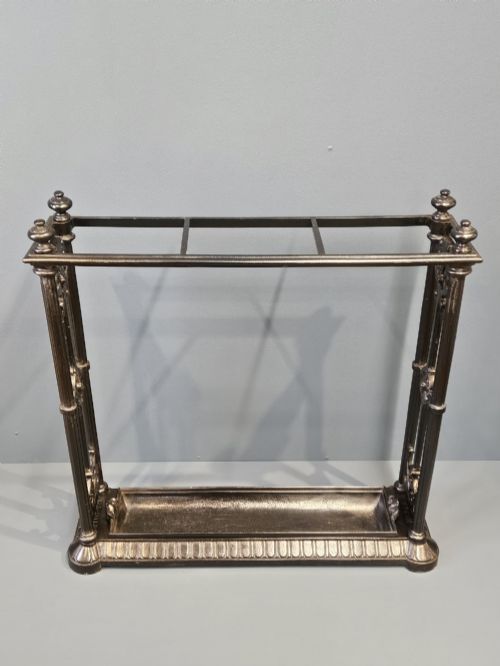
The most common examples on this page are Victorian cast iron umbrella stands and stick stands finished in black paint. These pieces range from substantial hall stands incorporating mirrors and console tables to compact umbrella holders with numerous ring divisions.
Origins span British foundries like Coalbrookdale, continental workshops in Belgium and France, and Edwardian interpretations. Forms vary from twenty-four ring umbrella holders to console tables with integrated mirrors and coat hooks.
How they were made
Makers utilised cast iron and wrought iron for the structural framework, pouring molten metal into sand moulds to create intricate openwork patterns and robust umbrella wells. Tubular metal and nickel plating emerge in later 20th-century iterations, offering sleeker metallic finishes.
Surface treatments typically involved dark paint or protective black coatings to prevent oxidation on the ironwork. Carved wood and glass occasionally complement the primary metal structures, particularly in hall stands that feature integrated mirrors and small console tables.
What varies in quality
The distinction between ordinary and superior pieces lies in the crispness of the iron casting and the sophistication of the decorative motifs. Foundry work that retains sharp botanical details or precise geometric Art Deco lines demonstrates superior craftsmanship.
Structural complexity also defines the upper tier of these objects, where integrated mirrors, multiple coat hooks, and removable drip pans are cast or assembled with architectural precision. Finer examples maintain proportional balance across heavy cast components without appearing cumbersome.
The Falkirk Foundry·Coalbrookdale
The Black Metal Hall Stand Glossary
- Cast iron
- A hard, brittle alloy of iron and carbon poured into moulds to create complex shapes. It forms the heavy structural base of many Victorian stick stands.
- Demi-lune
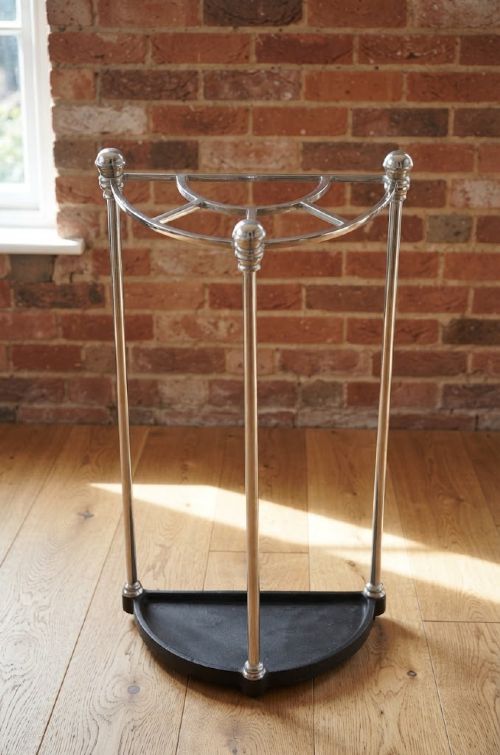
- A half-moon shape used for console tables and umbrella stands designed to sit flush against a wall. This profile saves floor space in narrow hallways.
- Drip pan
- A shallow metal tray positioned at the base of an umbrella stand to catch moisture from wet sticks. These pans are frequently removable for emptying and cleaning.
- Art Deco
- A design style characterised by sleek geometric shapes, streamlined forms, and modern industrial materials. It appears in 1930s stick stands with linear divisions.
Black Metal Hall Stand: Frequently Asked Questions
Where should I place a hall stand?
These pieces belong in an entrance hall or porch where guests enter your home. Their combination of coat hooks and umbrella rings provides immediate utility for outdoor garments.
Ensure there is sufficient clearance against the wall so that bulky coats and wet umbrellas do not obstruct passageways.
How do I clean cast iron?
Dust the metal surfaces regularly with a soft dry cloth to prevent the accumulation of grime within intricate decorative recesses. Avoid harsh chemical cleaners that can strip protective black finishes.
Inspect the removable drip pans periodically and empty any collected moisture to protect the lower iron framework.
Are these stands heavy?
Most examples utilise solid cast iron and wrought iron, making them exceptionally heavy and stable. This weight prevents the stand from tipping when loaded with heavy winter coats or multiple umbrellas.
Exercise caution when moving larger hall stands that incorporate mirrors and console tables, and enlist assistance if necessary.
Can I use these for walking sticks?
The ring divisions and upright frames suit walking sticks and canes just as effectively as umbrellas. Many Victorian and Edwardian examples were specifically manufactured for this dual purpose.
Narrower ring divisions keep slender cane shafts upright and separated for easy selection.