

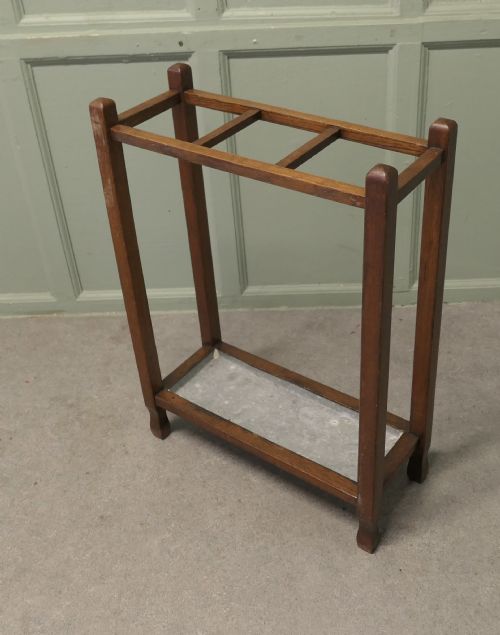
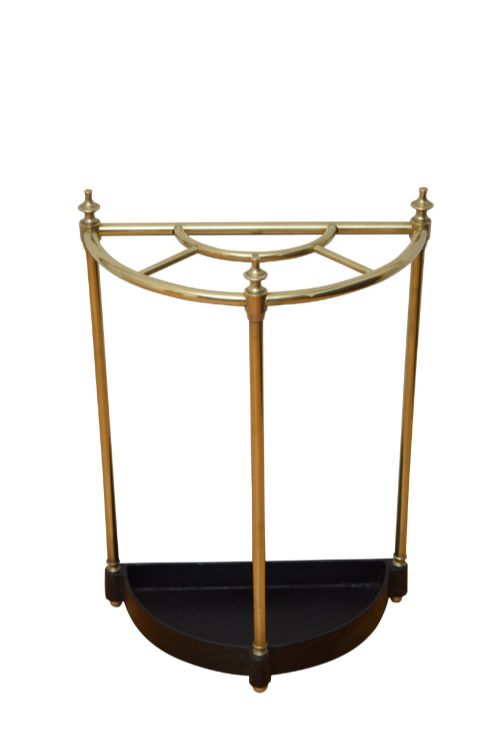
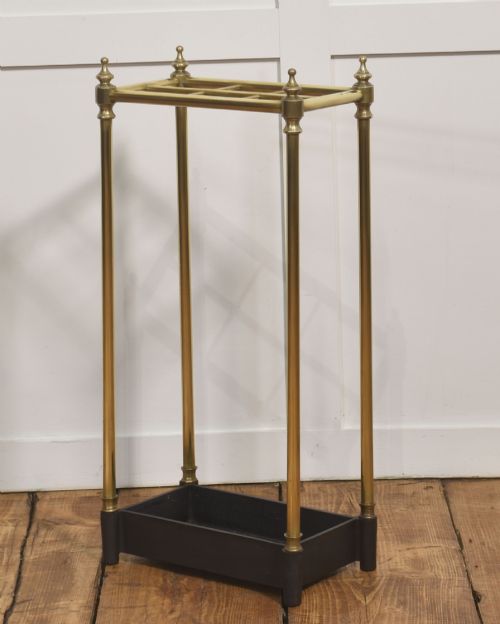
Umbrella Stand with Drip Tray
An umbrella stand with drip tray keeps hallways dry by catching rainwater from wet walking sticks and brollies.
Umbrella Stand with Drip Tray
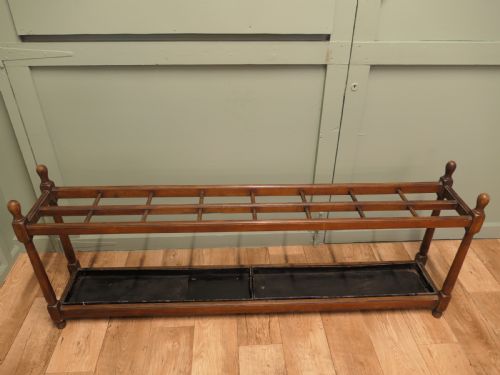
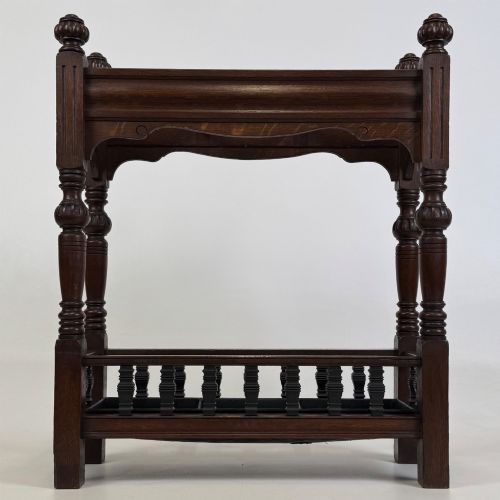
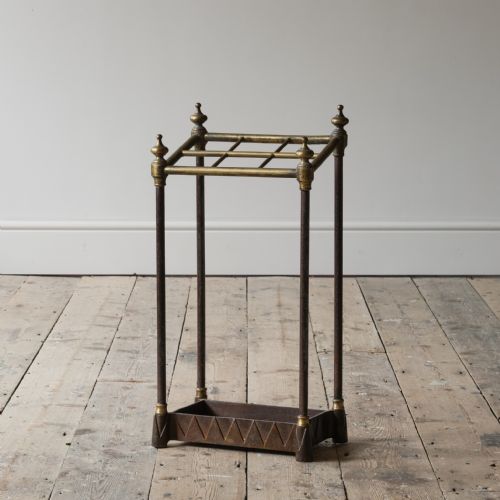
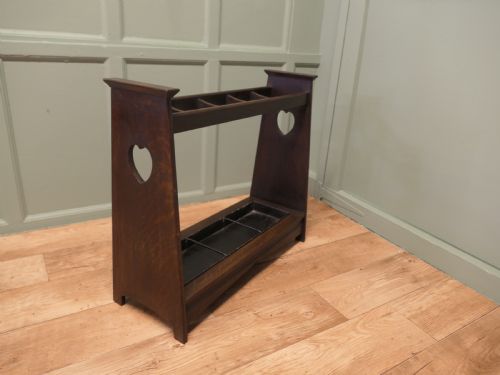
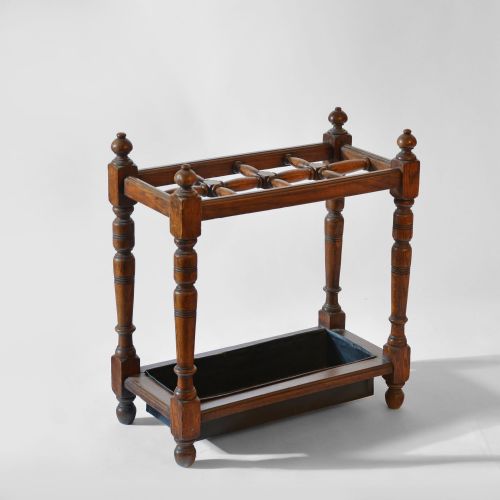
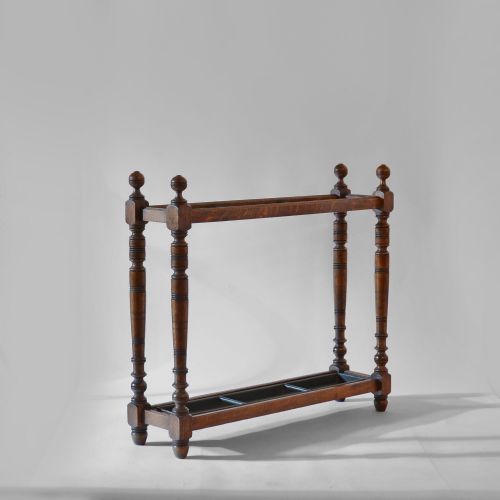
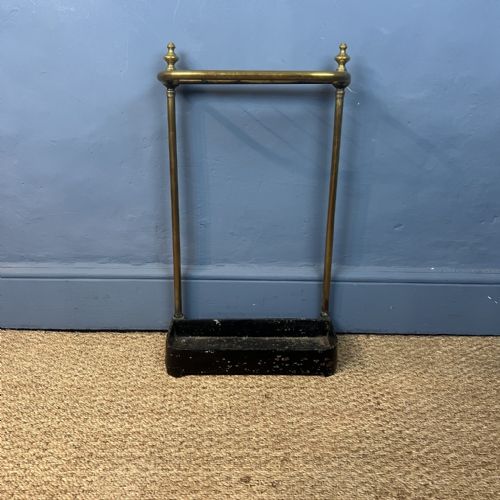
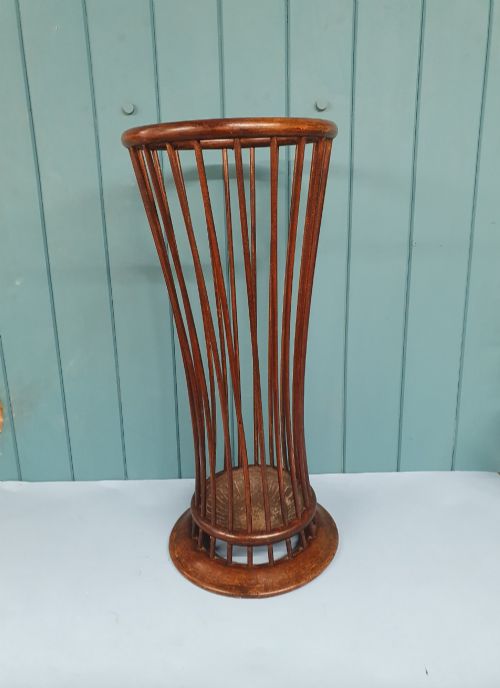
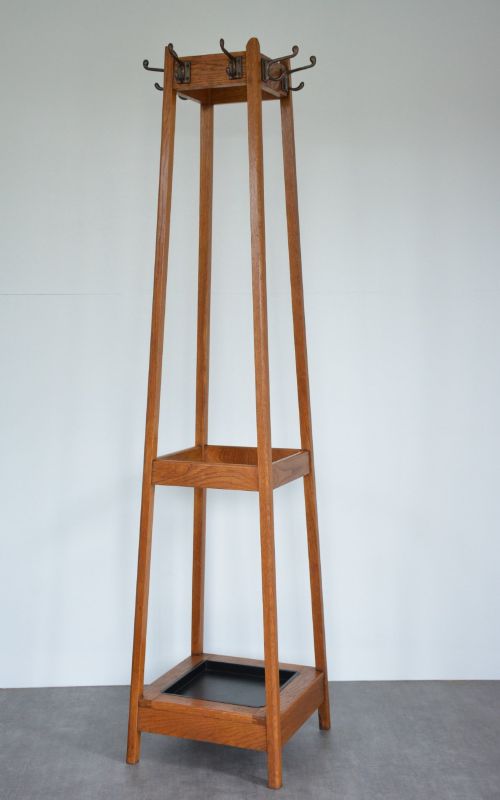
An umbrella stand with drip tray appears in several configurations across the Victorian, Edwardian and mid-century periods, ranging from dedicated stick holders to multi-functional pieces. The most common forms met here are freestanding oak frames, cast iron grilles and heavy brass cylinders.
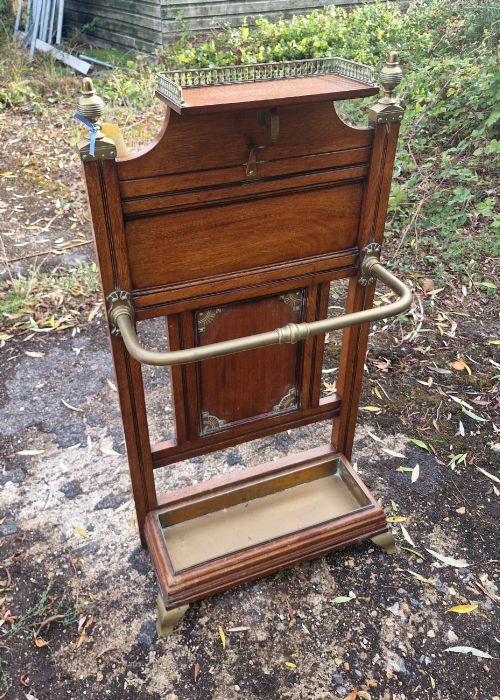
Many examples double as hall stands or coat stands, combining umbrella holders with hat hooks, mirrors and integrated seating. These larger hall furniture items suit entrance passages and corridors where guests leave wet outerwear.
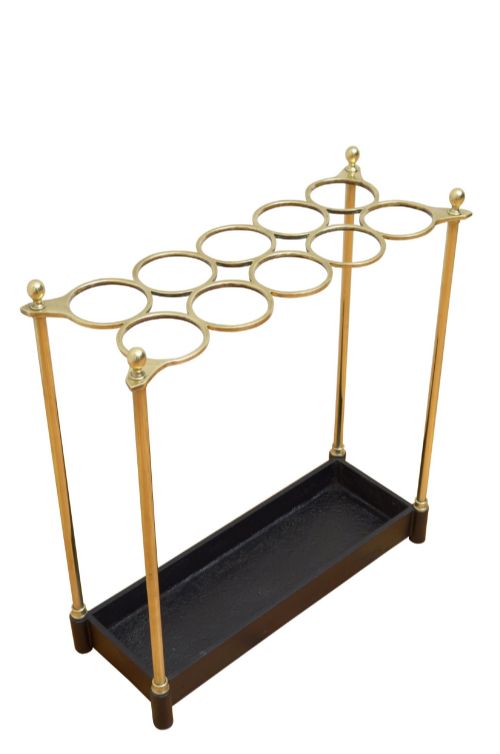
Dedicated stick stands often feature divided sections, allowing multiple walking sticks or brollies to stand upright without tangling. The underlying metal or iron tray catches moisture before it reaches wooden floorboards or carpets.
Materials and construction
Makers utilised solid oak and mahogany for timber frames, frequently incorporating carved details, panel work and applied mouldings. Metal components such as brass, cast iron and galvanised iron formed the structural trays and decorative finials.
Cast iron examples relied on moulded foundry work to create openwork grilles and sturdy bases that remained stable when loaded with heavy walking sticks. Brass versions often employed rolled sheet metal combined with cast elements and bun feet.
Oak appears most frequently among these listings, alongside cast iron, brass, mahogany and glass.
Assessing craftsmanship and condition
Quality rests upon the integrity of the original drip tray and the sturdiness of the frame joints. Missing trays or poorly matched replacements alter the utility and historical completeness of the piece.
Finer examples display crisp carving on oak panels, robust cast metal components, and thoughtful details like bun feet, coronets or patent numbering. Plain utility versions rely on simple panel construction without decorative enrichment.
The Umbrella Stand with Drip Tray Glossary
- Drip tray
- A shallow metal vessel positioned beneath the umbrella holders to catch water runoff. It is commonly removable for emptying and cleaning.
- Hallstand
- A large entrance hall item that combines umbrella storage with coat hooks, a mirror and sometimes a bench seat. These pieces anchor the hallway furniture scheme.
- Bun foot
- A rounded, flattened ball foot frequently seen on Victorian furniture supports. It raises the base slightly off the floor.
- Stick stand
- An alternative term for an umbrella stand designed primarily for walking sticks and canes. They often feature multiple divided sections.
Umbrella Stand with Drip Tray: Frequently Asked Questions
How do I clean the metal drip tray?
Remove the tray from the base and wash it gently with warm soapy water to clear accumulated dust and dried mud.
Dry the metal thoroughly before sliding it back into position to prevent rust formation.
Can I place these on wooden floors?
These stands work well on timber floors provided the integrated metal tray remains watertight.
Inspect the tray periodically for small leaks to ensure moisture does not reach the underlying wood.
What is the difference between oak and cast iron?
Oak stands offer traditional timber warmth and frequently feature carved panels or mirrored hall furniture attachments.
Cast iron versions provide industrial weight and openwork grilles that resist moisture damage entirely.
How do I date a Victorian hallstand?
Examine the timber species, joinery methods and decorative motifs such as Gothic Revival carving or Aesthetic Movement lines.
Patent numbers stamped onto the metalwork can also help narrow down the production decade.