


Vintage Brolly Holder
These vintage brolly holder pieces are sturdy hall furniture designed to corral wet umbrellas and walking sticks before they reach the parlour floor.
Vintage Brolly Holder
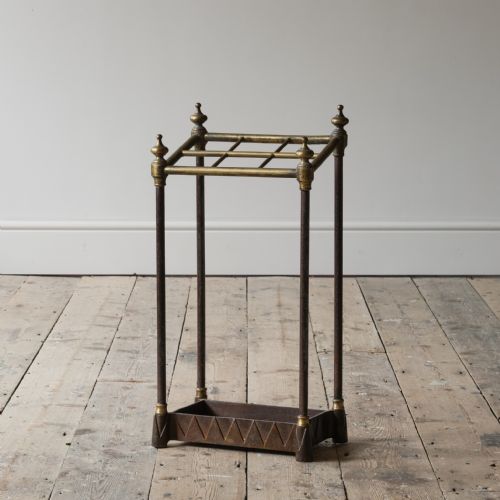
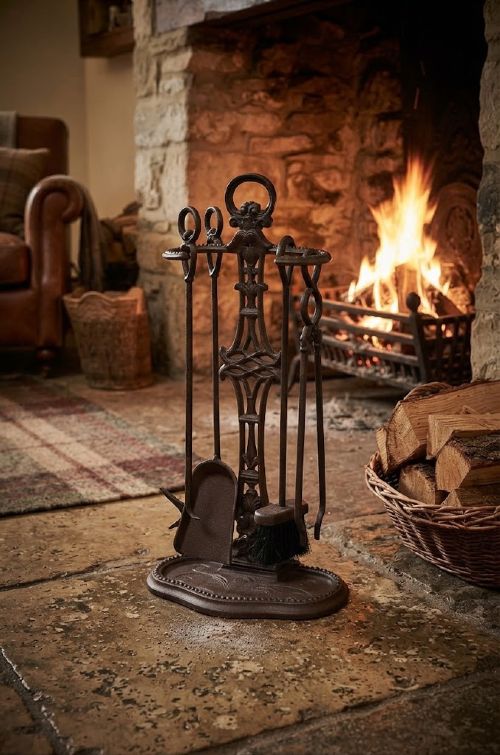
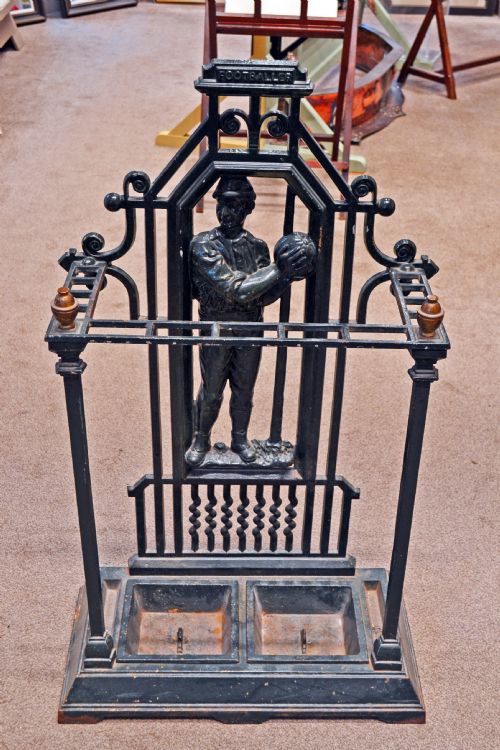
A vintage brolly holder is a practical piece of entrance hall furniture designed to keep walking sticks and wet umbrellas neatly contained. These stands appear in forms such as umbrella stands and stick stands, fashioned from heavy metals and timbers.
The versions most commonly met on this page span the Victorian period through to the early twentieth century, taking in Edwardian and Arts and Crafts aesthetics alongside French Art Nouveau designs.
Makers utilised resilient materials to withstand damp timber and dripping metal, resulting in robust hallway accessories that range from industrial cast iron frames to warm golden oak and pitch pine structures.
Materials and construction
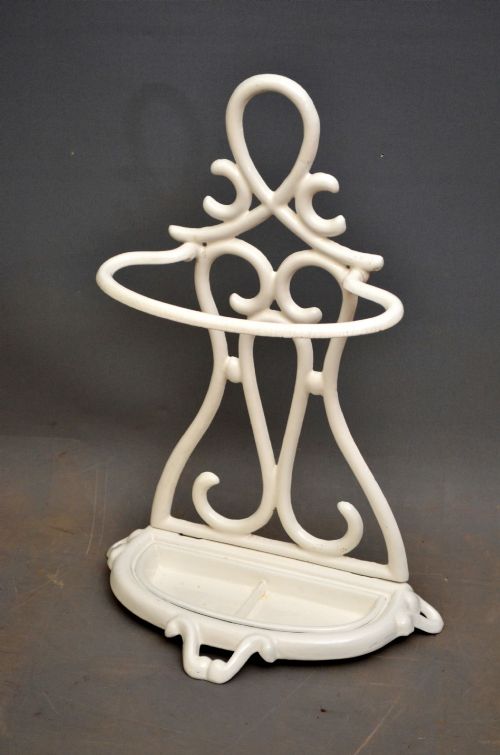
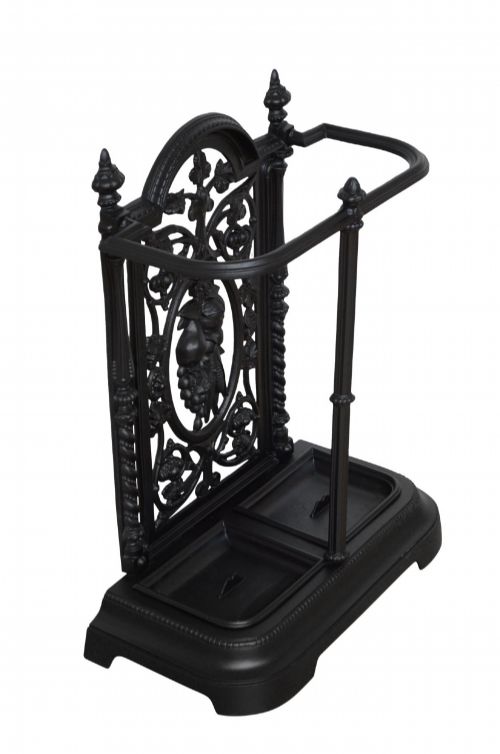
Foundries cast iron into elaborate openwork patterns or figurative motifs, occasionally applying white enamel finishes inside the base trays to catch moisture and prevent rust.
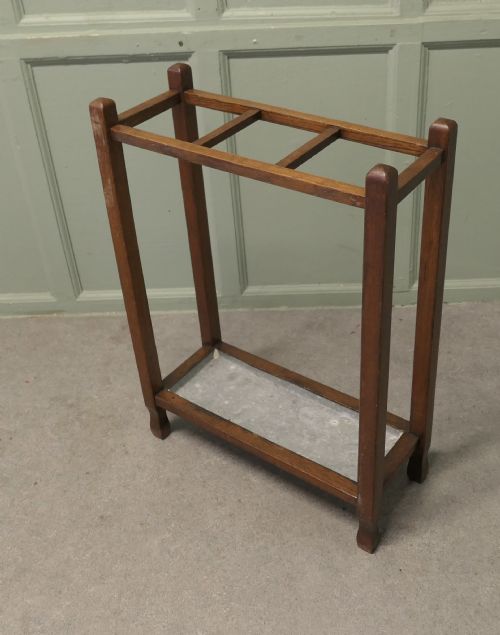
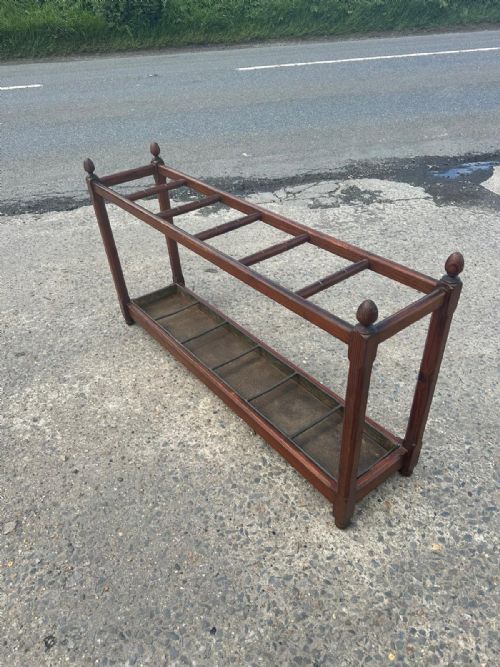
Cabinetmakers constructed sturdy timber frames from pitch pine and golden oak, utilising natural grain patterns to bring warmth and durability to country house and Arts and Crafts interiors.
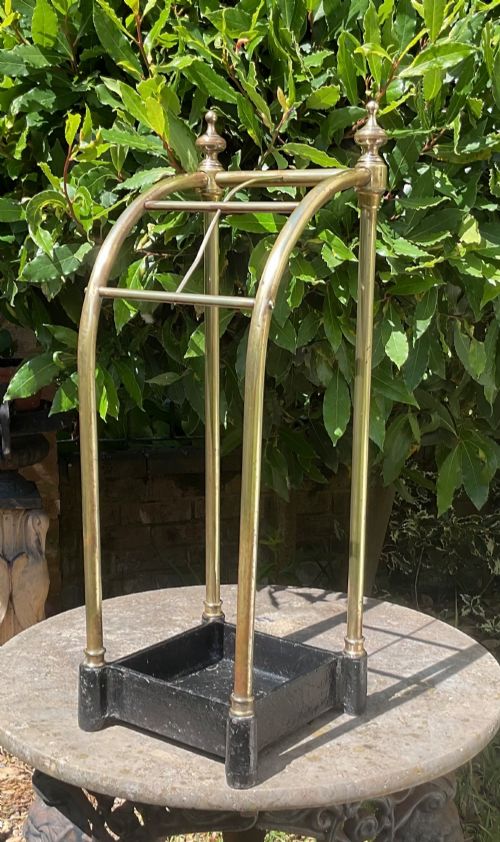
Sheet copper and polished brass provided bright metallic accents, often formed into circular or umbrella-shaped silhouettes with integrated loops to keep individual sticks upright.
Listings feature robust materials including cast iron, brass, iron, oak, zinc, enamel, pitch pine, and copper across the Victorian and Edwardian eras.
Judging quality and character
The fineness of the casting separates standard ironwork from superior examples, where intricate openwork, sharp botanical details, and crisp figurative modeling remain clear beneath layers of old paint.
Joinery and timber selection define the wooden pieces, distinguishing simple utility items from well-figured golden oak or pitch pine stands built with solid framing and honest pegged joints.
The presence of original drip trays and zinc liners indicates a well-preserved piece, as these removable components frequently went missing or corroded away over decades of daily hallway use.
The Vintage Brolly Holder Glossary
- Cast iron
- Molten iron poured into a sand mould to create rigid, durable objects with intricate surface decoration. This technique allowed makers to produce heavy, stable umbrella stands with openwork grilles.
- Pitch pine
- A resinous North American pine noted for its strength and prominent grain patterns. Cabinetmakers selected this timber for robust country house hall furniture.
- Arts and Crafts
- A design movement valuing traditional craftsmanship and simple construction over mass production. Pieces in this style often display honest timber construction and restrained ornamentation.
- Art Nouveau
- A decorative style characterised by sinuous, flowing lines derived from natural forms. French examples in this manner feature organic curves and plant motifs.
- Drip tray
- A shallow metal basin placed beneath the rack to catch rainwater from wet umbrellas. These liners protected hallway floors from puddles and moisture damage.
Vintage Brolly Holder: Frequently Asked Questions
What is a vintage brolly holder?
A vintage brolly holder is a functional hall stand designed to store wet umbrellas and walking sticks upright. These items kept hallways tidy and prevented dampness from reaching interior floorboards.
They appear in various forms, combining heavy metal bases with compartments for water collection and looped frames to keep long items separated.
Where were these stands placed?
These holders stood near the front entrance of a house, typically in a hallway, vestibule, or boot room. Guests and residents placed their wet gear into them immediately upon entering.
Their robust construction allowed them to handle heavy walking sticks and dripping umbrellas without tipping over.
How do I care for cast iron?
Cast iron stands require dry indoor conditions and gentle dusting to maintain their finish. Keeping the base dry prevents rust from forming on the metal.
Applying a light wax or oil can protect vintage painted or bare iron surfaces from moisture in the air.
How do I date a stick stand?
Dating relies on observing the materials, manufacturing techniques, and stylistic clues present in the design. Victorian pieces often feature heavy ornamentation, while later items reflect Edwardian or mid-century simplicity.
Construction methods, such as the use of pitch pine versus cast iron, also point toward specific periods of manufacture.